
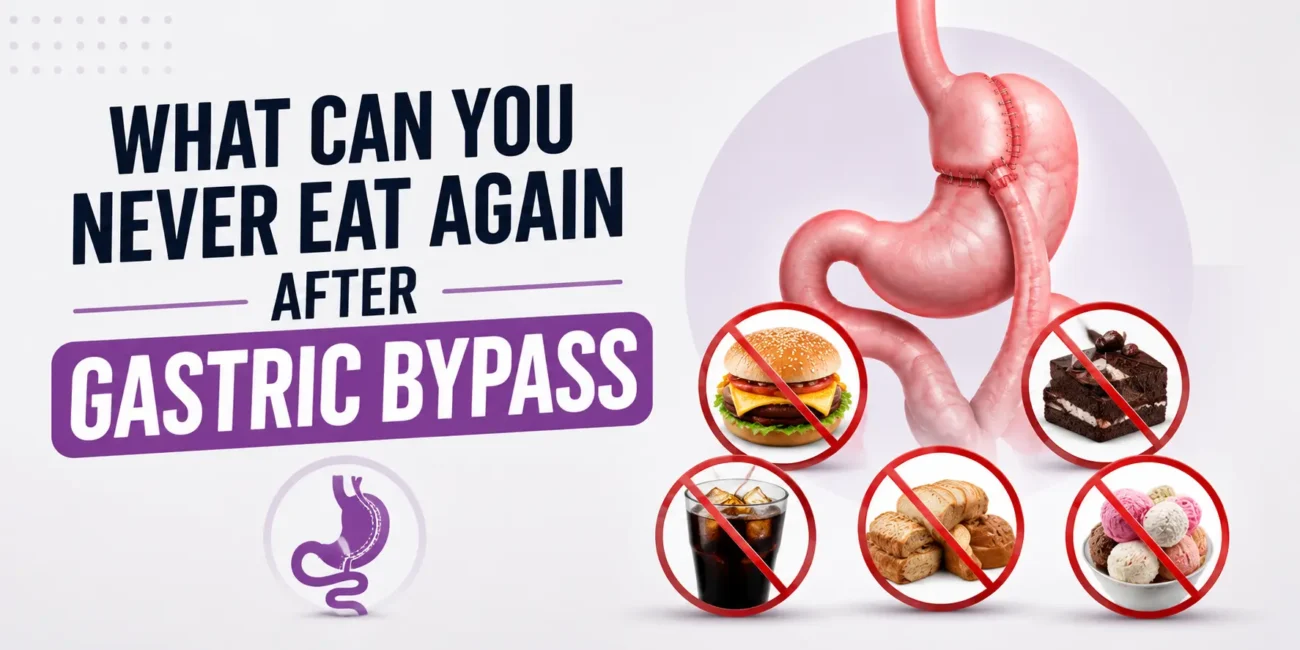
What Can You Never Eat Again After Gastric Bypass? The Permanent Food Rules Nobody Warns You About
Gastric bypass reshapes your digestive system for life. Some foods become genuinely dangerous. Others quietly undermine the surgery’s results for years. This guide covers both, with the reasons behind every restriction explained clearly.
After gastric bypass surgery, foods you should permanently avoid include sugary foods and drinks, fried and high-fat items, carbonated beverages, tough fibrous meats, white bread and rice, full-fat dairy, alcohol, and processed snack foods. These either trigger dumping syndrome, cause blockages in the smaller stomach, or silently undo the surgery’s results over time. Some restrictions apply for life. Others ease with time but require permanent mindfulness.
Why the Diet Changes Permanently
Gastric bypass, specifically the Roux-en-Y procedure, does two things to the digestive system. It creates a small stomach pouch roughly the size of an egg, and it reroutes food so it bypasses a section of the small intestine. The result is a system that absorbs fewer calories and fills up far faster. But it is also a system that reacts very differently to the foods your body once handled without issue.
The stomach pouch has no pyloric valve functioning in its normal capacity. That valve, in a standard digestive system, acts as a gatekeeper. It controls how quickly food moves from the stomach into the small intestine. Without that control, food can rush into the intestine too fast. Some foods exploit this weakness every single time they are eaten, no matter how long ago the surgery took place.
This is also why the question of what to avoid is not just a short-term recovery concern. Many patients assume the restrictions ease completely once they feel well again. Some do. Many do not. The foods listed in this article are those that create problems for the long term, not just in the weeks after surgery.
Understanding Dumping Syndrome First
Most of the permanent food restrictions after gastric bypass exist because of one condition: dumping syndrome. Understanding how it works makes the food rules feel less arbitrary and easier to follow consistently.
According to Johns Hopkins Medicine, dumping syndrome occurs when food gets moved directly from the stomach pouch into the small intestine without being properly digested. The intestine senses a dense, concentrated food mass arriving too early and responds by pulling fluid from the bloodstream into the intestine. The gut also releases hormones that affect heart rate and blood pressure. The result is deeply unpleasant.
Early dumping is driven by food bulk and osmotic pressure. Late dumping is driven by a blood sugar crash that follows an exaggerated insulin response. Both forms can occur in the same patient after the same meal. The Mayo Clinic notes that most cases of dumping syndrome can be managed or prevented through dietary choices. That is precisely why the food rules after gastric bypass are as specific as they are.
Foods to Permanently Avoid After Gastric Bypass
The following foods either reliably trigger dumping syndrome, risk creating blockages in the smaller stomach, or consistently undermine weight management results over the long term. Most bariatric programs treat these as lifetime restrictions, not temporary guidelines.
Sugary Foods and Sweet Drinks
Sugar is the most consistent dumping trigger after gastric bypass. Candy, cakes, cookies, pastries, milkshakes, fruit juice, sports drinks, and sweetened yoghurts all fall into this category. Refined sugar enters the small intestine in a concentrated form and triggers the cascade of symptoms described above within minutes.
Ice cream deserves specific mention because patients often ask about it. Its sugar and fat content make it a reliable dumping trigger. Its liquid-like consistency also means it can bypass the feeling of fullness that solid food creates, making it easy to consume more calories than intended. Most bariatric dietitians advise against it as a regular habit even years after surgery.
Sugary foods are also the primary driver of weight regain after gastric bypass. The surgery reduces how much you can eat. It does not prevent the body from absorbing sugar efficiently. A regular habit of sweetened drinks or desserts will undo results over months, even if portions feel small.
Carbonated Drinks
Soda, sparkling water, beer, and any fizzy beverage are consistently listed as permanent restrictions after gastric bypass. The reason is mechanical. Gas from carbonation builds up inside the small stomach pouch and causes significant discomfort, bloating, and pain. Over months and years, the pressure from repeated carbonation can stretch the pouch, enlarging it and reducing the surgery’s effectiveness at limiting food intake.
This includes diet soda. The carbonation is the problem, not the sugar content specifically. Even sparkling water, which many assume is safe, applies the same pressure to the pouch.
Fried Foods and High-Fat Meals
French fries, fried chicken, onion rings, and greasy fast food are poorly tolerated after gastric bypass for two reasons. First, high-fat foods are harder to digest and move more slowly, causing nausea and bloating in the smaller stomach. Second, fat and grease can trigger dumping syndrome in their own right, independent of sugar content. Fatty cuts of meat, bacon, sausages, pork belly, and ribs sit in this category too.
Beyond immediate discomfort, fried foods are among the most efficient ways to sabotage long-term weight management. They are calorie-dense, low in protein, and provide little satiety for the stomach space they occupy.
Tough, Fibrous, and Dry Meats
This one surprises many patients because meat is a food group actively encouraged after gastric bypass. The distinction is texture and cut. Lean ground chicken, fish, turkey, and tender poultry are appropriate choices. Thick steaks, pork chops, roasts with gristle, dry overcooked meats, and tough red meat cuts are not.
Meat that is difficult to chew thoroughly forms dense masses that can become lodged in the narrow connection between the stomach pouch and the small intestine. This causes pain, vomiting, and in serious cases, requires medical intervention. Chewing thoroughly helps, but very fibrous cuts remain risky regardless of how carefully they are eaten. For those managing related digestive concerns, understanding what causes stomach burning and how to address it can be useful during early recovery.
White Bread, White Rice, and Soft Doughy Foods
White bread expands when it absorbs saliva and stomach fluid. It can form a dense, sticky mass inside the stomach pouch that causes discomfort, a sensation of blockage, and sometimes vomiting. White rice behaves similarly. It clumps, expands, and takes up significant space without providing meaningful nutrition relative to what a post-bypass patient needs.
Soft doughy foods like rolls, bagels, and regular pasta share this problem. They fill the pouch with low-quality carbohydrates that offer almost no protein, leave the patient unsatisfied shortly after, and contribute to blood sugar instability.
Processed Snack Foods
Crackers, pretzels, crisps, packaged biscuits, and similar snack foods combine refined carbohydrates with fat and salt in ways that are highly problematic post-bypass. They tend to be calorie-dense in small portions, nutritionally poor, and easy to eat continuously in ways that bypass the fullness signal the pouch provides. Popcorn is often listed separately because the tough outer hulls can cause blockages and are difficult to digest even in a normal digestive system.
Foods to Strictly Limit Rather Than Eliminate
These foods are not absolute lifetime bans for every patient, but they require genuine caution and should never become habits. Tolerance varies between individuals, and a bariatric dietitian should guide personal decisions about these.
The Alcohol Problem After Gastric Bypass
Alcohol after gastric bypass carries risks beyond the typical concerns. The altered digestive system changes how quickly and severely alcohol affects the body, and research indicates a meaningful risk of alcohol use disorder developing after bariatric surgery. This section is not about moderation guidance. It is about understanding a genuine health risk.
Gastric bypass removes the stomach’s ability to pre-process alcohol before it reaches the small intestine. Normally, the stomach begins breaking down alcohol before it enters the bloodstream. After bypass, alcohol passes into the small intestine rapidly and is absorbed directly, producing blood alcohol levels that are significantly higher and faster-rising than the same drink would produce in a person who has not had surgery.
Patients can become legally intoxicated on one drink. More concerning, the brain’s response to this faster, more intense effect creates conditions that can accelerate alcohol dependence. Researchers and bariatric programs use the term “addiction transfer” to describe the pattern by which some patients shift compulsive eating behaviour toward alcohol after the surgery limits food intake. Most bariatric programs strongly advise avoiding alcohol entirely, particularly in the first year, and many recommend lifetime abstinence.
Alcohol is absorbed much faster after surgery. Patients become intoxicated more quickly and face higher risks of dependence. Empty calories also derail weight loss progress.
Bariatric Surgery Dietary Guidelines SummaryThe Recovery Eating Stages
The permanent restrictions described above apply across the long term. The immediate post-surgery period involves a separate, structured progression of eating stages. Patients who skip stages or rush this process face a significantly elevated risk of complications.
What to Focus On Instead
Understanding what to remove from the diet is only useful alongside a clear picture of what to build the diet around. The goal post-bypass is not simply to eat less. The goal is to extract maximum nutrition from a dramatically reduced food volume.
Protein takes absolute priority. The standard recommendation for most gastric bypass patients is 60 to 80 grams of protein per day, sometimes higher. The small pouch must be filled with protein before anything else. Lean chicken, fish, eggs, low-fat cottage cheese, Greek yoghurt, and protein shakes are the foundation. Given that nutrient absorption is also reduced after bypass, patients also need lifelong vitamin and mineral supplementation, typically including B12, iron, calcium citrate, and vitamin D.
Every meal should begin with the protein portion. Only after the protein is eaten should vegetables or other foods be considered. The stomach pouch fills quickly. Protein must come first, every time, or nutritional deficiency becomes a real long-term risk.
Hydration is the other major focus. Patients must drink at least 1.5 to 2 litres of water daily, but this cannot happen with or immediately after meals. Drinking with food dilutes stomach acid, pushes food through the pouch too quickly, and reduces the feeling of fullness that helps with portion control. The rule in most bariatric programs is no drinking for 30 minutes before a meal and 30 minutes after.
People considering longer-term weight management strategies post-surgery often research what nutritional approaches best support sustained results. Understanding the role of specific nutrients, including whether supplements like collagen affect body composition, can be relevant during this stage. For context on how individual supplements interact with weight management, this overview of collagen and weight gain covers the evidence clearly.
Full Food Reference Table
The table below brings together the key foods discussed in this article with their status and the primary reason for the restriction. Use this as a practical reference, not a final word. Individual tolerance varies, and your bariatric team’s guidance takes priority over any general list.
| Food or Drink | Status | Primary Reason to Avoid |
|---|---|---|
| Sugary drinks (soda, juice, energy drinks) | Permanent Avoid | Dumping syndrome trigger, weight regain |
| Carbonated drinks including sparkling water | Permanent Avoid | Gas pressure stretches stomach pouch over time |
| Fried foods (fries, fried chicken, onion rings) | Permanent Avoid | Dumping trigger, poor digestion, weight regain |
| Candy, cake, pastries, ice cream | Permanent Avoid | High sugar dumping trigger, empty calories |
| White bread and white rice | Permanent Avoid | Expands in pouch, blockage risk, low nutrition |
| Tough steak, pork chops, gristly meats | Permanent Avoid | Blockage risk in stomach pouch and intestinal connection |
| Alcohol | Permanent Avoid | Rapid absorption, high intoxication risk, dependence risk |
| Processed snack foods, popcorn, crackers | Permanent Avoid | Low nutrition, blockage risk (popcorn), easy overconsumption |
| Full-fat dairy (whole milk, cream, rich cheese) | Strict Limit | Fat content can trigger dumping. Low-fat versions better tolerated. |
| Raw fibrous vegetables (broccoli, cauliflower, celery) | Limit for 6 Months | Tough skins difficult to digest. Cooked versions usually fine. |
| High-sugar fruits (banana, grapes, mango, dried fruit) | Strict Limit | Sugar content can trigger late dumping. Lower-sugar fruit preferred. |
| Caffeine (coffee, strong tea) | Avoid First 3 Months | Irritates stomach lining, contributes to dehydration |
| Lean chicken, fish, turkey, eggs | Recommended | High protein, easy to digest, supports recovery and weight management |
| Low-fat Greek yoghurt, cottage cheese | Recommended | Protein-rich, soft texture, well tolerated |
| Cooked non-starchy vegetables | Recommended | Fibre, vitamins, easy digestion when cooked soft |
| Water and still herbal teas | Recommended | Essential for hydration. Drink between meals, not with them. |
For patients managing multiple dietary restrictions alongside post-surgical recovery, questions about specific foods come up regularly. One area that often overlaps with post-bariatric nutrition is blood sugar management. Pickles and fermented foods sometimes come up in patient conversations about gut health after surgery. The evidence on whether pickles are appropriate for blood sugar-conscious diets is relevant for those managing both weight and glucose levels post-bypass.
- Eat protein before anything else at every meal, every time
- Stop drinking 30 minutes before eating and wait 30 minutes after finishing
- Take prescribed vitamin and mineral supplements daily without exception
- Chew every bite thoroughly. Aim for 20 to 30 chews before swallowing.
- Eat slowly. The pouch fills fast. Eating quickly leads to overfilling, pain, and vomiting.
- Keep a food diary in the early months to identify personal trigger foods
- Attend all follow-up appointments. Nutritional deficiencies develop silently.
Weight management after gastric bypass is also influenced by hormonal factors that surgery does not fully address. Patients who later explore medications or supplements for weight maintenance should understand how these interact with the altered digestive system. For those researching hormonal weight influences, the connection between progesterone and weight gain is one area worth understanding, particularly for women post-surgery.
Medical Disclaimer: This article is for informational and educational purposes only. It does not constitute medical advice and is not a substitute for guidance from your bariatric surgeon, dietitian, or healthcare team. Dietary tolerance after gastric bypass varies significantly between individuals. All food decisions post-surgery should be made in consultation with your bariatric program. If you are experiencing symptoms of dumping syndrome, blockage, or nutritional deficiency, contact your healthcare provider promptly.
Frequently Asked Questions
After gastric bypass, foods you should permanently avoid or strictly limit include sugary foods and drinks, fried and high-fat foods, carbonated beverages, tough and fibrous meats, white bread and white rice, full-fat dairy, alcohol, and processed snack foods. These trigger complications including dumping syndrome, blockages, and weight regain.
Dumping syndrome is when food moves too quickly from the stomach pouch into the small intestine without being properly digested. Early dumping happens 10 to 30 minutes after eating and causes nausea, cramps, sweating, and diarrhea. Late dumping occurs 1 to 3 hours after eating and causes low blood sugar, shakiness, and fatigue. According to the American Society for Metabolic and Bariatric Surgery, about 85 percent of gastric bypass patients experience dumping syndrome at some point after surgery.
Alcohol is strongly discouraged after gastric bypass. The surgery causes alcohol to be absorbed much faster into the bloodstream, meaning patients become intoxicated more quickly on far less. There is also a significantly elevated risk of developing alcohol dependence after bariatric surgery, a phenomenon known as addiction transfer. Most bariatric programs advise avoiding alcohol entirely, especially in the first year.
White bread is generally considered a food to avoid permanently after gastric bypass. It expands when wet, can form a dense mass in the stomach pouch, and may cause blockages. It also fills the limited stomach space with low-nutrient calories that could go toward protein-rich foods. Some patients tolerate small amounts of whole grain options over time, but this varies individually and should be discussed with your bariatric dietitian.
Ice cream is typically not recommended after gastric bypass. Its high sugar and fat content make it a reliable trigger for dumping syndrome, and the liquid-like consistency means it can pass through the stomach pouch quickly, allowing higher calorie intake without the normal sensation of fullness. Sugar-free, low-fat versions may be tolerated occasionally, but should not become a regular part of the diet.
Yes. Carbonated drinks including soda, sparkling water, and beer are consistently listed as foods to avoid after gastric bypass. The gas from carbonation builds up in the small stomach pouch, causing significant discomfort and bloating. Over time, the pressure from carbonation can stretch the stomach pouch, which reduces the effectiveness of the surgery.
Recovery follows structured stages over several weeks. The first stage involves clear broths and protein shakes, followed by pureed foods, then soft foods like scrambled eggs and cottage cheese, and finally a gradual return to solid whole foods. Most patients reach a relatively normal eating pattern within 8 to 12 weeks, though the permanent restrictions on certain foods apply for life, not just during recovery.
Disclaimer: WellbeingDrive provides health information for educational purposes only. Do not use this content as a substitute for professional medical advice. Consult your doctor before making health related decisions.