
Communities don’t grow strong by accident. They grow strong when the people inside them understand how their bodies work, how their environments influence their daily choices, and how small habits add up over time. That understanding rarely shows up on its own. It usually arrives through patient, consistent health education that meets people where they are and respects what they already know.
When health knowledge becomes part of everyday life, families start asking better questions. Neighborhoods begin to look out for one another in new ways. Schools, clinics, and local groups stop working in silos and start sharing what they learn. The result is a quieter kind of strength, the kind that holds steady when something unexpected lands at the door.
How Public Health Pros Strengthen the Frontline
Building lasting community resilience takes more than awareness campaigns or one-off workshops. It requires people who understand both the human stories behind health struggles and the bigger systems that shape outcomes for entire neighborhoods. Professionals trained across social work and public health are uniquely positioned for this kind of frontline work. An MSW MPH dual degree gives them the tools to sit with a struggling family one afternoon and help redesign a community wellness program the next morning. That blend of close listening and broad thinking turns ordinary outreach into something far more effective.
These professionals often act as the connective tissue between residents and the institutions meant to serve them. They notice when a clinic’s hours don’t match a working parent’s reality. They catch the gap between what a flyer promises and what a household actually needs. Their presence in a community becomes a quiet form of stability, especially in places where trust has been hard to build.
Where Real Learning Begins
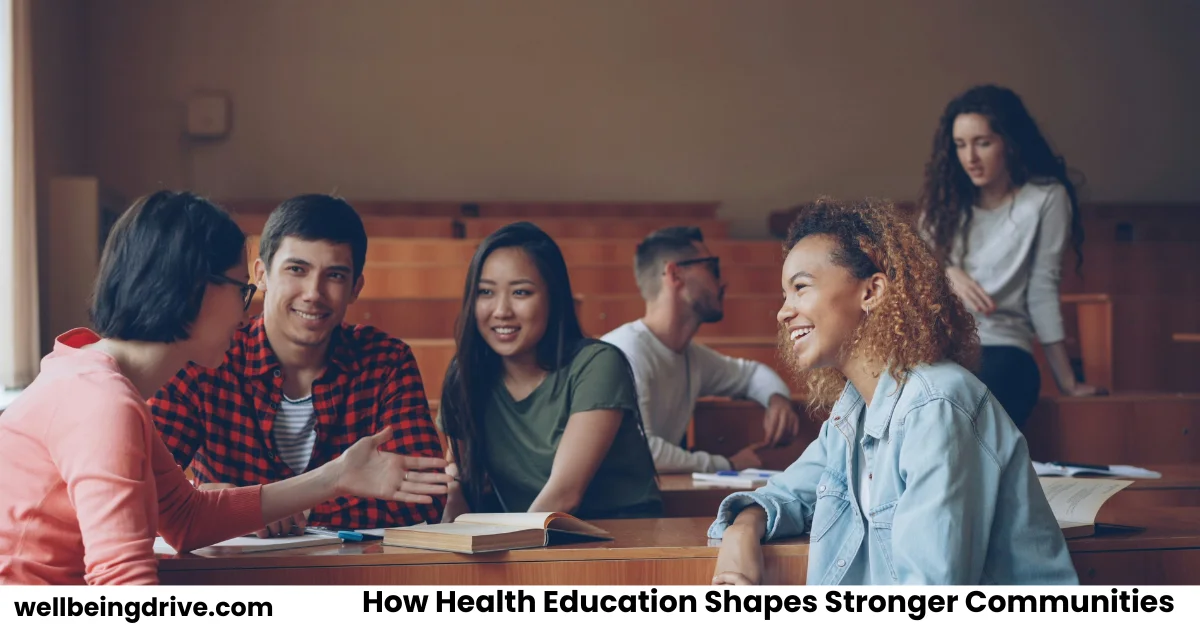
Real health education doesn’t begin in a lecture hall. It begins around a kitchen table, in a community center, on a school playground, or during a neighborly chat at the corner shop. People absorb information best when it feels relevant to their actual lives, not when it’s delivered as a list of warnings.
A mother learning how to read a food label is doing more than studying nutrition. She’s reshaping her family’s future in small, steady ways. A teenager learning about mental health is gaining language for things he might have buried otherwise.
The Power of Shared Knowledge
Knowledge becomes powerful when it travels. One person who understands how to manage diabetes can change the eating habits of an entire household. One coach who recognizes the early signs of burnout can shift the culture of a youth team. One auntie who learns to spot postpartum depression can support three friends through a season they didn’t know how to name.
Communities thrive when information flows freely between generations and between neighbors. Health education accelerates that flow. It gives people permission to talk about things that were once considered too private, too uncomfortable, or too complicated.
Prevention as a Form of Care
Prevention is sometimes treated as the boring cousin of treatment, but it’s where most of the meaningful work happens. A community that understands how infections spread protects itself faster than one that doesn’t. A neighborhood that knows the warning signs of heart trouble loses fewer parents and grandparents too soon. A school that teaches handwashing properly saves itself from outbreaks no one wanted to deal with.
Health education turns prevention from a vague suggestion into a daily practice. It moves the conversation away from fear and toward agency. People stop feeling like passive recipients of whatever life throws at them and start feeling like active participants in their own well-being. That shift in mindset is one of the most underrated forces in public health.
Building Trust Where It’s Been Broken
Many communities carry long memories of being talked at rather than spoken with. Health education done well begins by repairing that gap. It listens before it teaches. It asks what’s already working before suggesting what should change. It treats local wisdom as valuable rather than something to override.
When residents feel respected, they engage. When they engage, they share. When they share, programs get sharper, more useful, and more humane. Trust is slow to build and easy to lose, but it’s the foundation everything else rests on. Without it, even the best-designed initiatives fall flat.
Schools as Quiet Engines of Change
Children carry health lessons home in ways adults often underestimate. A child who learns about hydration becomes the family’s unofficial water reminder. A teenager who studies reproductive health becomes a calmer, better-informed friend. A young person who understands mental health gives older relatives permission to take their own struggles seriously.
When schools weave health education into their everyday rhythm, they shape generations rather than individuals. The lessons travel through dinner conversations, sibling chatter, and small acts of caregiving that ripple through entire households. Few investments compound the way early health education does.
Resilience Through Everyday Practice
Resilience isn’t built during crises. It’s built in the quiet years before crises arrive. Communities that practice good habits when nothing is wrong are the ones that hold together when something does. They have routines, networks, and shared language ready to draw on.
Health education seeds those routines long before they’re needed. It teaches families how to plan meals, how to manage stress, how to recognize when a loved one is slipping, and how to ask for help without shame.
The Long Arc of Community Wellness
Strong communities aren’t the product of one good program or one charismatic leader. They emerge from years of small, intentional choices made by many different people. Health education sits at the heart of that long arc. It supports the parent, the teacher, the volunteer, the local nurse, and the neighbor who simply pays attention.
The most resilient communities are rarely the loudest or the wealthiest. They’re the ones where knowledge moves freely, where care is practiced quietly, and where people have been gently equipped to look after themselves and each other.
Disclaimer: WellbeingDrive provides health information for educational purposes only. Do not use this content as a substitute for professional medical advice. Consult your doctor before making health related decisions.