
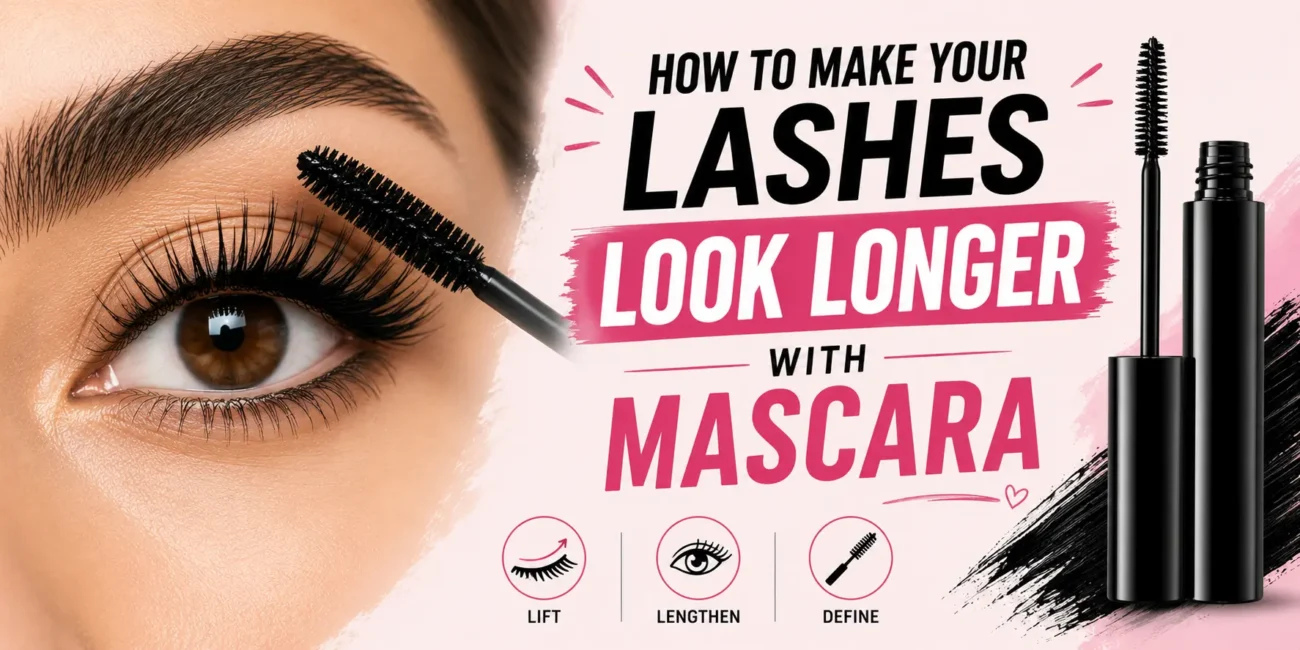
How to Make Your Lashes Look Longer With Mascara: Every Technique That Actually Works
The wand you are using is probably fine. The formula might be perfectly good. What is almost certainly holding your lashes back is everything that happens before and during application — the prep, the angle, the root work, and the layering. Here is the full picture, from curl to final coat.
Start With a Curl — Always
If you are skipping the lash curler, you are leaving the single most effective length illusion on the table before you even open your mascara. A curl lifts the lashes up and away from the eye, making every millimetre of length actually visible. Straight lashes that fall downward look short even when they are not.
There is a right way to curl. Most people clamp at the very base and hold once. That works, but a two-position technique works better.
Curling over wet or dried mascara causes lashes to stick to the curler pad and pulls them out at the root. If you have already applied mascara and forgotten to curl, skip it entirely for that application. Curl first — always.
The Root Wiggle — the Technique Change That Makes the Biggest Difference
Most people apply mascara the same way they learned without thinking about it: wand at mid-lash, sweep upward. It works, but it deposits product in the wrong place.
Length is built from the root, not the tip. If you start mid-lash, you are essentially bypassing the most important section of the lash — the part closest to your lid where loading with product actually extends the visible strand from its base.
Makeup artist Georgie Eisdell’s technique, which went widely viral after Marie Claire covered it, flips the standard approach entirely. The method: push the wand directly into the lash base and wiggle it side to side five times before sweeping upward. The wiggling loads the root with formula, separates lashes from the bottom, and creates a fan effect that no straight upward sweep can replicate.
Keep your head straight and squint your eyes, then push the mascara wand into the base of your lashes and wriggle it back and forth about five times to really load up the roots with formula. Then hold the wand still at your lash line and blink hard through the bristles.
Makeup Artist Georgie Eisdell — technique as documented by Marie ClaireThe blinking step is worth trying. When you blink through the wand bristles, the lashes pick up more product through force than they do from a gentle sweep. The result — as anyone who has tried it will confirm — looks different from anything a standard upward stroke produces. Messier lids during application, but that is what cotton swabs are for.
Start With a Lash Serum or Primer for Maximum Effect
A lash serum or primer layered under your mascara is one of the most underrated moves in a lash routine. A mascara that promotes lash growth often works on a longer timeline, so in the short term, a fiber-based lash primer gives you an immediate boost. It coats each lash with tiny fibers that physically extend the strand before mascara even goes on.
Lash serums, on the other hand, work over time to strengthen and lengthen your natural lashes. Used consistently at night, many serums show visible results within four to six weeks. This means your mascara has more to work with, since longer, healthier base lashes respond better to any formula you put on them. Think of the serum as the long game and the primer as the instant payoff.
Apply primer from root to tip on all upper lashes. Let it become slightly tacky — not fully dry, not soaking wet — before layering mascara over the top. If primer is fully wet when mascara goes on, the two formulas blend and the fibers clump. If it is completely dry, the mascara has nothing to bond to. That tacky window, usually 30 to 45 seconds after application, is the sweet spot.
Choosing the Right Formula for Length
Formula matters, but not in the way most people think. The wand shape influences the result as much as what is inside the tube.
| Formula Type | What It Does | Best For | Limitation |
|---|---|---|---|
| Lengthening Mascara | Contains fibers or polymers that adhere to lash tips and extend the strand | Short to medium lashes wanting visible extension | Less volume — lashes look longer but not necessarily thicker |
| Volumising Mascara | Thicker formula that builds density at the root | Thin or sparse lashes wanting more presence | Can make already-short lashes look heavy without adding length |
| Tubing Mascara | Wraps around each individual lash in a tube of formula rather than coating with pigment | Those prone to smudging, oily lids, humid climates | Less drama than traditional formulas — cleaner, more separated look |
| Curling Mascara | Holds the curl set by a lash curler and enhances it further | Straight lashes that lose their curl quickly | Does not add significant length on its own |
| Fiber Mascara | Deposits tiny synthetic fibers onto lash tips for extension | Anyone wanting an immediate length boost without a primer | Can flake — keep away from the waterline |
On wand shape: a thin, comb-like wand separates and coats each individual lash, which is ideal for length. A fat, fluffy wand deposits more product and builds volume. If length is the goal, reach for the thinner wand. The fat brush produces drama; the fine comb produces definition.
Layering Two Mascaras
This is not about using more of the same thing. Layering works because two different formulas do two different jobs, and the combination produces something neither one alone can achieve.
The Spoolie Step Nobody Skips Twice
A clean spoolie brush costs almost nothing and changes the result more than switching mascara brands. Between coats, it separates lashes before clumps have a chance to set. After the final coat, it blends and fans. For lashes that feel too dark or heavy, a spoolie lightens the look in seconds without removing any product.
Keep one clean spoolie on your makeup table permanently. Do not use the brush from your mascara tube — it already has product on it. A dry, clean spoolie is what creates separation. Run it through your lashes in a zigzag motion, mimicking the way the mascara wand moved during application.
Rather than pulling straight through lashes from root to tip, move the spoolie in a zigzag motion — left, right, left, right — as you work from base to tip. The side-to-side movement reaches lashes on both sides of the strand, not just the front surface. The result is a separated, fanned look that looks like individual lashes rather than a single dark curtain.
Lower Lashes, Corner Lashes, the Ones Everyone Forgets
Upper lashes get all the attention. But lower lashes and the inner and outer corner lashes are part of the same frame — neglecting them produces a look that is heavy on top and unfinished everywhere else.
What Not to Do
Most mascara problems come from the same handful of habits. These are worth eliminating specifically because they work against everything the techniques above are trying to achieve.
- Pumping the wand in and out of the tube — this pushes air into the formula, drying it out faster and introducing bubbles that create clumps. Swirl the wand inside the tube instead
- Applying from mid-lash — you skip the root entirely and miss the most important part of lash length. Start at the base every single time
- Using mascara older than three months — dried-out formula clumps immediately and deposits unevenly. The three-month rule exists for hygiene and performance reasons both
- Applying too many coats — more than three coats crosses from length into weight. Heavy lashes droop and lose the upward direction the curl created
- Curling after mascara — sticks lashes to the curler pad and pulls them out. Always curl on clean, dry lashes before any product
- Wiping the wand on the tube opening — this removes most of the product before it reaches your lashes. Scrape gently against the inside of the tube opening if you need to remove excess
Eye Makeup That Makes Mascara Work Harder
Mascara does not exist in isolation. The rest of your eye makeup either amplifies what the mascara achieves or works against it. These two additions specifically make lashes read as longer — not because they touch the lashes, but because of the context they create around them.
Applying a white or nude eyeliner pencil to the inner waterline — the wet rim of the lower lid — makes the eye appear larger and brighter. When the eye looks bigger, the space above it increases and your lashes appear to span more distance. It is a framing trick rather than a direct lash technique, but the visual effect on lash length is real. This works especially well during the day when heavy shadow might feel like too much.
A thin line of dark eyeliner directly at the upper lash line fills the gaps between individual lashes and creates the illusion of a fuller, denser lash base. When the base appears fuller, the lashes appear to extend from a more substantial foundation — and that makes them look longer by contrast. Keep it thin and tight to the lash line rather than as a pronounced liner look, and the effect reads as enhanced lashes rather than heavy eye makeup.
Together — white waterline below, thin dark liner above — these two additions create the most favourable possible frame for your mascara. The eye appears more open, the lashes appear to start from a denser base, and every technique you have applied above reads with more clarity. For a deeper look at how to choose the right mascara formula for your lash type, Allure’s guide to mascara application covers the product side in detail alongside technique recommendations from working makeup artists.
Frequently Asked Questions
The most effective techniques are: curl lashes before applying any product, wiggle the wand at the root before sweeping upward, use a fiber-based lash primer for immediate extension, layer a lengthening formula first followed by a volumising formula, and run a clean spoolie between coats to separate and prevent clumping. The root wiggle is the single biggest technique change most people can make — starting mid-lash is the most common mistake.
Always before. Curling after mascara causes lashes to stick to the curler pad and can pull them out at the root. Curl at the base first, hold for 10 seconds, then move the curler mid-lash and hold for another 5 to 8 seconds. Apply mascara immediately after curling while the lashes are still holding their lifted position — the mascara locks the curl in place.
Place the wand at the very base of your lashes and wiggle it side to side five times before sweeping upward. This loads the root with product where length is actually built. Makeup artist Georgie Eisdell popularised this push-and-wiggle technique, which produces significantly more length than the standard upward sweep from mid-lash. The blinking technique — holding the wand at the lash line and blinking hard through the bristles — also deposits more product than a gentle stroke.
Yes, when done correctly. Apply a lengthening formula first and allow it to become slightly tacky before applying a volumising formula on top. The lengthening coat extends each lash strand. The volumising coat adds thickness so the length is actually visible — thin lashes read shorter than they are because fine strands are hard for the eye to register. Run a clean spoolie between coats to prevent clumping.
A fiber-based lash primer coats each lash with tiny fibers that physically extend the strand before mascara goes on — adding immediate, visible length that mascara alone cannot replicate. Apply the primer, allow it to become slightly tacky rather than fully dry, then layer mascara over the top to seal the fibers in place. Lash serums work differently — they strengthen and lengthen natural lashes over four to six weeks of nightly use, giving your mascara a stronger base to work with.
Beauty Note: Techniques described in this article are sourced from professional makeup artists and established beauty publications. Individual results vary based on lash type, formula, and application. External references include Allure’s mascara application guide and techniques documented by Marie Claire’s beauty team in collaboration with working makeup artists.
Disclaimer: WellbeingDrive provides health information for educational purposes only. Do not use this content as a substitute for professional medical advice. Consult your doctor before making health related decisions.