
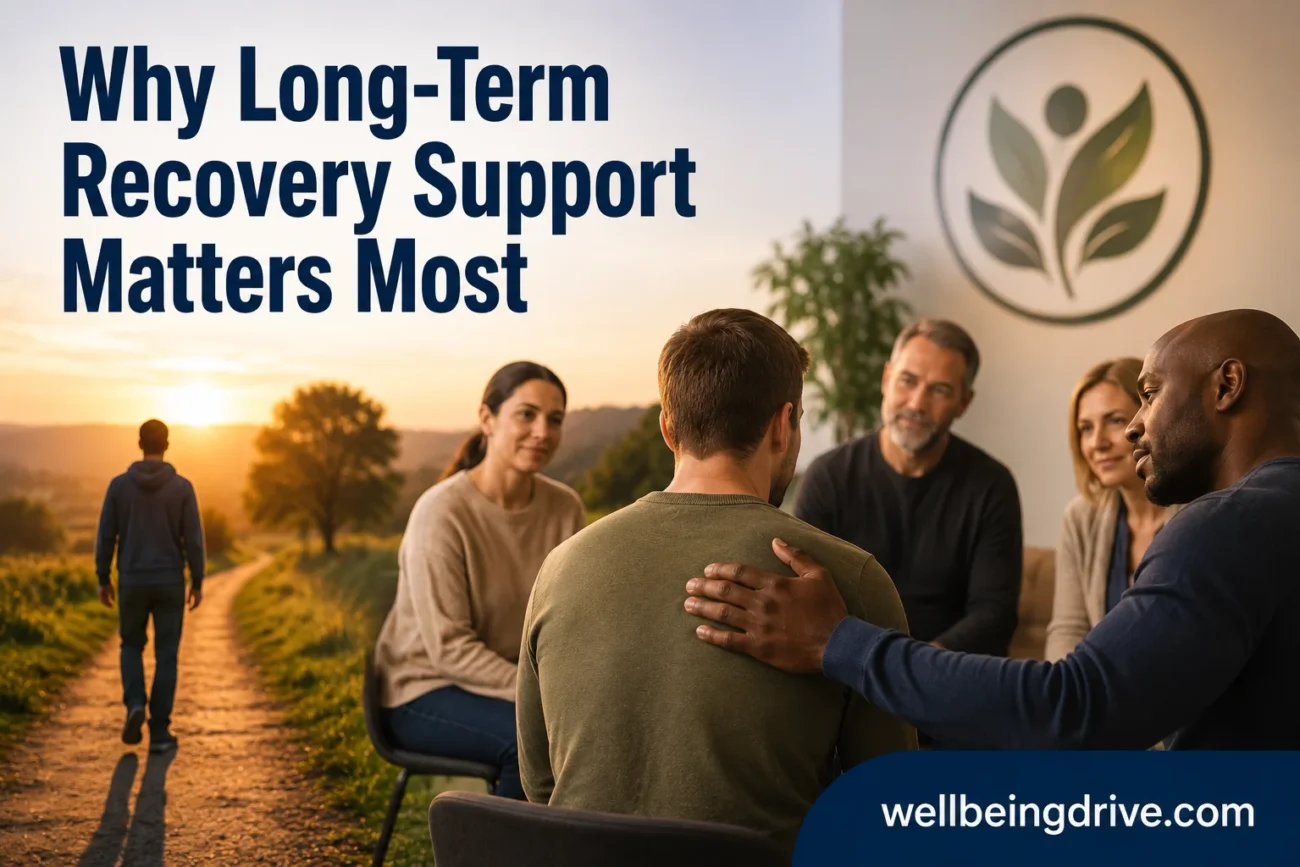
You’ve made it through treatment. You’ve completed the program, learned coping strategies, and felt hopeful about your future. But then you return home, and suddenly the real challenge begins. This is the reality for countless individuals who successfully complete addiction treatment programs only to find themselves struggling weeks or months later. The statistics are sobering—research shows that 40-60% of people in recovery experience relapse at some point. But here’s what those numbers don’t tell you: relapse isn’t failure, and more importantly, it’s often preventable with the right support systems in place.
The gap between completing treatment and maintaining long-term recovery is where many people stumble, not because they lack willpower or commitment, but because they lack sustained community support. Recovery isn’t a destination you reach after 30, 60, or 90 days of treatment. It’s an ongoing journey that requires consistent effort, connection, and resources that extend far beyond your initial treatment experience.
Why Traditional Treatment Models Often Fall Short
Traditional addiction treatment has historically operated on what experts call the “acute care model.” You enter treatment, receive intensive services for a defined period, and then you’re discharged back into your regular life. This approach works reasonably well for many medical conditions, but addiction operates differently. Substance use disorders fundamentally alter brain chemistry, decision-making pathways, and behavioral patterns in ways that require long-term management rather than short-term intervention.
Think of it this way: if you broke your leg, you’d get a cast, let it heal for several weeks, and then gradually return to normal activities. But addiction isn’t a broken bone. It’s more like a chronic condition such as diabetes or hypertension—conditions that require ongoing monitoring, lifestyle adjustments, and continued care to manage effectively. When treatment ends abruptly without transitional support, you’re essentially being asked to manage a complex chronic condition entirely on your own, often while returning to the same environment where substance use originally developed.
The environmental triggers alone can be overwhelming. You might return to a neighborhood where drug use is visible and accessible. You may reconnect with friends or family members who still use substances. Financial stress, relationship conflicts, and daily responsibilities that were temporarily suspended during treatment suddenly demand your attention again. Without a robust support system to help you navigate these challenges, the risk of returning to old patterns increases dramatically.
The Power of Continuum-Based Care
Progressive treatment approaches recognize that recovery requires different levels of support at different stages. This is where continuum-based care makes a significant difference. Rather than viewing treatment as a single event, this model sees recovery as a series of connected phases, each building on the previous one while gradually increasing your independence and self-management skills.
The continuum typically begins with medical detoxification, where your body safely processes substances under medical supervision. This phase addresses the immediate physical dependence and stabilizes your health. From there, you might move into residential treatment, where you’re immersed in a structured environment focused entirely on recovery. This intensive phase helps you develop foundational skills, understand your triggers, and begin reshaping thought patterns.
But here’s where many programs stop—and where continuum-based care continues. After residential treatment, you transition to partial hospitalization programs (PHP), where you receive several hours of treatment daily while beginning to reintegrate into regular life. You might sleep at home but spend your days in therapeutic programming. This intermediate step allows you to practice your new skills in real-world situations while still having substantial professional support.
Next comes intensive outpatient programming (IOP), where treatment sessions occur several times per week but you’re managing most aspects of daily life independently. This phase helps you build confidence in your ability to maintain recovery while handling work, relationships, and responsibilities. Finally, standard outpatient care provides ongoing check-ins, counseling sessions, and support as you establish your new normal.
Community Integration: The Missing Piece
Even with a well-designed treatment continuum, there’s another critical component that determines long-term success: genuine community integration. You need more than periodic appointments with counselors. You need a community of people who understand your journey, who can offer support during difficult moments, and who celebrate your progress along the way.
This is where recovery housing, peer support groups, and community-based programs become invaluable. Recovery housing, sometimes called sober living environments, provides a substance-free living situation where you’re surrounded by others committed to recovery. These aren’t treatment facilities—they’re homes where residents support each other, share responsibilities, and build accountability structures that reinforce healthy choices.
Research consistently shows that people who engage with recovery housing after treatment have significantly better outcomes than those who don’t. One study published in the Journal of Substance Abuse Treatment found that individuals who stayed in recovery housing for at least six months showed substantial improvements in employment, criminal justice involvement, and sustained abstinence compared to those who returned directly home after treatment.
Peer support groups operate on a similar principle. Whether through 12-step programs, SMART Recovery, Refuge Recovery, or other models, these groups connect you with people who’ve walked similar paths. They provide a judgment-free space where you can share struggles, receive encouragement, and learn from others’ experiences. The relationships you build in these settings often become lifelines during challenging periods.
Addressing Co-Occurring Challenges
For many people in recovery, substance use doesn’t exist in isolation. You might also be managing anxiety, depression, trauma, or other concerns that contributed to or resulted from substance use. Effective long-term recovery requires addressing these interconnected issues simultaneously rather than treating them as separate problems.
Integrated care models recognize this reality by providing coordinated services that address substance use alongside other behavioral health needs. When your treatment team communicates effectively and coordinates your care, you’re more likely to experience lasting improvement across all areas of your life. This might mean your therapist, prescriber, and case manager all work together to ensure your treatment plan addresses your unique combination of challenges.
For example, if you’ve been using substances to cope with untreated anxiety, simply stopping substance use without addressing the underlying anxiety leaves you vulnerable. You need strategies for managing anxiety that don’t involve substances, and you may benefit from medication, therapy, or both. When these services are integrated rather than siloed, you receive more coherent, effective care.
The Role of Medication-Assisted Treatment
One of the most significant advances in addiction treatment over the past two decades has been the expanded use of medication-assisted treatment (MAT). Despite persistent stigma, medications like buprenorphine, naltrexone, and methadone have proven extraordinarily effective for opioid use disorder, while medications like acamprosate and disulfiram support alcohol use disorder recovery.
MAT works by reducing cravings, blocking the euphoric effects of substances, or creating unpleasant reactions to substance use. These medications don’t replace recovery work—they support it by making it physiologically easier to focus on behavioral changes, therapy, and skill development. Research shows that people who receive MAT are more likely to remain in treatment, less likely to use illicit opioids, and less likely to experience fatal overdose.
Unfortunately, access to MAT remains limited in many areas, and stigma continues to prevent some people from considering this option. Some view MAT as “replacing one drug with another,” but this perspective misunderstands both addiction neuroscience and recovery principles. MAT medications are prescribed, monitored, and adjusted by medical professionals. They’re tools that help normalize brain chemistry disrupted by substance use, much like insulin helps manage blood sugar in diabetes.
Geographic Considerations in Recovery Support
Where you live significantly impacts your access to comprehensive recovery support. Urban areas typically offer more treatment options, more recovery housing, and more peer support meetings than rural communities. But even within cities, resources vary considerably. Coastal Texas communities, for instance, have developed robust recovery ecosystems that include everything from initial treatment through long-term community support, with programs like cenikor corpus christi offering integrated services that address the full spectrum of recovery needs.
Geographic factors also influence the specific challenges you might face in recovery. Coastal communities might have different prevalent substances, different cultural attitudes toward treatment, and different employment opportunities that affect your recovery journey. Understanding your local recovery ecosystem helps you identify available resources and plan accordingly.
If you live in an area with limited resources, you might need to be more creative and proactive about building your support network. This could mean participating in online recovery meetings, traveling to neighboring communities for services, or working with your treatment team to develop robust relapse prevention strategies that account for limited local support options.
The Economics of Long-Term Support
One common barrier to accessing comprehensive recovery support is cost. Treatment can be expensive, and many people worry about affording the extended care that improves outcomes. However, several factors make long-term support more accessible than you might think.
First, insurance coverage for substance use disorder treatment has expanded significantly under federal parity laws, which require insurers to cover behavioral health conditions comparably to physical health conditions. Most major insurance plans now cover not just initial treatment but also outpatient services, medication-assisted treatment, and other continuing care services. Understanding your specific benefits and working with treatment providers who accept your insurance can dramatically reduce out-of-pocket costs.
Second, many treatment organizations operate on nonprofit models specifically to increase accessibility. These organizations often work with numerous insurance carriers, offer sliding-scale fees based on income, and help connect you with financial assistance programs. Their mission focuses on providing care rather than maximizing profit, which often translates to more affordable options and more flexibility in payment arrangements.
Third, consider the long-term economic impact of sustained recovery versus continued substance use. Substance use disorders carry enormous financial costs—lost employment, legal expenses, healthcare costs, damaged relationships, and decreased quality of life. Investing in comprehensive treatment and support systems typically costs far less than the cumulative expenses of ongoing substance use, even before considering the immeasurable value of improved health, relationships, and life satisfaction.
Building Your Personal Recovery Infrastructure
While professional treatment and community programs provide essential support, you also need to develop your own personal recovery infrastructure—the daily practices, relationships, and routines that keep you grounded and moving forward. This infrastructure looks different for everyone, but several elements consistently appear in successful long-term recovery.
First, establish a daily routine that supports physical and emotional well-being. Regular sleep schedules, nutritious meals, physical activity, and stress management practices create a foundation that makes everything else easier. When you’re well-rested, properly nourished, and physically active, you’re better equipped to handle challenges and make healthy decisions.
Second, cultivate meaningful relationships with people who support your recovery. This might mean creating some distance from friends or family members who continue using substances or who undermine your recovery efforts. It definitely means actively building connections with people who understand and respect your journey. These relationships provide accountability, encouragement, and practical support when you need it.
Third, develop a clear understanding of your personal triggers and early warning signs. What situations, emotions, or thought patterns make you vulnerable to cravings or poor decisions? What subtle changes in your behavior or thinking indicate you’re moving away from recovery? The better you understand your unique vulnerability factors, the more effectively you can implement preventive strategies.
Fourth, maintain regular connection with professional support even when things are going well. Many people reduce or eliminate contact with counselors, support groups, and other resources when they feel stable, only to find themselves struggling later without that support network. Consistent engagement, even during good periods, helps you maintain momentum and provides immediate resources if challenges arise.
The Role of Purpose and Meaning
One often-overlooked aspect of long-term recovery is the importance of purpose and meaning. Substance use often fills a void—boredom, lack of direction, disconnection from values, or absence of fulfilling activities. Sustainable recovery requires filling that void with something meaningful rather than simply removing substances and expecting to feel satisfied.
This might involve returning to education, developing career skills, volunteering in your community, pursuing creative interests, or deepening spiritual practices. The specific activities matter less than the sense of purpose and engagement they provide. When you’re invested in meaningful pursuits, you’re less vulnerable to the appeal of substances and more motivated to maintain the stability that allows you to continue those pursuits.
Many people in recovery find particular meaning in helping others who are earlier in their journey. Peer support roles, sponsorship in 12-step programs, or volunteering with recovery organizations allow you to give back while reinforcing your own commitment. There’s something powerful about witnessing someone else’s growth and knowing you played a part in supporting them.
Looking Forward: Recovery as Growth
Perhaps the most important shift in thinking about long-term recovery is moving from a deficit model to a growth model. Traditional approaches often frame recovery as returning to your pre-addiction baseline—getting back to where you were before substances became problematic. But many people discover that recovery offers an opportunity for something more profound: becoming a healthier, more self-aware, more connected version of yourself than you’ve ever been.
Recovery challenges you to develop skills and insights that many people never cultivate. You learn to identify and communicate your emotions effectively. You develop strategies for managing stress without escape or avoidance. You practice setting boundaries, asking for help, and navigating conflict constructively. You build resilience by facing difficulties without numbing yourself. These are life skills that benefit every aspect of your existence, not just your relationship with substances.
This perspective transforms recovery from something you have to do into something you get to do—an opportunity for genuine personal development and improved quality of life. When you view recovery through this lens, engaging with support systems and continuing care doesn’t feel like a burden or evidence of weakness. Instead, it becomes an investment in your ongoing growth and well-being.
Taking the Next Step
If you’re currently in treatment or considering seeking help, remember that the quality and comprehensiveness of your support system significantly impacts your long-term outcomes. Look for programs that offer a full continuum of care rather than just acute treatment. Ask about aftercare planning, recovery housing options, and community support resources. Understand what services your insurance covers and what financial assistance might be available.
Most importantly, recognize that asking for help and accepting support isn’t weakness—it’s wisdom. Recovery is challenging enough without trying to manage it entirely alone. The people who achieve lasting recovery aren’t necessarily stronger or more determined than those who struggle. They’re often simply better connected to effective support systems that help them navigate challenges and maintain momentum over time.
Your recovery journey is unique, but you don’t have to walk it alone. Community support, professional guidance, and personal commitment combine to create the foundation for lasting change. By engaging with comprehensive care systems and building your personal recovery infrastructure, you’re not just avoiding substances—you’re creating a life worth protecting and celebrating.
Disclaimer: WellbeingDrive provides health information for educational purposes only. Do not use this content as a substitute for professional medical advice. Consult your doctor before making health related decisions.