
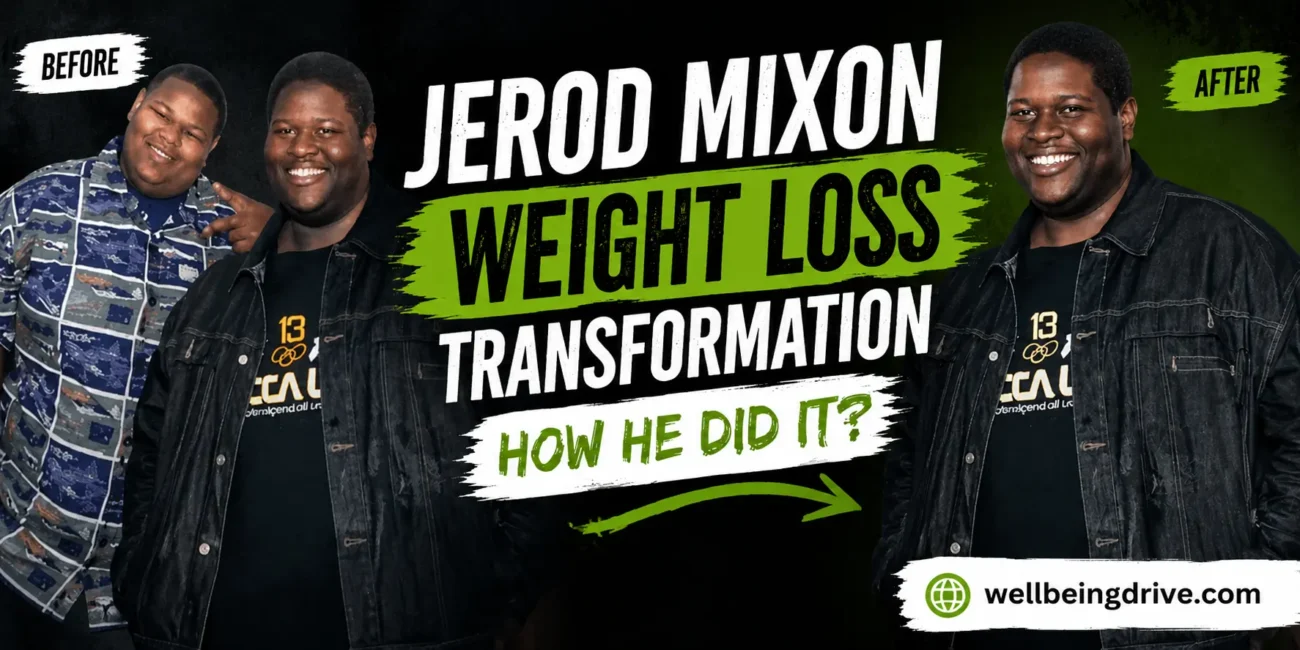
Jerod Mixon Weight Loss: The Transformation, the Brother Who Made It Happen, and What He Actually Said
Most people remember him as Weensie from Old School — the guy who got the crowd going and had Will Ferrell losing it in that fraternity scene. Fewer people know what came after that, and fewer still know that the most significant chapter of his adult life was written not on a film set but in a gym, alongside his brother.
Who Jerod Mixon Is
Jerod Mixon was born on May 24, 1981, in Port Hueneme, California — a small coastal city about an hour north of Los Angeles that is more navy base than Hollywood. He is the older of two brothers, the younger being Jamal Mixon, whose face most people will immediately recognise as Ernie Klump Jr. — the young Lil’ Hercules from Eddie Murphy’s Nutty Professor films.
Both brothers started acting young. Jerod was working by 1997, picking up television appearances on Malcolm & Eddie and Moesha before landing film roles that drew on his size and natural timing for physical comedy. He is an actor, comedian, writer, and producer — a person who clearly understood that his best shot at a career was building one himself when the industry was not offering what he wanted.
His Career, His Weight, and What Hollywood Did With Both
For actors who come up in Hollywood as the large guy — the one who plays the big funny friend, the physical comedian, the presence in the background — there is a particular kind of typecasting that comes with the territory. You get the work that fits the type. You rarely get the work that does not.
Jerod Mixon understood this from early in his career. His size was simultaneously what made him distinctive and what limited the range of roles he was offered. Virtually every role he played through the late 1990s and early 2000s drew on the same physical template. He was good at it — genuinely funny and naturally charismatic on screen — but “good at the type you have been cast as” is not the same as having full access to your own range as a performer.
Jerod has spoken about his weight in the context of what it meant for his career trajectory. The roles available to him were shaped by his size in ways that became increasingly limiting. The combination of health concerns and professional frustration — being consistently typecast and watching roles go to actors with more perceived versatility — contributed to his decision to make a change. As he put it directly: “If I can lose weight so can you.”
The Turning Point — and His Brother’s Role In It
The most consistent thread across every account of Jerod’s transformation is Jamal. His younger brother, not a health scare, not a doctor’s warning, not a Hollywood ultimatum — his brother reaching out and saying they needed to do this together.
Jamal made the first move. He contacted Jerod, acknowledged that both of them had been struggling with their weight for years, and proposed that they commit to it simultaneously rather than separately. The logic was straightforward: accountability between two people who know each other completely is harder to walk away from than a personal resolution made in private.
At first it looked very crazy. I didn’t know how to start.
Jerod Mixon — on beginning his gym routine after years away from structured fitnessThat quote is specific in a way that rings true. The gym, for someone who had not been to one regularly in years, genuinely does look overwhelming at first — the equipment, the routines, the knowledge gap between where you are and where the people around you seem to be. What got him through it was not immediate competence but consistency. He showed up anyway, figured it out gradually, and kept going.
Both brothers also worked with a health coach during the process — reported as Jaicy Elliot, specialising in weight loss and habit-building — who helped them set realistic targets and develop routines they could sustain. The emphasis was on sustainable habits rather than dramatic short-term interventions, which is consistent with what the results reportedly show: genuine, lasting change rather than a temporary crash.
What He Changed About His Diet
The dietary changes Jerod made were substantial but not exotic. No branded meal plan, no extreme elimination protocol. The core of it was replacing the habits that had built up over years — fast food, alcohol, binge eating — with a consistent approach built around real food.
| What Came Out | What Replaced It |
|---|---|
| Fast food — pizza, burgers, takeout as regular meals | Lean proteins: chicken breast, fish, eggs, Greek yogurt |
| Alcohol — a regular habit that added calories and disrupted sleep and recovery | Fresh fruit juice and water, which also sustained his energy for daily exercise |
| Binge eating and unstructured meal timing | Intermittent fasting — structured eating windows without compromising nutrition quality |
| High-calorie, low-nutrient side choices | Complex carbohydrates: quinoa, brown rice; healthy fats: avocados, nuts |
| Large, unplanned meals throughout the day | Green salads as a consistent lunch and dinner anchor, with protein added |
What is notable about this list is how recognisable it is. None of these are unusual changes. They are the same changes that any nutritionist would recommend to someone starting from a place of habitual poor eating. The difficulty was never knowing what to do — it was sustaining the decision to do it over the months required to see real results. That is the part that is always harder than the knowledge.
The use of intermittent fasting by both brothers was described specifically as giving them flexibility during meal times without compromising nutrition quality. This is a meaningful distinction. Intermittent fasting — typically an eating window of 8 hours with a 16-hour fast — does not require counting calories or eliminating food groups. For people who struggle with the structure of multiple scheduled meals, it can simplify decision-making and reduce the frequency of impulsive eating. According to Healthline’s evidence review of intermittent fasting, it is associated with meaningful weight loss in overweight adults when maintained consistently.
His Gym Routine — What He Built Up To
Jerod did not start at full intensity. The account of his gym journey describes someone who began cautiously — initially walking regularly before transitioning to structured gym work — and built up over time as fitness improved and confidence in the environment grew.
The Numbers — and an Honest Note on What Is Verified
This is where most articles about Jerod Mixon’s transformation present confident figures without acknowledging that those figures vary significantly depending on which source you consult.
The range of figures cited — anywhere from 140 pounds combined to 300 pounds for Jerod alone — tells you more about how celebrity weight loss gets reported than it does about Jerod. Numbers travel across the internet detached from their original context. A figure mentioned casually in one article gets picked up, repeated, and treated as official. Without a sit-down interview in which Jerod confirms a specific number, the honest position is that the transformation was significant and sustained, and the exact figure remains unverified.
Life After the Transformation
What Jerod Mixon’s transformation did for his health and sense of self is documented in the tone of every account that covers it — he is described as lighter in every sense, with improved energy and a different relationship to the physical demands of daily life that someone carrying extreme excess weight faces constantly.
What it did for his career is a more complicated question. Hollywood has not always been quick to recalibrate once it has decided what a person is for. But the direction of travel is clear. He and Jamal have moved increasingly into production and writing — the side of the industry where you build the vehicle yourself rather than waiting to be cast in someone else’s. White T was an early version of that approach. Their ongoing collaboration suggests more of the same.
He also showed up. When death rumours began circulating — a phenomenon that hits certain actors when their public profile drops — both brothers appeared together on HYPE+ to address it directly. They are alive, active, and still working. That matters to fans who grew up watching them and has its own kind of straightforward dignity.
Stripped of the inflated numbers and the motivational-poster language that other coverage layers on top of it, Jerod Mixon’s story is about a sustained decision made by two brothers together, executed through ordinary means over an ordinary amount of time. No surgery. No shortcut. A change in what he ate, a daily practice in the gym, and a person he could not let down waiting on the other end of the phone. According to Mayo Clinic’s weight loss guidance, the most effective long-term weight loss comes from combining dietary changes with physical activity and — critically — some form of social support or accountability. That is exactly what the Mixon brothers built for each other. The simplest version is often the truest one.
Frequently Asked Questions
Figures reported across various sources range from 200 to 300 pounds for Jerod specifically. No single verified interview with precise, confirmed numbers exists in the public record — different sources cite different figures. What is consistent across all accounts is that his transformation was significant and clearly visible, representing a major change from his earlier Hollywood appearances.
Reported methods include a significant dietary overhaul — replacing fast food and alcohol with lean proteins, complex carbohydrates, vegetables, and fruit juice — combined with a daily gym routine covering weightlifting, boxing, and cycling. He also began with regular walking before transitioning to structured gym work, and used intermittent fasting as a meal timing framework. His brother Jamal undertook the journey alongside him, providing mutual accountability throughout.
No surgery has been confirmed or mentioned in any verified account of his transformation. All reported methods point to sustained dietary changes and physical training. Jerod has not publicly confirmed any surgical procedure, and none of the coverage of his journey — even the unverified accounts — mentions surgery as part of the process.
Jerod Mixon is an American actor, comedian, writer, and producer born on May 24, 1981, in Port Hueneme, California. He is best known for playing Weensie in the 2003 comedy Old School and Shonté Jr. in Me, Myself and Irene (2000) alongside Jim Carrey. He is the older brother of Jamal Mixon, known for the Nutty Professor films. Together they produced and starred in the 2013 hip-hop comedy White T, and both continue to work on film and production projects.
Yes. Accounts consistently describe both brothers’ journeys happening in parallel, with Jamal initiating the process by reaching out to Jerod and proposing they commit together. The mutual accountability — each brother showing up for the other daily over the course of nearly a year — is one of the most consistently credited factors in both of them sustaining the effort long enough to see real results.
Editorial Note: This article applies verified sourcing where available. Specific weight loss figures cited in other publications vary significantly and do not originate from a single confirmed primary interview with Jerod Mixon. Figures are presented with that context noted. Career information is drawn from verified biographical sources. Quotes attributed to Jerod Mixon are sourced from widely republished accounts. External references include Healthline’s intermittent fasting evidence review and Mayo Clinic’s weight loss guidance.
Disclaimer: WellbeingDrive provides health information for educational purposes only. Do not use this content as a substitute for professional medical advice. Consult your doctor before making health related decisions.