
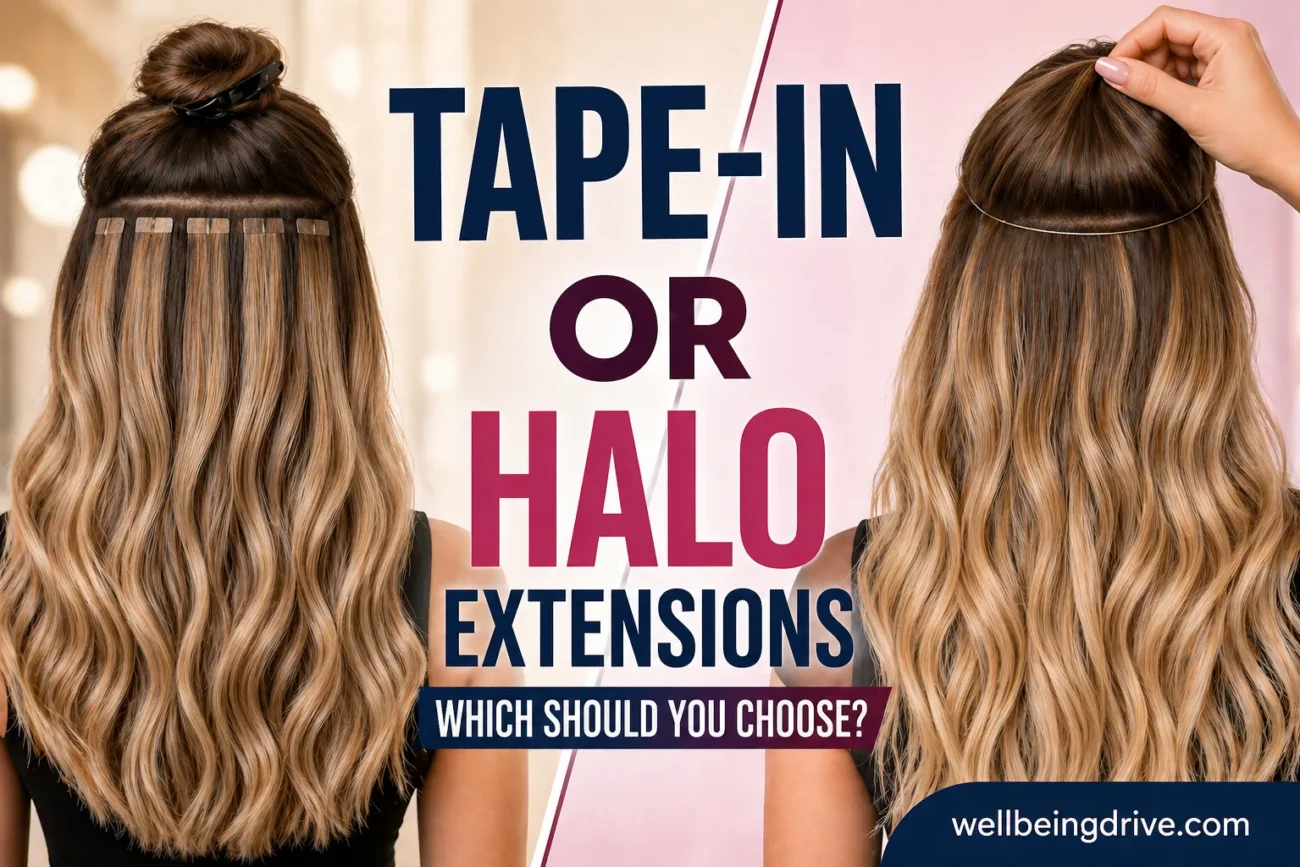
Choosing between tape-in and halo extensions is one of those decisions that feels simple on the surface but gets complicated fast once you start comparing your options. Both styles promise longer, fuller hair, yet they work in very different ways and suit very different lifestyles. Buy the wrong type, and you could end up with discomfort, damage, or a product that doesn’t match your daily routine. Before you spend a single dollar, it’s worth understanding what separates these two extension types, how each one performs in real life, and which one genuinely fits your hair and habits.
What Are Tape-In and Halo Extensions, Really?
Tape-in extensions are thin, pre-taped wefts of hair that a stylist sandwiches between sections of your natural hair using a medical-grade adhesive. Each weft sits flat against your scalp, which makes them nearly invisible under your own hair. The result is a seamless, blended look that works especially well for fine or medium-thickness hair. Because the wefts lie so close to the root, they move naturally and rarely shift throughout the day.
Halo extensions, on the other hand, are a single weft of hair attached to a thin, transparent wire. You place the wire over your head like a headband, and the wire sits underneath your top layer of hair, hidden from view. There’s no adhesive, no heat, and no professional appointment required. Many halo products, including hair extensions made with realistic Kanekalon fibers, offer a soft, natural look at a lower entry price, which makes them popular among people who are new to extensions or prefer a temporary solution.
Both extension types have legitimate strengths. The key difference comes down to permanence. Tape-ins are semi-permanent and stay in for weeks at a time, whereas a halo is something you put on in the morning and take off at night, much like an accessory.
How Each Extension Type Is Applied and Removed
Tape-in extensions require a professional stylist for both application and removal. During the appointment, the stylist sections your hair, places wefts on either side of each section, and presses them together with the adhesive tabs. The process typically takes one to two hours, depending on how many wefts you need. Removal is equally methodical: a stylist applies a bond remover solution to dissolve the adhesive, then gently slides each weft out without pulling on your natural hair. Done correctly, this process causes minimal damage. But, if you try to remove tape-ins at home without the proper solution, you risk tearing out your own hair along with the weft.
Halo extensions require zero professional help. You simply part your hair, place the wire loop over your head so it sits about an inch from your hairline, adjust the fit, and then drop your top layer of hair over the wire to conceal it. The whole process takes under two minutes once you’ve practiced a few times. Removal is just as straightforward: lift your top layer, slide the wire off, and you’re done. There’s no residue, no product buildup, and no appointment to schedule. For someone with a busy schedule or a limited budget for salon visits, this simplicity is a serious advantage.
Comfort, Maintenance, and Longevity Compared
Day-to-Day Comfort and Wearability
Tape-in extensions feel natural once your scalp adjusts to them, which usually takes a few days. Because the wefts are flat and thin, most people forget they’re wearing them after the first week. That said, some users report mild tension near the roots, particularly in the first few days after a fresh application. You also need to be mindful about how you sleep, as rough pillowcases or tight braids can cause the wefts to shift or the adhesive to weaken faster than expected.
Halo extensions feel different because the wire rests on your head for as long as you wear them. A well-fitted halo is barely noticeable, but one that’s too loose will slide back, and one that’s too tight can create pressure along the crown of your head. Most brands let you adjust the wire length to get a custom fit, which resolves the tension issue for the majority of users. The trade-off is that halos are not suitable for high-intensity activities like exercise or swimming, since movement can cause the wire to shift out of place.
Upkeep, Reusability, and Long-Term Cost
Tape-ins need to be moved up every six to eight weeks as your natural hair grows out. The wefts themselves can be reused several times over, so your main recurring costs are the adhesive tabs and the salon appointments. Over the course of a year, those appointments add up, which is something to factor into your budget before you commit.
A halo extension, by contrast, requires no maintenance appointments. You wash and condition the weft at home, let it air dry, and store it on a hanger or stand to keep it from tangling. With proper care, a high-quality halo can last a year or longer. The upfront cost is typically lower than a full set of tape-ins, and there are no ongoing salon fees to account for. If you wear the halo daily, the cost per use drops considerably over time, making it one of the more affordable long-term options available.
Which Extension Type Suits Your Hair and Lifestyle Best?
Your hair type is the first thing to consider. Tape-in extensions are ideal for people with fine to medium hair because the flat wefts blend seamlessly without adding obvious bulk near the roots. If your hair is very thick or coarse, tape-ins can sometimes struggle to lie flat, and the wefts may become visible at certain angles. Halo extensions, in contrast, are more versatile across hair types because the wire sits beneath the top layer rather than attaching to individual strands.
Your lifestyle matters just as much as your hair type. If you prefer a set-it-and-forget-it approach and want your extensions to be undetectable even during close physical contact, tape-ins are the stronger option. They stay put through most daily activities and look seamless from every angle. On the other hand, if you value flexibility and don’t want to commit to a semi-permanent solution, a halo is a better match. You control exactly how often you wear it, and there’s no risk of damage to your natural hair from adhesive or removal.
Finally, think about your budget, not just for the initial purchase but for the full duration of use. Tape-ins carry higher ongoing costs due to salon appointments, whereas halos are largely self-maintained. Neither option is universally better, but one will almost certainly align with your priorities more closely than the other. Take stock of what you actually need day to day, and let that guide your decision.
Conclusion
There’s no single right answer between tape-in and halo extensions. Tape-ins offer a seamless, long-lasting result for those ready to invest in professional upkeep. Halos give you flexibility, simplicity, and low-maintenance wear with no salon commitment required. Your hair type, daily routine, and budget will point you toward one more naturally than the other. Take your time, weigh the real costs of each option, and choose the one that fits the life you actually live.
Disclaimer: WellbeingDrive provides health information for educational purposes only. Do not use this content as a substitute for professional medical advice. Consult your doctor before making health related decisions.