
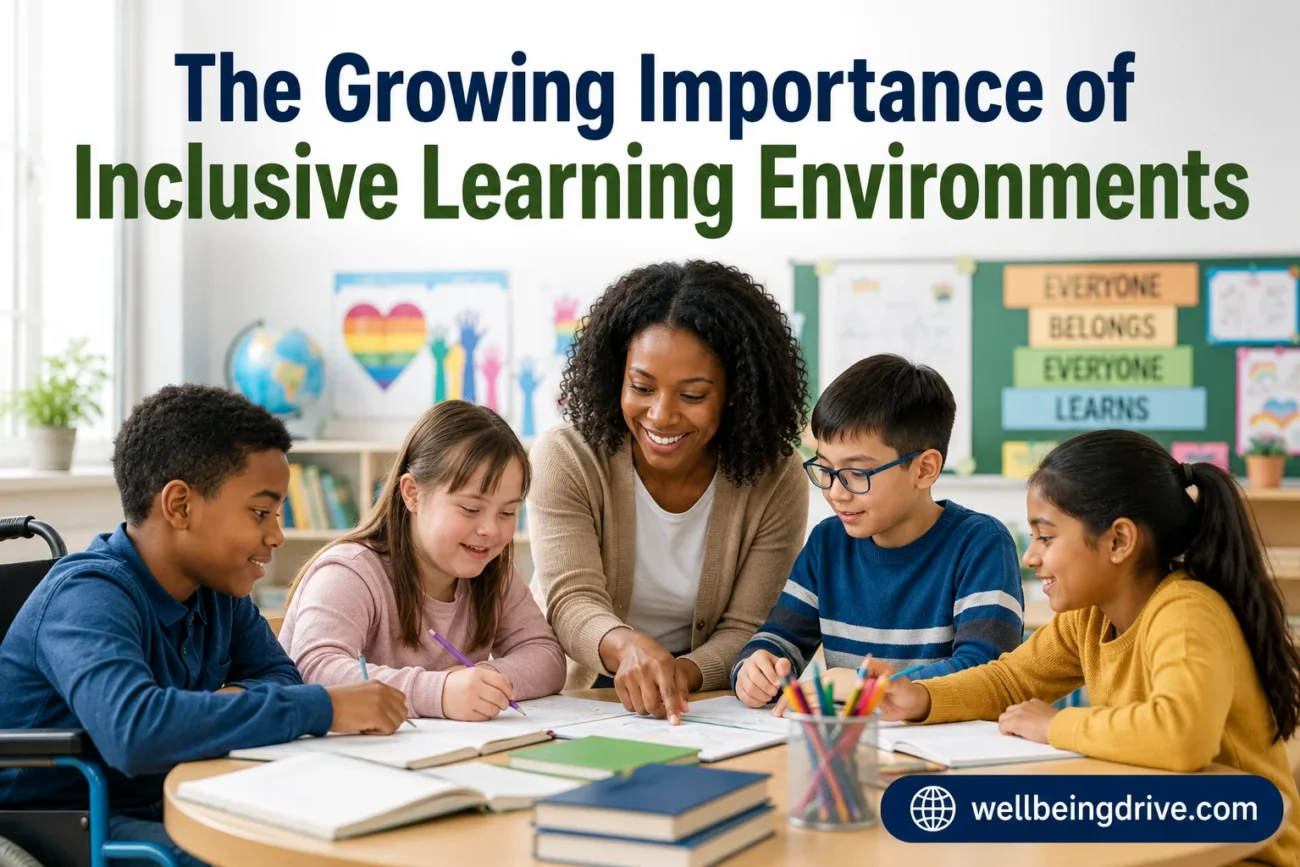
A classroom can feel welcoming before a single word is spoken. A student walks in, looks around carefully, and decides almost immediately whether participation feels safe or uncomfortable. That silent decision matters more than many people realize. Learning is shaped not only by textbooks and lesson plans, but also by whether students feel understood inside the room itself.
For years, educational success was often measured through test scores alone. While academic performance still matters, schools are beginning to recognize that emotional support, communication access, and social belonging affect learning just as deeply. Students arrive with different backgrounds, abilities, and personal experiences, and those differences cannot simply be ignored if meaningful education is expected.
An everyone-should-fit-the-same-mold type of system no longer reflects the reality of modern classrooms. Inclusive learning environments are being valued because they create space for students who process information differently, communicate differently, or require additional support to participate fully. That shift is changing how schools approach teaching, collaboration, and student care.
The conversation has also expanded beyond special education programs. Inclusion now touches classroom design, communication methods, emotional well-being, and peer interaction. Could schools truly prepare students for the real world if differences are overlooked instead of respected? Many educators are beginning to answer that question differently.
When Support Becomes Part Of Everyday Learning
Inclusive learning environments work best when support systems are integrated naturally into daily classroom experiences. Instead of separating students who need additional assistance, schools are increasingly building learning spaces where support feels accessible and normalized for everyone involved.
This shift has highlighted the role of speech pathologist within educational settings. Communication challenges can affect academic confidence, classroom participation, and peer relationships, especially when students struggle to express thoughts clearly or process spoken information effectively. When speech and language support is included within broader educational planning, students are often given more opportunities to participate comfortably in classroom activities.
The impact reaches beyond academics alone. A child who avoids speaking during group discussions may begin contributing more actively once communication barriers are addressed thoughtfully. Another student may improve reading comprehension after receiving language-focused intervention connected directly to classroom learning. Those changes may appear gradual, although they can influence confidence significantly.
Teachers also benefit from collaborative support systems. When specialists, counselors, and classroom educators work together, students receive more consistent guidance throughout the school day. That teamwork strengthens the educational experience because problems are approached from multiple perspectives rather than handled in isolation.
Families are becoming more involved in this process as well. Parents increasingly expect schools to recognize individual student needs while creating environments where inclusion feels genuine instead of performative. That expectation is reshaping educational priorities across many communities.
The Classroom Feels Different Now
Modern classrooms look different because student needs are being viewed more carefully. Traditional teaching models often assumed every student learned at the same pace, although that assumption has slowly been challenged through research and lived experience. Inclusive classrooms acknowledge variation openly rather than treating it as an obstacle.
Flexible teaching strategies are becoming more common because students absorb information differently. Some students thrive during group discussion, while others respond better to visual instruction or quieter reflection. When multiple approaches are offered, participation becomes more balanced across the classroom.
Several practices are now shaping inclusive educational spaces:
- Flexible seating arrangements
- Communication-friendly classroom activities
- Visual learning supports
- Collaborative group learning
- Emotional support resources
- Accessible technology tools
These adjustments may sound simple, although they can dramatically affect student comfort and participation. A classroom where students feel heard often becomes a classroom where learning happens more naturally.
Inclusion Is About More Than Academics
Inclusive learning environments influence far more than grades. They shape how students understand themselves, how they interact with others, and how confidently they move through social situations outside school walls. Those broader effects are becoming harder to ignore.
Students who grow up in inclusive classrooms are often exposed to different communication styles, cultural experiences, and learning needs early in life. That exposure can encourage empathy naturally because differences become familiar instead of uncomfortable. Respect is learned through daily interaction, not through occasional lectures about kindness.
The emotional health of students is also being discussed more openly now. Conversations around wellness messaging, stress management, and mental well-being are appearing more frequently in educational settings because schools recognize that emotional stability affects academic engagement directly. Students who feel emotionally safe are generally more willing to participate, ask questions, and take intellectual risks.
Inclusive environments also prepare students for future workplaces and communities. Real-world environments are diverse, and collaboration often depends on the ability to communicate respectfully with people who think differently. Schools that promote inclusion help students develop those social skills earlier and more naturally.
Examples of this can already be observed. A student who once avoided presentations may gradually become more confident in supportive classroom settings. Another student may build friendships more easily after communication barriers are addressed collaboratively rather than treated as personal shortcomings. Those moments carry lasting influence because confidence often grows through repeated positive experiences.
Why Inclusion Can No Longer Be Optional
Inclusive learning environments are becoming increasingly important because education is no longer viewed only as information delivery. Schools are expected to support communication, emotional growth, and social development alongside academic instruction. That broader responsibility reflects how interconnected learning truly is.
The movement toward inclusion is also being driven by practicality. Students cannot fully engage with education when they feel isolated, misunderstood, or unsupported inside the classroom. Participation improves when students feel respected, and stronger participation often leads to stronger learning outcomes.
This shift benefits entire school communities rather than only specific groups of students. Teachers gain more collaborative support, families feel more involved, and students develop stronger interpersonal skills that extend beyond graduation. Inclusion creates healthier educational environments because barriers are addressed earlier and more thoughtfully.
Most importantly, inclusive learning recognizes something fundamental about education itself: every student deserves the opportunity to participate meaningfully. That principle may sound simple, although its impact reaches deeply into classrooms, relationships, and long-term student confidence. As schools continue evolving, inclusion is no longer being viewed as an additional feature. It is increasingly being treated as part of what meaningful education should already be.
Disclaimer: WellbeingDrive provides health information for educational purposes only. Do not use this content as a substitute for professional medical advice. Consult your doctor before making health related decisions.