
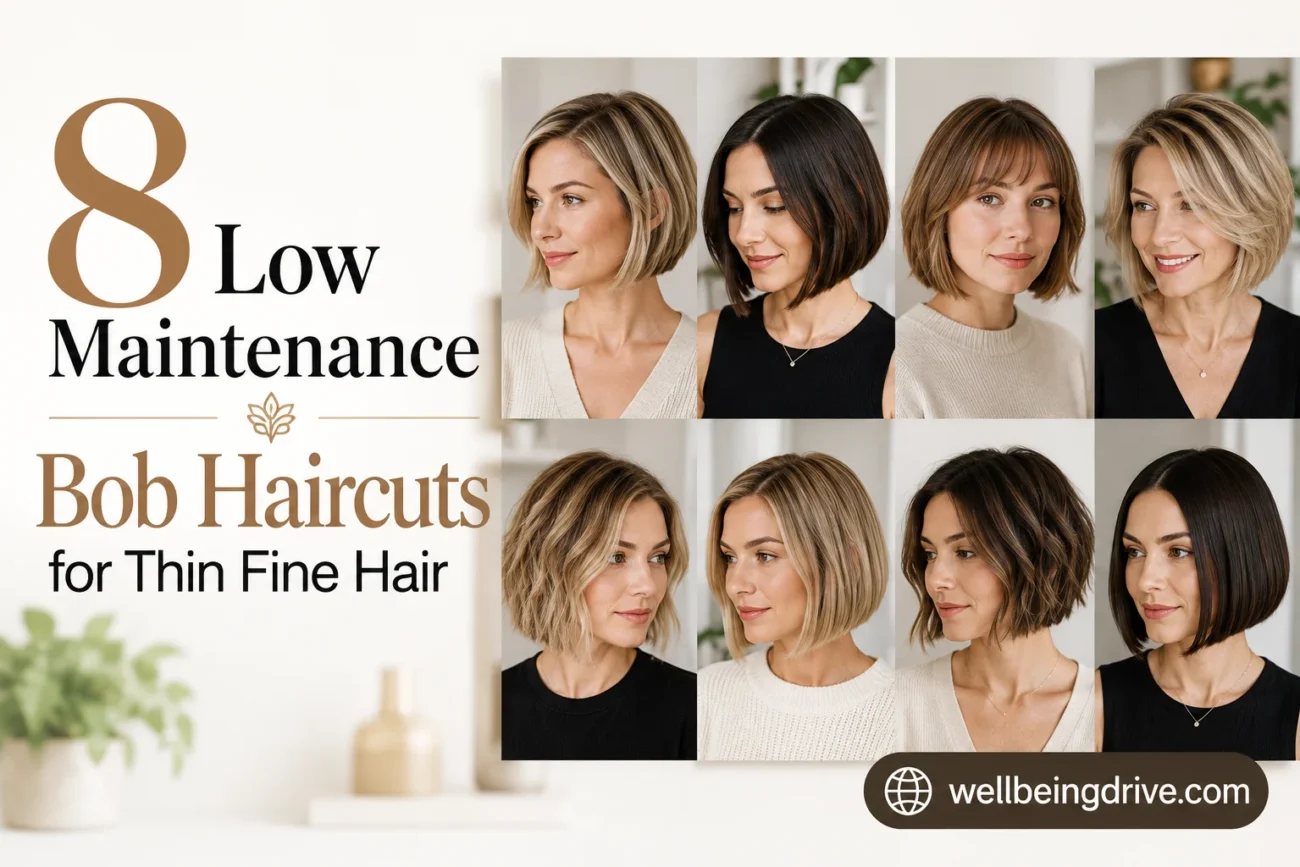
Low Maintenance Bob Hairstyles for Extremely Thin Fine Hair: 8 Cuts That Actually Add Volume
Thin fine hair and a bob are a better match than most people realise. The right cut does in ten minutes what a shelf full of volumising products cannot. Here are the styles that actually work, the ones to avoid, and what to say to your stylist.
Thin fine hair has a few things working against it at longer lengths. Gravity pulls it flat, the ends look transparent, and the more product you add to create volume the faster it collapses. A bob solves most of these problems structurally rather than cosmetically. Shorter length means less weight pulling strands down, a blunt baseline creates the visual illusion of density, and the reduced surface area means air drying is faster and heat styling takes minutes rather than half an hour.
The challenge is knowing which bob actually delivers on its promise for thin hair. Some cuts that look beautiful on social media were shot on hair with double the density. This guide focuses specifically on what works for extremely thin, fine hair, and why each style does what it does.
Why Bobs Work for Thin Fine Hair
Fine hair and thin hair are technically different things but often occur together. Fine hair refers to the diameter of each individual strand. Thin hair refers to the overall density, meaning how many strands you have per square inch of scalp. When both are present, the result is hair that lacks both structural integrity and mass. Length amplifies both problems by adding weight that pulls already lightweight strands flat against the head.
A bob haircut works on fine hair by redistributing the weight of the hair to a single point closer to the ends. When all strands terminate at the same level, the perimeter looks dense and solid even when the individual strands are not. A blunt baseline essentially creates an optical illusion of thickness by pooling the hair’s total weight at the bottom of the cut instead of allowing it to taper and thin out toward the ends. Gravity also has less distance to work against shorter hair, which means roots lift more naturally and maintain volume longer without product.
The other advantage is cut maintenance. Long fine hair hides split ends poorly because transparency at the tips reveals exactly how damaged they are. A bob removes that problem entirely with every trim. The result is hair that looks visibly healthier and more polished simply because the damaged ends are gone, not because anything has been added.
8 Low Maintenance Bob Styles for Thin Fine Hair
Which Style Suits Your Face Shape
The best bob for fine hair is not just about the hair itself. Face shape determines which length and silhouette will be the most flattering, and for people with thin hair who are already managing one limitation, choosing a cut that also suits the face shape means the result works on every level.
What Makes These Styles Low Maintenance
Low maintenance does not mean the cut requires no effort. It means the effort required is minimal and predictable, the hair behaves consistently on most days, and recovery from a bad hair day is quick. For thin fine hair specifically, low maintenance also means the style is forgiving enough that you are not fighting your hair’s natural limitations every morning.
Air-Drying Compatibility
The blunt bob, French bob, collarbone lob, and sleek straight bob all air-dry into a presentable shape with no styling required beyond a light product application. Fine hair dries faster than thick hair, so a bob that air-dries in 20 minutes with acceptable results is genuinely low effort. The styles that require blow-drying for their full effect, specifically the inverted stacked bob, are slightly higher maintenance but still faster to complete than any long-hair styling routine.
Styling Speed
Shorter hair takes less time to heat style, and the bobs on this list are all achievable with a flat iron, a large barrel wand, or a round brush in under 15 minutes once familiar with the technique. For the laziest mornings, a light volumising spray at the roots and air-drying is the entire routine for most of these cuts. For similar reasons the choppy shaggy shoulder length style is another low-effort option worth comparing if you want to keep slightly more length than a traditional bob.
Trim Frequency
Classic and blunt bobs need a trim every 6 to 8 weeks to maintain their shape. A collarbone lob can stretch to 8 to 10 weeks. For very low maintenance scheduling, the Italian bob and collarbone lob grow out the most gracefully, as their slightly imprecise finish means a few weeks of growth looks intentional rather than overgrown. The French bob similarly benefits from a slightly grown-in look.
Products That Help vs Products to Avoid
| Product Type | Fine Hair Verdict | Why |
|---|---|---|
| Lightweight volumising mousse | Use at roots | Adds lift and hold without weighing fine strands down. Apply to damp roots before air-drying or blow-drying. |
| Dry texture spray or sea salt spray | Use through lengths | Adds grit and separation to fine hair without product buildup. Creates the appearance of texture and body on flat strands. |
| Volumising root spray | Use at scalp | Sprayed directly to roots and blown dry, this is the single most effective product for lifting fine hair away from the scalp. |
| Lightweight heat protectant spray | Use before heat | Protects fine strands from heat damage without coating them. Choose a spray rather than a cream formulation. |
| Heavy hair oil or serum | Avoid at roots | Weighs fine strands down immediately. If used, apply only to the ends and in very small amounts. A single drop is usually enough. |
| Thick conditioning masks | Avoid root application | Coat the hair shaft with silicones that reduce natural lift. Apply only mid-length to ends, never to roots or scalp. |
| Wax or pomade | Avoid | Makes fine hair look stringy and clumped. The heavy hold of wax products is unsuitable for the texture and density of fine thin hair. |
| Dry shampoo | Use carefully | Absorbs oil and adds root texture, but buildup on fine hair can cause scalp issues with overuse. Apply sparingly at the roots only and brush through thoroughly. |
The relationship between scalp health and hair density is worth paying attention to alongside styling choices. Certain topical treatments and skincare products that are absorbed through the scalp can affect the hair growth environment over time. For those also managing other scalp or skin concerns, understanding how specific treatments interact with skin and follicle health is useful additional context.
What to Tell Your Stylist
Stylists respond better to specific technical requests than to general descriptions. Bringing a reference photo is helpful, but these phrases communicate the specific outcome you want for fine thin hair and prevent common mistakes that leave fine hair looking sparse rather than full.
“I have very fine, thin hair — please keep the perimeter solid and blunt.” This directly prevents over-thinning the ends, which is one of the most common mistakes on fine hair. A blunt baseline is the single most important technical request for thin hair of any bob length.
“I want internal movement without perimeter layering.” This tells the stylist you want the hair to move and not lie completely flat, but you do not want the ends thinned out. Interior invisible layers add movement through the mid-length without compromising the density of the baseline.
“I want a low maintenance cut that air-dries well.” This is critical context. A stylist who knows you will not blow-dry every day will cut the hair to work with its natural texture rather than against it, choosing a silhouette that holds its shape after air-drying rather than one that only looks right after styling.
“Please do not razor cut the ends.” Razor cutting creates feathered, wispy tips that are the visual opposite of what thin hair needs. It is a common technique stylists use to soften blunt ends, but on fine thin hair it makes the perimeter look even sparser. A scissors-only finish preserves the density of the baseline.
Communicating your hair texture and lifestyle honestly before a cut is as important as the reference photo you bring. The same bob looks different on every person depending on natural texture, growth patterns, and how much time they are willing to invest in styling. For women in the context of broader hair and beauty changes over time, understanding how aging affects hair texture and density and adjusting the cut accordingly is part of getting long-term value from any hairstyle.
Final Thoughts
The right bob for thin fine hair is not about disguising the hair. It is about working with its actual characteristics to produce a result that looks full, healthy, and intentional. A blunt baseline creates visual density. Shorter length removes the weight that flattens fine strands. Lower maintenance comes from choosing a silhouette that behaves predictably after air-drying rather than one that demands daily heat styling to look like the reference photo.
Any of the eight styles on this list achieves both goals when cut correctly. The difference between a great result and a disappointing one usually comes down to the specificity of the conversation with your stylist before the cut begins. Fine hair requires a different cutting approach than thick hair, and the phrases above are the clearest way to communicate that before scissors come anywhere near your head.
For makeup looks that complement the shorter, face-framing effect of a bob, you may also find it useful to explore how to make lashes look longer with mascara, since a bob naturally draws attention upward to the eyes and brows in a way that longer hair does not.
Disclaimer: This article is for informational and styling guidance purposes only. Hair type, texture, and growth patterns vary significantly between individuals. Always consult a qualified professional hairstylist for personalised advice before making significant changes to your hair. If you are experiencing significant hair thinning or hair loss, consult a dermatologist or trichologist to rule out underlying health causes.
Frequently Asked Questions
A bob is one of the best cuts for thin and fine hair. The reduced length removes the weight that pulls fine strands flat, and a blunt baseline creates the visual illusion of density at the ends. The key is the cutting technique: a single-length blunt finish maximises the appearance of thickness, while excessive layering on very fine hair can make ends look wispy. A well-executed bob on thin hair consistently looks fuller than the same hair at longer lengths.
Every 6 to 8 weeks for a classic or blunt bob to maintain the shape and clean baseline. A collarbone lob can stretch to 8 to 10 weeks. For extremely low maintenance scheduling, a collarbone lob or Italian bob grows out the most gracefully because their slightly relaxed finish means a few weeks of growth looks intentional rather than overgrown.
Yes. A skilled stylist works with cowlicks rather than against them. A side part can redirect growth more flatteringly, and slightly longer lengths around a cowlick allow natural movement without fighting the pattern. Curtain bangs help manage irregular growth at the hairline better than blunt fringes. Tell your stylist exactly where your cowlicks are before the consultation so they can factor them into the cut.
Chin to jaw length is the most effective for extremely thin hair. At this length gravity has the least pulling effect on fine strands, and a blunt baseline creates maximum visual density. Collarbone length works well for moderately thin hair. The general rule is the shorter the bob, the more volume it creates, but the more frequently it needs trimming to maintain its shape.
Yes, reliably so. A bob redistributes the weight of fine hair closer to the ends, creating a denser-looking baseline. A blunt baseline especially creates the optical illusion of thickness because all the hair ends at the same point, making the perimeter look solid. Stylist Adam Reed of Arkive Headcare specifically recommends the single-length blunt bob as the cut that creates the most volume for fine hair without heavy product.
For extremely thin hair, layers at the perimeter should be avoided. Cutting through thin ends creates wispy, translucent tips that look sparse. Interior invisible layers through the mid-length can add movement without compromising the solid baseline. Ask your stylist specifically for internal movement without perimeter layering if you have very fine hair.
Avoid heavy oils, thick serums applied to roots, silicone-heavy products, waxes, and pomades. These weigh down fine hair and make it look limp within hours. Lightweight mousse, volumising root spray, and dry texture spray applied at the roots are the best-suited products for maintaining volume and body in fine thin hair throughout the day.
Disclaimer: WellbeingDrive provides health information for educational purposes only. Do not use this content as a substitute for professional medical advice. Consult your doctor before making health related decisions.