
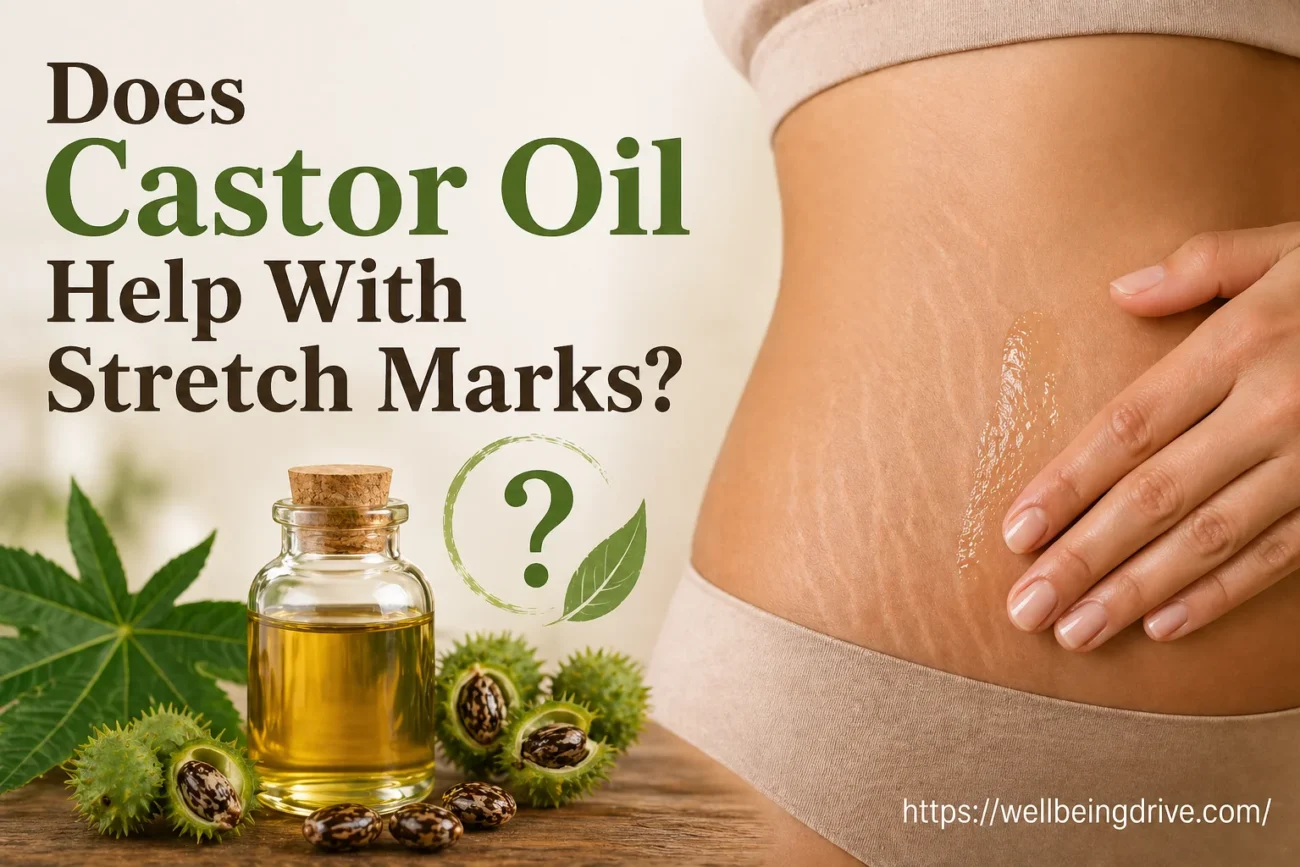
Does Castor Oil Help With Stretch Marks? What the Skin Science Actually Says
Short answer: probably yes, but not in the way most of the internet describes. The longer answer involves understanding what stretch marks actually are, what castor oil genuinely does to skin, and why the difference between new and old marks changes everything about what you can realistically expect.
The Honest Verdict First
There are no clinical trials that have tested castor oil specifically on stretch marks. That is the most important sentence in this article, and almost no other piece covering this topic leads with it. What exists is a solid body of evidence about castor oil’s skin properties — deep moisturisation, anti-inflammatory action, collagen support, wound-healing potential — and from those properties, a reasonable argument can be made that it helps.
Castor oil will not remove stretch marks. No topical product does. What it can do — with consistent use over weeks — is reduce the visibility of newer marks, keep the skin around them supple, reduce redness and inflammation in fresh stretch marks, and support the skin’s natural repair process. Results are better the earlier you start. On old, white, fully healed marks, improvement is minimal.
What Stretch Marks Actually Are
Understanding what you are trying to treat matters more than most people realise when it comes to setting expectations for any treatment.
Stretch marks — medically called striae distensae — are not surface-level skin discolouration. They are scars in the dermis, the middle layer of your skin that sits below the visible surface. When skin stretches rapidly — during pregnancy, puberty, weight gain, or muscle growth — the collagen and elastin fibres in the dermis tear. The skin heals from the inside out, and what remains on the surface is a stretch mark.
This distinction is why so many people try castor oil on old white stretch marks and feel it did nothing, while others who use it on new red ones report visible improvement. They are not wrong — they are just treating different stages of the same condition.
What Castor Oil Actually Does to Skin
Castor oil is extracted from the seeds of the Ricinus communis plant. Around 90 percent of it is made up of a monounsaturated fatty acid called ricinoleic acid — a compound that is genuinely unusual in the plant world and responsible for most of castor oil’s skin benefits.
Here is what the actual skin science says about each of its properties:
| Property | What It Means for Stretch Marks | Strength of Evidence |
|---|---|---|
| Deep Moisturisation | Ricinoleic acid acts as a humectant and emollient — it attracts moisture and fills gaps in the skin barrier. Well-hydrated skin is more elastic and stretch marks on moisturised skin appear less pronounced and fade more evenly. | Well Established |
| Anti-Inflammatory Action | Ricinoleic acid inhibits prostaglandin E2 receptors, reducing inflammation. On new red or purple stretch marks — which are inflamed — this can reduce redness and help the skin heal with less visible scarring. | Supported by Research |
| Collagen Protection | Castor oil is rich in Vitamin E (tocopherols), which neutralises free radicals generated by UV radiation and pollution. Free radicals degrade collagen and elastin — the fibres that tear to form stretch marks. Protecting these fibres may reduce severity. | Supported by Research |
| Wound Healing | One study on daily application of castor oil to a wound in an animal model showed significantly accelerated tissue repair. Extrapolating to human stretch marks is a stretch — but the mechanism points toward possible dermal repair benefits. | Limited — Animal Study Only |
| Direct Stretch Mark Reduction | No clinical trial exists specifically testing castor oil on stretch marks. The evidence for this specific claim is anecdotal and extrapolated from the above properties. | No Direct Clinical Evidence |
A 2018 review of existing research found that no topical product — including prescription creams — has been proven definitively better than another at either preventing or removing stretch marks. The most honest summary: consistent moisturisation with any quality oil or cream reduces appearance over time. Castor oil is one of the better options for this — but managing expectations is part of using it correctly.
New vs. Old Marks: Where Castor Oil Makes a Real Difference
Given everything above, the most practical way to think about castor oil for stretch marks is this:
How to Use Castor Oil on Stretch Marks Correctly
Most people who feel castor oil did not work for them applied it incorrectly — usually too little, too infrequently, or without the massage component that may be as important as the oil itself.
Apply daily for new stretch marks, or at minimum three to four times per week. The American Academy of Dermatology recommends allowing several weeks before assessing any topical treatment for stretch marks. Most people who report results with castor oil had been using it consistently for four to eight weeks. Using it twice and expecting visible change will always disappoint.
Combinations That Work Better Than Castor Oil Alone
Castor oil is thick and slow-absorbing. Blending it with other skin-supportive ingredients improves both its usability and its effect on stretch marks. These four combinations have the most practical evidence behind them.
What Castor Oil Cannot Do — and What Can
Being clear about limitations is as useful as knowing the benefits. If your goal is significant, lasting reduction of deep or old stretch marks, castor oil is a supportive tool rather than a primary treatment. The dermatological options that have proper clinical evidence behind them are worth knowing about.
Tretinoin (prescription retinoid) — the most evidence-backed topical for new stretch marks. Works by stimulating collagen production in the dermis. Prescription only, not suitable during pregnancy. Laser therapy — pulsed dye lasers reduce redness in new marks; fractional laser improves texture of older marks. Multiple sessions required. Microneedling — creates micro-injuries that trigger collagen remodelling. Works on both new and established stretch marks over a course of treatments. None of these eliminate marks entirely, but they produce more measurable improvement than topical oils in clinical settings. According to the American Academy of Dermatology, no treatment can make stretch marks disappear completely — the goal is always improvement, not elimination.
What to Buy — Choosing the Right Castor Oil
Not all castor oil is the same. The refining process significantly affects the concentration of ricinoleic acid and natural antioxidants that make it useful for skin.
Castor oil is often credited with beneficial effects on stretch marks, but no scientific study has so far been conducted specifically on this use. It is true that castor oil has moisturising, protective, and antioxidant properties that could be useful in preventing the appearance of stretch marks.
Typology Skincare — Chemical Engineer Editorial Review, updated October 2024That is an honest summary from a skincare formulator’s perspective, and it holds. Castor oil is not overhyped snake oil and it is not a miracle treatment. It is a well-characterised skin ingredient with genuine moisturising and anti-inflammatory properties, used correctly on the right type of stretch marks, with realistic expectations. For the cost of a bottle of good cold-pressed castor oil, it is a sensible addition to any stretch mark routine — particularly on newer marks, during pregnancy, or as part of a consistent daily massage practice.
Frequently Asked Questions
Castor oil can reduce the visibility of stretch marks — particularly newer ones — through deep moisturisation, anti-inflammatory properties, and possible collagen support. However, no clinical trial has specifically tested castor oil on stretch marks. The evidence is drawn from its known skin properties and anecdotal reports. It will not remove stretch marks, but consistent daily use on new marks can make them less visible as they heal.
Most people who see results report noticing improvement after four to eight weeks of consistent daily use. The American Academy of Dermatology recommends allowing several weeks before assessing any topical treatment for stretch marks. Results are more noticeable on newer, red or purple marks than on older, white or silver ones. Using it twice and expecting visible change will always disappoint — consistency is the determining factor.
Cold-pressed, hexane-free, organic castor oil preserves the highest concentration of ricinoleic acid and natural antioxidants. Look for 100 percent pure Ricinus communis seed oil with no added ingredients, fragrances, or preservatives. The oil should be pale yellow with a mild smell. Jamaican black castor oil is a popular alternative that works through a similar mechanism and is well-regarded for skin use.
Castor oil may help reduce the severity of pregnancy stretch marks by keeping skin well-moisturised and supple as it stretches rapidly. Applying to the abdomen, breasts, hips, and thighs from the second trimester onwards is a common preventive approach. No topical product has been proven to fully prevent stretch marks — genetics and the rate of stretching are the primary determining factors. Always consult your doctor before using any topical during pregnancy.
Yes, for most people. Castor oil has a low comedogenic rating of 0 to 1, meaning it is unlikely to clog pores despite its thick consistency. It does not contain ricin after processing. Perform a patch test on a small area of skin first — some people experience irritation or mild allergic reactions. Avoid use on broken, infected, or sunburned skin.
Skincare Disclaimer: This article is for informational purposes only. It does not constitute medical or dermatological advice. Stretch marks are a normal and common occurrence. If you have concerns about your skin or are pregnant, consult a qualified dermatologist or healthcare provider before beginning any new skincare treatment. Information sourced from Healthlineand the American Academy of Dermatology.
Disclaimer: WellbeingDrive provides health information for educational purposes only. Do not use this content as a substitute for professional medical advice. Consult your doctor before making health related decisions.