
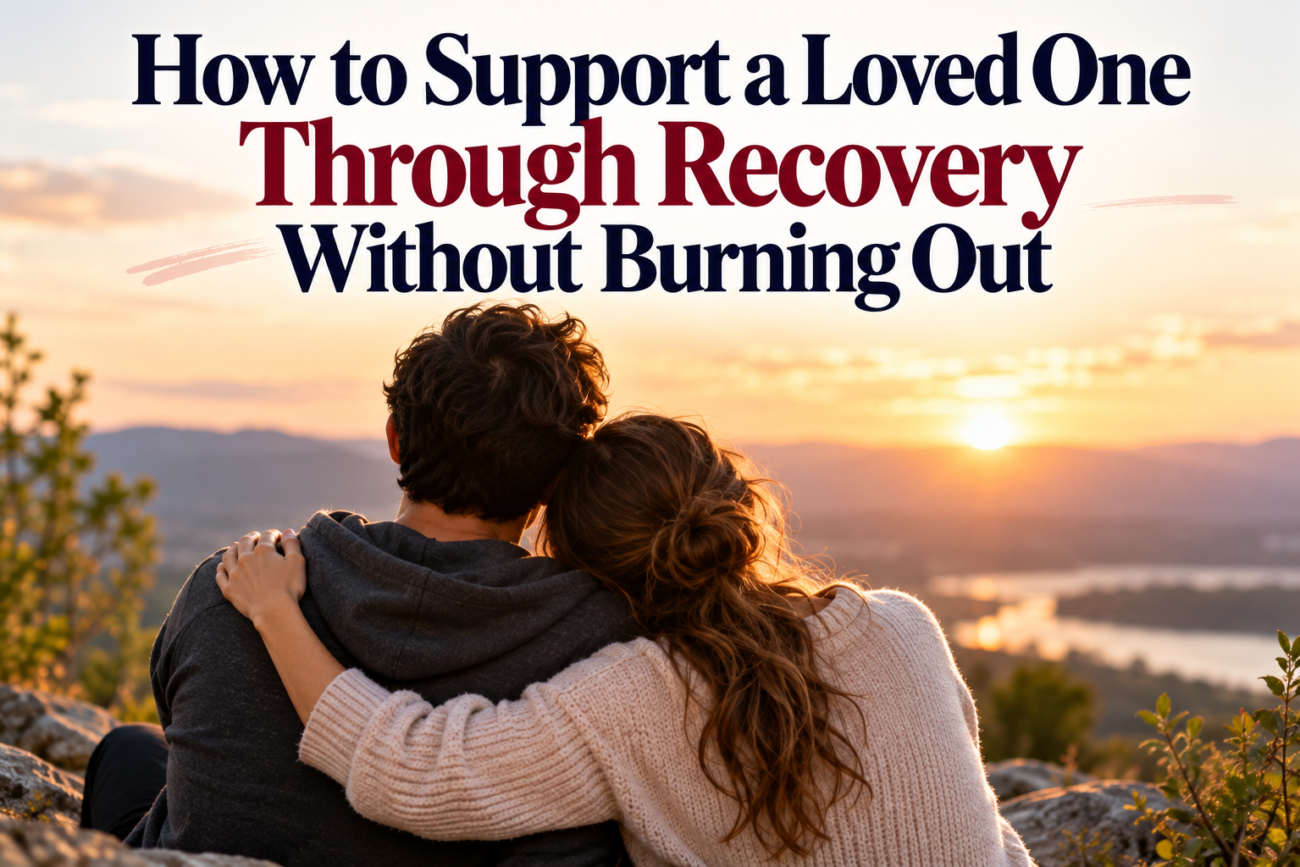
The Weight You’re Carrying Isn’t Yours Alone.
When someone you love is struggling with addiction or mental health challenges, you naturally want to help. You research treatment options at 2 AM, rearrange your schedule for their appointments, and hold your breath every time your phone rings. But somewhere between being supportive and being consumed, you’ve noticed something shifting inside you—exhaustion that sleep doesn’t fix, resentment you’re ashamed to admit, and a nagging question: “Am I doing this right?”
Supporting someone through recovery is one of the most emotionally demanding experiences you’ll face. It’s also one where you receive the least guidance. While treatment programs focus on helping your loved one heal, you’re often left navigating your own emotional landscape without a map. The truth is, you can’t pour from an empty cup, and learning to support someone without losing yourself isn’t selfish—it’s essential for both of you.
Understanding What Recovery Really Looks Like
Before you can effectively support someone, you need to recalibrate your expectations about what recovery involves. Many people envision a linear path: treatment begins, progress happens steadily, and life returns to normal. Real recovery rarely follows this script.
Recovery is more like learning to walk after a serious injury. There will be days of remarkable progress followed by setbacks that feel devastating. Your loved one might seem motivated one week and completely shut down the next. They might complete a program successfully, then struggle months later when stress hits. This isn’t failure—it’s the nature of healing from addiction and mental health disorders.
Understanding this reality helps you prepare emotionally. When you expect a straight line and encounter zigzags, you interpret setbacks as catastrophes. When you understand that recovery involves cycles of progress and challenge, you can respond with steadiness rather than panic. This doesn’t mean accepting harmful behavior or abandoning boundaries. It means recognizing that healing takes time and rarely happens on your preferred timeline.
The Boundaries That Actually Help
You’ve probably heard you need boundaries, but what does that actually mean when you’re watching someone you love struggle? Boundaries aren’t walls you build to keep someone out—they’re guidelines that protect your wellbeing while still allowing connection.
Effective boundaries in recovery support look different than you might expect. They’re not ultimatums delivered in anger or rules designed to control someone else’s behavior. Instead, they’re clear statements about what you will and won’t do, based on your own capacity and values.
For example, you might decide you’ll attend family therapy sessions but won’t engage in daily crisis management calls that leave you unable to function at work. You might offer to drive your loved one to treatment appointments but won’t loan money that could enable substance use. You might listen when they want to talk about their struggles but won’t accept verbal abuse, even when they’re having a difficult day.
The hardest part about boundaries isn’t setting them—it’s maintaining them when your loved one pushes back. People in active addiction or mental health crisis often resist boundaries because they’ve learned that persistence or emotional escalation gets them what they want. Your consistency matters more than your perfection. If you set a boundary and then cave under pressure, you’ve taught them that boundaries are negotiable. If you hold steady with compassion, you demonstrate that you mean what you say while still caring about them.
Remember that boundaries protect relationships rather than damage them. When you’re resentful and exhausted from overextending yourself, you can’t show up as the supportive presence your loved one needs. Boundaries allow you to stay engaged for the long haul.
Navigating Different Levels of Care
Recovery often involves multiple levels of treatment, and understanding these can help you support your loved one more effectively. The journey typically doesn’t start and end with a single program—it’s a continuum that meets people where they are and adjusts as they progress.
Medical detox usually comes first when someone is physically dependent on substances. This supervised withdrawal process addresses the immediate physical dangers and discomfort of stopping substance use. It’s a critical foundation, but it’s just the beginning—detox alone doesn’t address the underlying reasons someone started using or provide skills for staying sober.
After detox, many people benefit from residential treatment or partial hospitalization programs that provide intensive daily support while they develop coping strategies and begin addressing root causes. These structured environments remove people from triggering situations while they build a foundation for recovery.
As stability increases, treatment often transitions to less intensive formats. This is where programs like the intensive outpatient guide become relevant—offering several hours of treatment per week while allowing people to maintain work, school, or family responsibilities. These programs strike a balance between ongoing support and real-world application of recovery skills.
Eventually, standard outpatient care and aftercare support help people maintain their recovery long-term. This might include weekly therapy, support groups, medication management, or alumni programming that keeps people connected to recovery resources.
Understanding this continuum helps you recognize that stepping down to a less intensive level isn’t abandoning treatment—it’s progressing. It also helps you appreciate that recovery requires sustained support over time, not just a single intervention.
Managing Your Own Emotional Reactions
Your feelings about your loved one’s addiction or mental health struggles are probably complicated. You might feel guilty for past mistakes, angry about current situations, fearful about the future, and exhausted by the whole situation—sometimes all within the same hour.
These reactions are normal, but they can interfere with effective support if you don’t process them. Unexamined guilt might lead you to overcompensate by enabling harmful behavior. Unaddressed anger might cause you to withdraw support when your loved one needs it most. Unchecked fear might drive you to control rather than support.
Creating space to process your own emotions is essential. This might mean working with a therapist who specializes in family systems and addiction, attending support groups for families (like Al-Anon or Nar-Anon), or simply giving yourself permission to feel what you feel without judgment.
One of the most liberating realizations in this process is understanding what you can and cannot control. You cannot control whether your loved one chooses recovery. You cannot control whether they stay sober. You cannot control whether treatment works for them. You can control how you respond, what boundaries you set, how you care for yourself, and whether you remain available for connection.
Accepting this limited sphere of control doesn’t mean giving up or not caring. It means directing your energy toward the things you can actually influence rather than exhausting yourself trying to force outcomes you can’t guarantee.
Communication Strategies That Actually Work
How you talk to your loved one about their recovery matters enormously. Certain communication patterns help, while others create defensiveness and distance—even when your intentions are good.
Avoid leading with criticism or lectures, even when you’re frustrated. Starting conversations with “You always…” or “You never…” immediately puts people on the defensive. Instead, try expressing your observations and feelings: “I noticed you seemed withdrawn this week, and I’m concerned about how you’re doing.”
Ask questions rather than making assumptions. Instead of “You’re not taking your recovery seriously,” try “What’s been challenging for you lately?” or “How can I support you right now?” These questions create space for honest conversation rather than triggering shame and defensiveness.
Listen more than you talk. When your loved one does open up, resist the urge to immediately problem-solve or offer advice. Sometimes people need to be heard more than they need solutions. Practice reflecting back what you hear: “It sounds like you’re feeling overwhelmed by all the changes you’re trying to make.”
Be specific with your support offers. “Let me know if you need anything” sounds helpful but it’s vague and puts the burden on them to ask. Instead, try specific offers: “I’m free Tuesday afternoon if you’d like company at your appointment” or “I’m making dinner this weekend—can I bring some by for you?”
Celebrate progress without creating pressure. Acknowledge the effort your loved one is making: “I’m proud of you for going to group even when you didn’t feel like it.” Avoid comparisons or expectations: “You’re doing so well—I knew you could do this!” The second statement, while positive, creates pressure to maintain perfection and can make setbacks feel like personal failures.
When to Step In and When to Step Back
One of the most difficult aspects of supporting someone in recovery is knowing when to intervene and when to allow them to experience natural consequences. This balance shifts depending on the situation, and there’s no perfect formula.
Generally, you should step in when there’s immediate danger—threats of suicide, severe medical symptoms, or situations where someone is incapacitated and unsafe. These are times when intervention isn’t enabling; it’s potentially life-saving.
You should also consider stepping in when someone is genuinely asking for help and you have the capacity to provide it in a healthy way. If your loved one says “I’m struggling and I think I need more support,” helping them connect with resources isn’t enabling—it’s supporting their self-awareness and willingness to seek help.
Step back when your help would shield them from natural consequences that might motivate change. If your loved one loses a job due to substance use and you immediately offer to pay their bills, you’ve removed a consequence that might have prompted them to seek treatment. This doesn’t mean being cruel or abandoning them—it means allowing reality to provide feedback.
Also step back when helping would require you to violate your own boundaries or wellbeing. If supporting your loved one means sacrificing your financial security, your other relationships, or your mental health, you’ve crossed from support into self-destruction. You can care about someone while still protecting yourself.
Building Your Own Support System
You cannot support someone through recovery if you’re isolated and depleted. Building your own support system isn’t optional—it’s essential.
Start by identifying people in your life who understand what you’re going through. This might include other family members, friends who’ve supported loved ones through similar situations, or support groups specifically for families affected by addiction and mental health issues.
Consider professional support for yourself. A therapist can help you process complex emotions, develop healthy coping strategies, and maintain perspective during difficult times. This isn’t a luxury—it’s a practical tool for staying emotionally healthy while navigating a challenging situation.
Don’t neglect activities and relationships that replenish you. When you’re worried about a loved one, it’s easy to put everything else on hold. But maintaining hobbies, friendships, and activities that bring you joy isn’t selfish—it’s what allows you to remain a stable, supportive presence.
Set aside time that’s completely separate from your loved one’s recovery. This might mean establishing one evening a week where you don’t discuss treatment, symptoms, or progress. It might mean taking a weekend away to recharge. These breaks don’t mean you care less—they mean you’re taking care of yourself so you can continue caring effectively.
Handling Setbacks and Relapses
If your loved one experiences a setback or relapse, your response matters enormously. How you react in these moments can either support their return to recovery or deepen their shame and isolation.
First, remember that setbacks are common in recovery, not signs of failure. Research shows that relapse rates for addiction are similar to those for other chronic conditions like diabetes or hypertension. This doesn’t make relapse acceptable or consequence-free, but it does mean it’s a potential part of the recovery process rather than proof that treatment doesn’t work.
When a setback happens, avoid the extremes of either minimizing it (“It’s no big deal, everyone slips up”) or catastrophizing it (“You’ve ruined everything”). Instead, acknowledge reality clearly: “This is serious, and I’m concerned. What do you need to get back on track?”
Help your loved one reconnect with their support system quickly. The period immediately after a setback is when shame and hopelessness can derail recovery entirely. Encouraging them to contact their therapist, sponsor, or treatment team—and offering practical help like transportation if needed—can interrupt this spiral.
Examine what led to the setback without blame. Understanding triggers—whether they were emotional, environmental, or social—helps your loved one develop better strategies for the future. This isn’t about excusing the behavior; it’s about learning from it.
Recommit to your boundaries. A setback doesn’t mean your boundaries disappear. In fact, maintaining them becomes even more important. You can express concern and offer specific support while still protecting yourself from enabling or being pulled into chaos.
Recognizing Your Own Warning Signs
Supporting someone through recovery can gradually erode your own wellbeing in ways you might not notice until you’re in crisis. Learning to recognize your own warning signs allows you to course-correct before you reach complete burnout.
Physical symptoms often appear first. You might notice persistent fatigue, changes in appetite, frequent headaches, or difficulty sleeping. These aren’t just stress—they’re your body signaling that you’re exceeding your capacity.
Emotional warning signs include feeling constantly anxious or on edge, experiencing mood swings, feeling numb or disconnected, or having difficulty feeling joy in activities you normally enjoy. If you find yourself dreading interactions with your loved one or feeling resentful more often than compassionate, these are signals you need more support.
Behavioral changes matter too. Are you withdrawing from friends? Neglecting your own health appointments? Using substances more frequently to cope? Avoiding activities you used to enjoy? These patterns indicate you’re depleting your resources without replenishing them.
When you notice these warning signs, treat them seriously. Adjust your boundaries, increase your own support, or temporarily step back from certain responsibilities. Taking care of yourself isn’t abandoning your loved one—it’s ensuring you’ll be able to support them sustainably over time.
The Long View: Recovery as a Lifestyle
Eventually, if recovery takes hold, you’ll need to adjust your understanding of what “recovered” means. Recovery isn’t returning to how things were before addiction or mental health challenges emerged. It’s building a new way of living that supports ongoing wellness.
This means your loved one will likely need to maintain certain practices indefinitely—therapy, support groups, medication, lifestyle changes. Your role shifts from crisis management to supporting sustainable wellness. This might feel anticlimactic if you’ve been waiting for a moment when everything is “fixed,” but it’s actually a positive sign that recovery is becoming integrated into daily life.
Your relationship will also need to evolve. Patterns you developed during active addiction or acute mental health crisis won’t serve you once stability is established. You might need to renegotiate boundaries, rebuild trust gradually, or create new ways of connecting that aren’t centered on problems and solutions.
This transition can be surprisingly difficult. When your identity has been wrapped up in helping someone through crisis, it can feel disorienting when they need you less intensely. This is actually the goal—your loved one becoming more self-sufficient and stable—but it requires you to rediscover who you are beyond the caregiver role.
Finding Meaning in the Journey
Supporting someone through recovery is exhausting, heartbreaking, and often thankless work. But many people who’ve walked this path also describe it as transformative in unexpected ways.
You might discover strengths you didn’t know you had—resilience, patience, the ability to hold space for someone else’s pain without trying to fix it. You might develop deeper empathy and understanding of human struggle. You might learn to set boundaries and prioritize your own wellbeing in ways that improve all your relationships.
These silver linings don’t make the difficulty worthwhile or erase the pain. But they can coexist with the hardship. You can simultaneously wish this weren’t happening and recognize how you’re growing through it.
Remember that your worth isn’t determined by whether your loved one achieves lasting recovery. You cannot control their choices, and their struggles are not your failure. What you can control is showing up as your best self—boundaried, compassionate, and committed to your own wellbeing alongside theirs.
Recovery is possible, and your support matters. But it matters most when it comes from a place of sustainability rather than self-sacrifice. Take care of yourself with the same compassion you’re extending to your loved one. You both deserve it.
Disclaimer: WellbeingDrive provides health information for educational purposes only. Do not use this content as a substitute for professional medical advice. Consult your doctor before making health related decisions.