
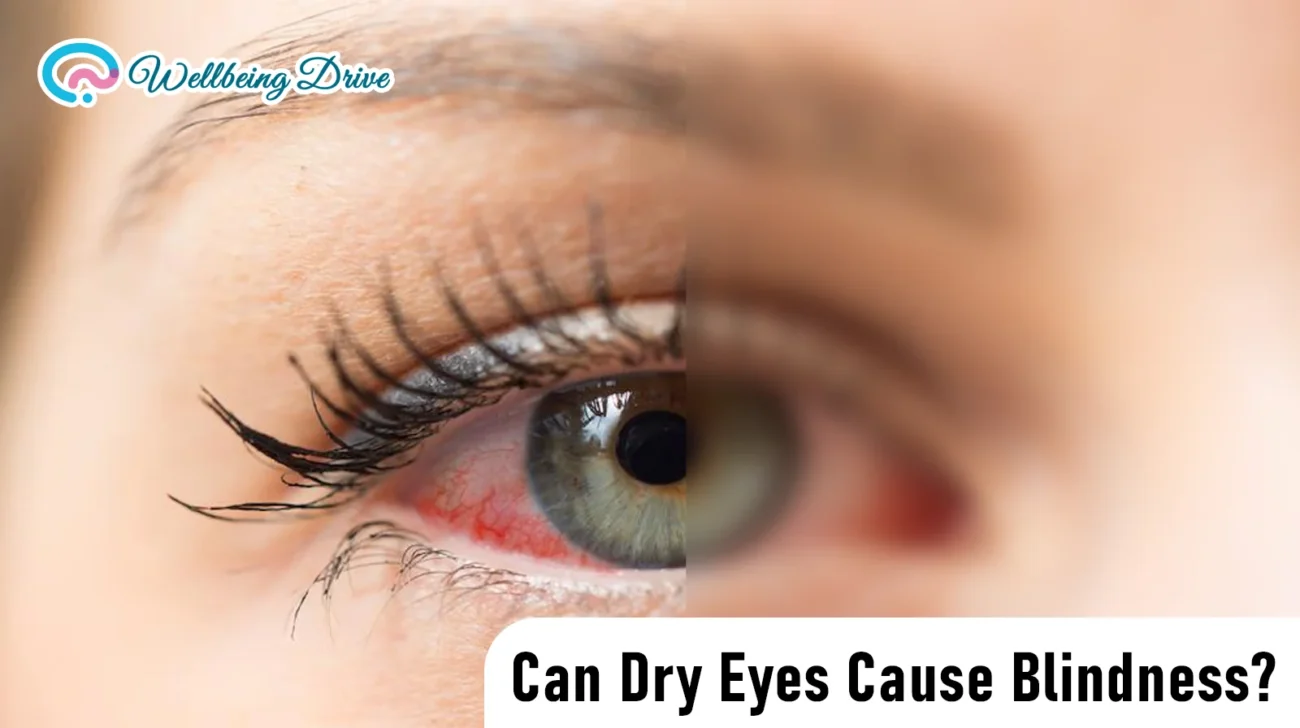
Can Dry Eyes Cause Blindness? What Chronic Dry Eye Really Does to Your Vision
Complete blindness from dry eye alone is rare. But permanent vision loss from untreated dry eye disease is not — and understanding the difference between those two things is exactly what this article covers.
Most people with dry eyes have learned to live with the discomfort. A burning sensation after staring at a screen for too long, a gritty feeling that comes and goes, vision that blurs briefly then clears with a blink. For the vast majority, dry eye disease stays in this manageable zone. But a meaningful minority of people with chronic, untreated dry eye follow a different path entirely, one that ends with real, documented, and in many cases permanent damage to their vision.
The question of whether dry eyes can cause blindness is not dramatic. It reflects a reasonable concern, particularly for anyone who has been dealing with persistent symptoms and is not getting better. The answer requires more than a simple yes or no, because the actual risk sits in the territory between “harmless nuisance” and “complete loss of sight” — and that territory is where most of the important clinical information lives.
The Direct Answer
Total blindness caused by dry eye disease alone is uncommon. What is far more clinically significant is the intermediate risk: corneal scarring, ulceration, and chronic surface inflammation that can permanently reduce visual clarity in people whose dry eye goes unmanaged. According to the American Academy of Ophthalmology, corneal ulcers resulting from severe dry eye can permanently damage vision and even cause blindness if not treated promptly. A 2022 peer-reviewed review in Cureus, published through the NIH, identifies dry eye disease specifically as a predisposing cause of corneal blindness alongside infections and trauma.
The practical takeaway is this: dry eye disease that is caught, monitored, and treated appropriately carries a very low risk of vision loss. Dry eye disease that is ignored for months or years, particularly in people with underlying inflammatory or autoimmune conditions, carries a risk that is neither theoretical nor trivial.
What Dry Eye Disease Actually Is
Dry eye disease, clinically known as keratoconjunctivitis sicca, occurs when the eyes either fail to produce enough tears or produce tears that evaporate too quickly. Both lead to the same outcome: a tear film that cannot adequately protect and nourish the eye’s surface.
The tear film is a precisely layered structure of water, oils, and mucus. It lubricates every blink, clears debris, delivers oxygen directly to the cornea, and maintains the smooth optical surface that makes sharp vision possible. Without a stable film, the cornea is repeatedly exposed between blinks.
There are two distinct types. Aqueous deficient dry eye, where the lacrimal glands produce insufficient tear volume, and evaporative dry eye, which is actually more prevalent and stems from Meibomian gland dysfunction. The Meibomian glands, located along the rim of the eyelids, produce the oily outer layer of the tear film that slows evaporation. When these glands become blocked or begin to atrophy, tears evaporate faster than they are replenished, leaving the corneal surface exposed even when tear production is technically normal. Many patients have a combination of both types, which is one reason dry eye can be frustratingly resistant to a single treatment approach.
How the Cornea Gets Damaged
The cornea is the transparent dome at the front of the eye, responsible for approximately two thirds of the eye’s total focusing power. Unlike most body tissues, it contains no blood vessels. It receives oxygen and nutrients almost entirely from the tear film, which makes it uniquely dependent on adequate lubrication for survival.
When the tear film breaks down repeatedly, exposed areas of the corneal surface begin to dry within seconds of a blink. The body responds to this micro-damage with inflammation. A single episode causes no lasting harm. But repeated cycles of drying, surface injury, and inflammatory response gradually compromise the cornea’s structural integrity in ways that accumulate quietly over time.
Chronic inflammation can penetrate deeper corneal layers, progressing from surface stress to keratitis (inflammation of the cornea itself), then to ulceration — open sores on the corneal surface — and in advanced cases, to scarring. Scar tissue on the cornea is opaque. It distorts or blocks the passage of light through the eye in ways that cannot always be corrected with glasses or contact lenses. If you are already dealing with vision concerns and wondering whether updating your lenses might help with clarity issues, it is worth noting that blur caused by corneal surface irregularity often does not respond to lens changes the way standard refractive errors do.
A less discussed complication is corneal neovascularization. When the cornea is chronically starved of oxygen due to tear film failure, the body attempts to compensate by growing new blood vessels into corneal tissue. The cornea is avascular by design, meaning those new vessels reduce its optical clarity, increase inflammatory risk, and complicate any future surgical intervention.
There is a minimum amount of lubrication that the cornea needs to stay clear. At the severe end, you can actually cause structural damage that is sometimes permanent.
Dr. Diaz, Ophthalmologist — as cited by Health Central, December 2025From Mild Irritation to Serious Risk
Dry eye does not jump from occasional discomfort to vision-threatening damage overnight. It moves along a spectrum, and most people’s experience remains toward the milder end. Understanding where a particular case sits on that spectrum is what determines how urgently it needs professional attention.
At the mild end, the effects are confined to discomfort and intermittent blurred vision. The tear film instability causes light to refract unevenly across the eye surface, producing the foggy or fluctuating vision that clears temporarily with blinking. This is a functional problem, not a structural one, and it resolves when the tear film is adequately supported through treatment.
In moderate disease, surface staining becomes visible under clinical examination. The corneal epithelium shows signs of cumulative stress. Vision fluctuates more significantly and does not always clear with blinking or lubricating drops. At this stage, the trajectory matters: moderate dry eye that is treated appropriately rarely progresses to serious damage. Moderate dry eye that continues without meaningful intervention is where risk begins to accumulate.
Severe chronic dry eye, particularly in the presence of underlying autoimmune disease or prolonged neglect, is where vision-threatening complications become genuinely possible. Corneal ulceration at this stage can develop rapidly. Without prompt treatment, ulcers spread, destroy corneal tissue, and produce scarring that permanently reduces the clarity of sight. In the most severe cases, corneal transplant surgery becomes the only viable path to recovering usable vision.
Who Faces the Highest Risk
The gap between manageable dry eye and vision-threatening dry eye is largely determined by individual risk factors. For people with mild symptoms and no complicating conditions, the risk of serious vision loss with basic treatment is very low. For specific groups, that calculus is meaningfully different.
Symptoms That Need Urgent Attention
The everyday symptoms of dry eye — the gritty sensation, the burning after screen use, the light sensitivity in bright environments — are uncomfortable but not urgent in the same way as those listed below. The distinction matters because acting on the wrong set of symptoms with the wrong level of urgency is one of the main reasons dry eye progresses to serious damage.
These symptoms may indicate corneal ulceration or active infection. Both conditions can cause permanent vision damage within days if left untreated. Lubricating drops will not resolve them. Do not wait for a routine appointment.
Sharp or persistent eye pain that differs from the usual dry eye discomfort. Corneal ulcers are distinctly painful in a way that surface irritation is not. The pain tends to be constant, deep, and unrelieved by blinking or applying drops.
Vision that remains blurred regardless of blinking, resting the eyes, or using lubricating drops. Persistent blur that is new, or that has worsened noticeably over days, suggests structural change rather than tear film fluctuation.
Visible white, grey, or cloudy patches on the cornea. These can represent ulceration, infection, or early scarring. They are sometimes visible without medical equipment and always warrant same-day assessment.
Eye discharge combined with significant redness and pain. Standard dry eye does not produce discharge. When it appears alongside the other symptoms above, it changes the clinical picture from surface irritation to likely infection.
Sudden or rapidly intensifying light sensitivity. Photophobia that develops quickly and is more severe than previous experience with dry eye suggests active corneal inflammation at a deeper level than typical surface disease. Women who notice that fluctuating hormones are affecting their overall symptom experience may find it useful to read about how aging and hormonal shifts affect surface tissues more broadly, as the mechanisms overlap with what happens to the ocular surface over time.
Treatment Options That Protect Vision
Treatment for dry eye disease is not one-size-fits-all. The right approach depends on severity, the underlying cause, and whether the primary issue is insufficient tear production or excessive evaporation. What follows covers the evidence-based options across the spectrum, from self-managed to clinically supervised.
| Treatment | Best Suited For | Key Clinical Notes |
|---|---|---|
| Preservative-free artificial tears | Mild to moderate dry eye | Use preservative-free formulations if applying more than four times daily. Preserved drops contain benzalkonium chloride, which is toxic to the corneal surface with frequent exposure and can worsen the condition it is meant to treat. |
| Warm compresses and lid hygiene | Meibomian gland dysfunction | Daily warm compresses applied for five to ten minutes soften blocked meibum and improve gland expressibility. Lid scrubs reduce bacterial biofilm on the lid margin. Effective, low-cost, and consistently underused by patients. |
| Omega-3 fatty acid supplementation | Evaporative dry eye | Evidence is mixed but supports a modest benefit on tear film quality and ocular surface inflammation. A three-month trial with monitoring is a reasonable approach before concluding whether supplementation helps individually. |
| Cyclosporine eye drops (prescription) | Moderate to severe inflammatory dry eye | Targets the inflammatory component of dry eye rather than simply lubricating. Full effect typically takes three to six months. Requires prescription. One of the most evidence-backed options for chronic moderate disease. |
| Punctal plugs | Aqueous deficient dry eye | Small silicone plugs inserted into the tear drainage ducts slow tear drainage and increase tear volume on the eye surface. Reversible, well-tolerated, and effective for patients whose primary issue is insufficient tear production rather than poor quality. |
| Intense pulsed light (IPL) therapy | Meibomian gland dysfunction | Targets abnormal blood vessels around the eyelid margin that contribute to chronic gland inflammation. Growing evidence base. Multiple sessions required. Increasingly available through specialist dry eye clinics. |
| Autologous serum eye drops | Severe or treatment-resistant dry eye | Made from the patient’s own blood serum, which contains growth factors that support corneal healing and surface regeneration. Used when standard treatments are insufficient, particularly in post-surgical or autoimmune dry eye cases. |
Environmental and behavioural adjustments support whatever medical treatment is being used. Humidifying indoor air reduces evaporative stress on the tear film. Following the 20-20-20 rule during screen use (every 20 minutes, look at something 20 feet away for 20 seconds) helps restore blink rate and reduces tear film disruption. Avoiding direct airflow from fans or air conditioning over the eyes, and protecting them with wraparound glasses in dry or windy conditions, reduces the environmental burden on an already compromised surface.
For people whose dry eye has progressed to significant corneal scarring despite treatment, corneal transplant surgery can restore usable vision in selected cases. According to the Research to Prevent Blindness organisation, corneal damage from dry eye disease is one of the documented pathways to corneal blindness, and transplantation — while often successful — carries its own risks including immune rejection over time. It represents the outcome of years of inadequately managed disease, not a routine treatment option.
Key Takeaways
Dry eye disease sits in an uncomfortable position in how people think about eye health. Common enough to be dismissed as trivial, but capable of genuine and permanent harm when it goes unaddressed long enough. For the majority of people who treat it consistently, the long-term visual outlook is very good. For those who ignore it, particularly those with autoimmune disease, post-surgical changes, or age-related risk factors, the outcome can be meaningfully worse.
The cornea does not give dramatic warning before serious damage sets in. The warning signs it does give — persistent pain, vision that stays blurred, visible surface changes — are easy to act on if a person knows what to look for. That knowledge is the most practical thing this article can offer. Dry eyes that do not respond to basic lubricating drops within two to three weeks deserve a professional eye examination. Sudden or worsening symptoms deserve same-day attention.
Blindness from dry eye disease remains rare. Permanent reduction in visual clarity from untreated dry eye is not. The distance between those two outcomes is, in most cases, determined entirely by how early a person takes the condition seriously.
Medical Disclaimer: This article is for informational and educational purposes only. It does not constitute medical advice and is not a substitute for professional eye care. If you are experiencing persistent dry eye symptoms, vision changes, or eye pain, consult a qualified ophthalmologist or optometrist. Do not delay professional evaluation based on information found online.
Frequently Asked Questions
Prolonged screen use significantly reduces blink rate, which accelerates tear film evaporation and worsens symptoms. On its own, screen time is unlikely to cause permanent corneal damage in an otherwise healthy eye. However, in someone with existing moderate or severe dry eye disease, consistently poor blinking habits over months can contribute to cumulative surface stress that raises the risk of inflammation and corneal damage over time.
Hydration supports the aqueous component of tear production, and dehydration can reduce tear volume. Drinking adequate water each day is a sensible baseline habit. However, hydration alone is rarely sufficient to resolve dry eye disease, particularly when the underlying cause is Meibomian gland dysfunction affecting the oily layer of the tear film rather than the water content of tears.
For most people, yes. Dry eye disease is a chronic condition that treatment controls rather than cures. The underlying causes, whether Meibomian gland dysfunction, lacrimal gland insufficiency, or autoimmune inflammation, do not typically resolve permanently. Most people manage dry eye long-term, adjusting their treatment approach with their eye doctor as symptoms evolve.
There is a genetic component. Research suggests certain genes influence tear production, Meibomian gland structure, and the inflammatory response in ways that can run in families. People with a family history of dry eye disease, Sjogren’s syndrome, or related autoimmune conditions have a moderately higher likelihood of developing the condition themselves, though lifestyle and environmental factors also play a significant role.
Yes, though it is less common in children than in adults. Children who spend extended time on screens, wear contact lenses, have allergies, or live with autoimmune conditions can develop dry eye symptoms. In regions where vitamin A deficiency is prevalent, xerophthalmia affects children specifically and is a leading cause of preventable blindness globally. Any child with persistent eye discomfort, redness, or blurred vision should be assessed by an eye doctor.
Sleep is the primary recovery window for the ocular surface. With eyes closed, the tear film replenishes without the constant evaporation that occurs during waking hours. Inadequate sleep reduces this recovery time. A condition called nocturnal lagophthalmos, where the eyelids do not fully close during sleep, can severely worsen dry eye. People who consistently wake with burning eyes, crusting, or severe dryness should mention this pattern to their eye doctor.
Yes to both. Artificial tears containing the preservative benzalkonium chloride are toxic to the corneal surface when used frequently, worsening the condition they are meant to relieve. Preservative-free formulations are recommended for anyone using drops more than four times daily. Regarding makeup, eyeliner applied to the inner lid margin and waterproof mascara formulas can both interfere with Meibomian gland openings, contributing directly to evaporative dry eye over time.
Disclaimer: WellbeingDrive provides health information for educational purposes only. Do not use this content as a substitute for professional medical advice. Consult your doctor before making health related decisions.