
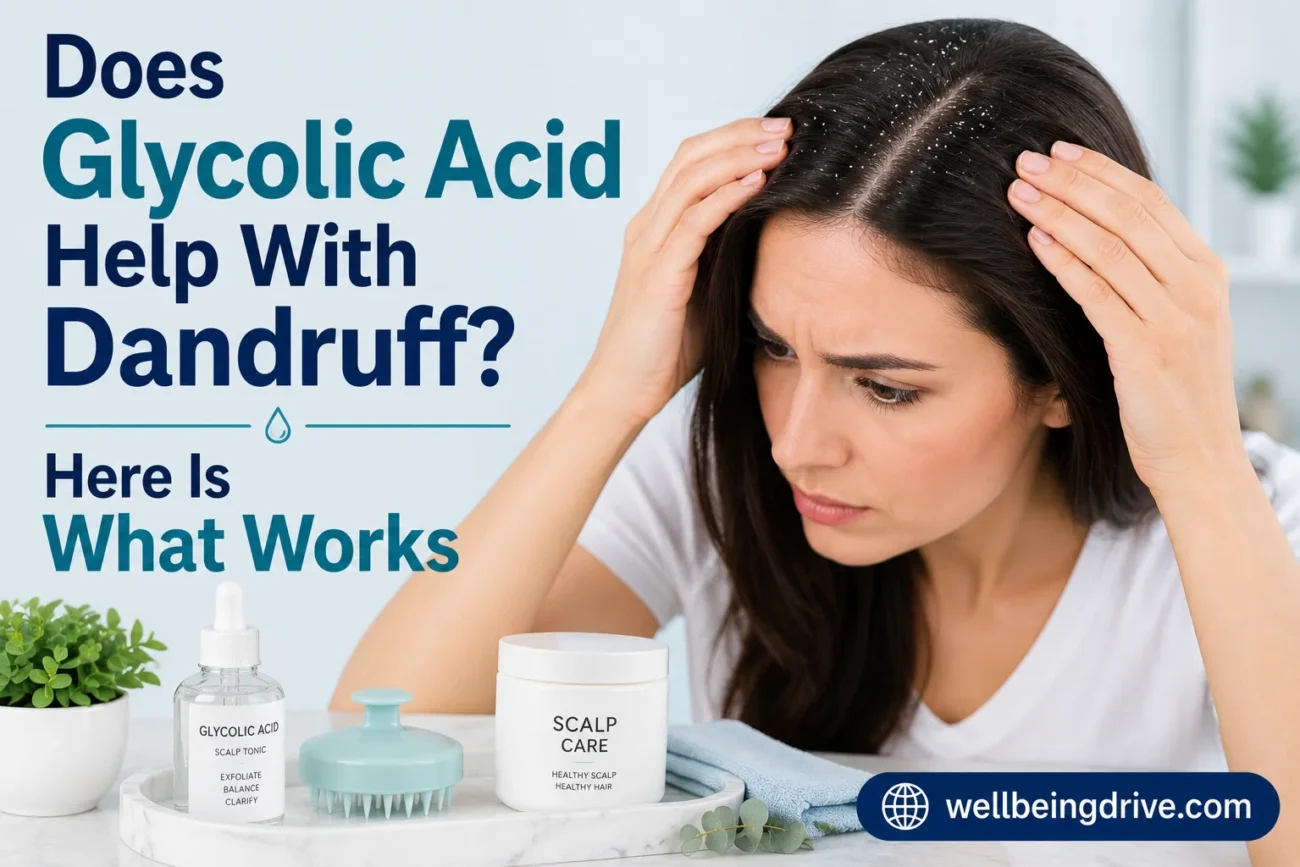
Does Glycolic Acid Help With Dandruff? What the Science Says About Using AHAs on Your Scalp
Glycolic acid has been doing the rounds in scalp care conversations for good reason. But its role in managing dandruff is more specific than most content explains, and the way you use it determines whether it actually works.
Glycolic acid built its reputation on the face. Brightening, exfoliating, smoothing fine lines, it became one of the most widely used active ingredients in skincare. The scalp has been slower to receive the same attention, partly because hair makes application fiddly and partly because scalp care was underserved as a category for a long time. That has changed, and glycolic acid is increasingly mentioned by dermatologists as a useful tool for managing dandruff and seborrheic dermatitis.
The answer to whether it actually works is yes, with important qualifications about what it does, what it does not do, and how it fits into a complete dandruff management approach.
Short Answer
Yes, glycolic acid can help with dandruff, specifically by dissolving the protein bonds that hold dead scalp cells together and allowing flaking scale to shed more easily. At concentrations of 5 to 10 percent, it has keratolytic and mild antifungal properties that make it useful for seborrheic dermatitis and dandruff caused by scale buildup. It works best as part of a treatment approach rather than as a standalone cure, and it does not address the fungal overgrowth that drives most cases of dandruff unless combined with an antifungal ingredient.
What Dandruff Actually Is
Dandruff and seborrheic dermatitis are often used interchangeably, and for practical purposes the distinction is one of severity rather than cause. Both involve an overgrowth of a lipid-dependent yeast called Malassezia on the scalp. According to the NIH StatPearls review of seborrheic dermatitis, the condition is a common inflammatory skin disease presenting in areas rich in sebaceous glands, particularly the scalp.
Malassezia feeds on the sebum your scalp produces and releases fatty acids as a byproduct. These fatty acids irritate the scalp, accelerating its natural cell turnover cycle. Normal scalp cells shed invisibly because they separate individually. When Malassezia is proliferating, cells shed in visible clumps instead, producing the white or yellowish flakes people recognise as dandruff.
The scale itself is the visible problem. But it is a symptom of the inflammatory and fungal process underneath, not the root cause. This distinction matters when evaluating what glycolic acid can and cannot do.
A buildup of scale on the scalp does more than produce visible flaking. It creates a physical barrier that reduces the effectiveness of antifungal shampoos and treatments by preventing active ingredients from reaching the scalp surface directly. Removing scale first improves treatment penetration significantly. This is one of the primary practical reasons dermatologists recommend glycolic acid as a pre-shampoo treatment for moderate to severe dandruff and seborrheic dermatitis.
How Glycolic Acid Works on the Scalp
Keratolytic Action
Glycolic acid is an alpha-hydroxy acid (AHA) with the smallest molecular size of any AHA. Its small size allows it to penetrate the outermost layer of skin more effectively than other acids. On the scalp, its primary mechanism is keratolysis: the dissolution of the protein bonds that hold dead skin cells together in the stratum corneum.
When those bonds break down, accumulated scale loosens and separates from the scalp surface. Combined with shampooing, this produces a noticeable reduction in visible flaking. The effect is mechanical and chemical simultaneously, acting on the scale directly rather than on the Malassezia causing it.
Mild Antifungal Properties
Beyond scale removal, glycolic acid has demonstrated mild antifungal properties in research contexts. Its acidic pH creates an environment less hospitable to Malassezia, which proliferates most readily in the slightly more alkaline conditions of an irritated, scale-covered scalp. While glycolic acid is not potent enough to replace dedicated antifungal treatments, this secondary mechanism contributes to its overall usefulness for dandruff management.
Sebum Regulation
Excess sebum production is one of the factors that feeds Malassezia overgrowth. Glycolic acid helps regulate sebum by exfoliating the follicle opening and reducing the accumulation of oil within the scalp’s microenvironment. For people with an oily scalp as a contributing factor to dandruff, this adds a third line of benefit beyond scale removal and mild antifungal activity.
What the Evidence Shows
The evidence base for glycolic acid specifically on the scalp is modest but consistent. Most of the clinical work comes from studies on multi-ingredient formulations rather than glycolic acid in isolation, which means isolating its precise contribution requires some interpretation.
Clinical Study Findings
A study published in the Journal of Cosmetic Dermatology evaluated a shampoo containing urea, glycolic acid, salicylic acid, and ichthyol pale in ten patients with mild to moderate seborrheic dermatitis and scalp psoriasis. Photography and trichoscopy assessments showed visible reduction in scale, erythema, and itching over the treatment period. All participants tolerated the product without significant adverse effects. While the small sample size limits conclusions, the results are consistent with the established mechanisms of each ingredient.
A 2022 PMC study on Malassezia hyphae and seborrheic dermatitis severity confirmed that Malassezia hyphae are positively correlated with clinical severity, reinforcing the importance of targeting both the fungal component and the scale accumulation in treatment. Glycolic acid addresses the scale component; antifungals address the fungal component.
What the Evidence Does Not Show
There are no large-scale randomised controlled trials testing glycolic acid alone as a dandruff treatment. Most available studies are small, open-label, and use multi-ingredient products. This means it is not possible to claim glycolic acid definitively outperforms established treatments like ketoconazole or selenium sulphide shampoos. What the evidence does support is its role as a useful addition to a complete scalp care approach.
How to Use Glycolic Acid for Dandruff Correctly
Pre-Shampoo Application Method
The most clinically supported approach, recommended by dermatologists including Dr. Abby, a board-certified dermatologist with over 134,000 likes on a single post about this method, is to apply glycolic acid as a pre-shampoo scalp treatment rather than a leave-on product. Apply a 5 to 10 percent glycolic acid solution or serum directly to the scalp, section by section. Leave it on for 10 minutes, then shampoo as normal. The shampooing step lifts the loosened scale that the glycolic acid has detached from the scalp surface.
Frequency
For active dandruff treatment, use one to two times per week. Once symptoms are controlled, reduce to once every one to two months as maintenance. Using glycolic acid more frequently than twice weekly on the scalp risks over-exfoliation, which can disrupt the scalp’s moisture barrier and paradoxically worsen flaking by causing dryness-driven irritation.
What to Avoid
Do not apply to an actively broken, bleeding, or severely inflamed scalp. Do not use concentrations above 10 percent for home scalp treatment. Avoid applying to the hair shafts if you have color-treated or chemically processed hair, as glycolic acid can affect cuticle integrity. Always follow with a moisturising shampoo rather than a clarifying or stripping formula to prevent excessive dryness after application.
Before applying glycolic acid across your full scalp for the first time, apply a small amount to a 2cm section near the nape of the neck. Wait 24 hours and check for redness, burning, or unusual irritation. Scalp sensitivity varies significantly between individuals, and a patch test takes two minutes but can prevent an uncomfortable full-scalp reaction.
Glycolic Acid vs Other Dandruff Treatments
Glycolic acid occupies a specific position in the dandruff treatment landscape. Understanding where it sits relative to other options helps in deciding how to incorporate it.
| Treatment | Primary Mechanism | Best For | Limitation |
|---|---|---|---|
| Glycolic acid (5 to 10%) | Keratolytic, mild antifungal, sebum regulation | Scale removal, pre-treatment preparation, oily scalp | Does not address root fungal cause alone |
| Ketoconazole shampoo | Antifungal — inhibits Malassezia directly | Moderate to severe seborrheic dermatitis | Does not remove existing scale buildup effectively |
| Salicylic acid | Oil-soluble keratolytic, anti-inflammatory | Oily scale, seborrheic dermatitis | Can be drying with overuse |
| Zinc pyrithione | Antifungal and antibacterial | Mild to moderate dandruff, maintenance | Banned in EU cosmetics as of 2023 due to safety concerns |
| Selenium sulphide | Antifungal, reduces cell turnover | Moderate dandruff and seborrheic dermatitis | Can discolour light or chemically treated hair |
| Corticosteroid lotions | Anti-inflammatory | Severe inflammation, scalp psoriasis | Prescription only in most cases. Not for long-term use. For context on topical corticosteroids more broadly, how corticosteroid creams affect skin tissue is worth understanding before use. |
The most effective approach for persistent seborrheic dermatitis combines glycolic acid as a pre-treatment scale remover with a dedicated antifungal shampoo. The glycolic acid clears the path; the antifungal addresses the underlying cause. Used together they are more effective than either alone.
Who Should Be Cautious or Avoid It
Glycolic acid is well-tolerated by most people when used correctly, but specific conditions and circumstances change its suitability.
Active wounds, cuts, or open sores on the scalp. Glycolic acid applied to broken skin causes significant burning and irritation. Wait until the scalp surface is fully healed before using any acid-based treatment.
Eczema or atopic dermatitis on the scalp. The compromised skin barrier in eczema-affected skin makes it more sensitive to acid exposure. Glycolic acid may worsen inflammation rather than help. A dermatologist should guide treatment in this case.
Very sensitive or reactive scalp. Some people find any acid-based product triggers scalp tingling, burning, or prolonged redness even at low concentrations. Start with the lowest available concentration and the shortest contact time if you have a history of scalp sensitivity.
Recent chemical scalp treatments. Relaxers, perms, and chemical straighteners alter the scalp’s pH and can make it more reactive to acids in the weeks following treatment. Wait at least four weeks before introducing glycolic acid after any chemical service.
As we age, both scalp and skin composition change in ways that affect how they respond to actives. The shifts in barrier function and sebum production that accompany aging make scalp care increasingly relevant. Understanding how skin changes with age provides useful context for why scalp conditions like seborrheic dermatitis often become more persistent over time.
Bottom Line
Glycolic acid is a legitimate and useful tool for dandruff management, but its role is specific. It removes scale, mildly disrupts the conditions Malassezia needs to proliferate, and improves how well subsequent antifungal treatments penetrate the scalp. It is not a cure for seborrheic dermatitis, and it cannot replace a dedicated antifungal shampoo for anyone whose dandruff is driven primarily by fungal overgrowth.
The correct way to use it is as a pre-shampoo scalp treatment at 5 to 10 percent concentration, applied for 10 minutes one to two times per week, followed by your regular antifungal or medicated shampoo. Patch test first, avoid overuse, and give it two to four weeks of consistent application before assessing results.
For persistent or severe scalp conditions that are not responding to over-the-counter approaches, a dermatologist visit remains the most effective use of your time. The scalp is skin, and it deserves the same informed care as the rest of it. People dealing with broader skin concerns alongside scalp issues may also find it relevant to understand how certain supplements and skincare actives interact with the skin’s overall behaviour when building a complete skin health routine.
Medical Disclaimer: This article is for informational purposes only and does not constitute medical advice. Scalp conditions including seborrheic dermatitis should be assessed by a qualified dermatologist for persistent, severe, or treatment-resistant cases. Always patch test new topical ingredients before full application and consult your doctor if you are unsure whether a treatment is appropriate for your specific condition.
Frequently Asked Questions
No. Daily use is too frequent and risks over-exfoliation, dryness, and scalp irritation. The recommended frequency is one to two times per week for active treatment, reducing to once every one to two months for maintenance once dandruff is under control. Overuse can disrupt the scalp’s moisture barrier and paradoxically worsen flaking through dryness-driven irritation.
Concentrations between 5 percent and 10 percent are considered safe and effective for scalp use. This is the range used in clinical studies on seborrheic dermatitis. Higher concentrations such as those used in professional chemical peels are not appropriate for home scalp treatment and should never be applied without professional guidance.
Glycolic acid has some keratolytic benefit for scalp psoriasis in helping lift and remove thick plaques. However, psoriasis is a distinct inflammatory condition driven by immune dysfunction rather than fungal overgrowth, and glycolic acid does not address its underlying cause. Dermatologists recommend it as a descaling adjunct alongside prescribed treatments for psoriasis, not as a standalone therapy.
Glycolic acid used correctly at appropriate concentrations does not cause hair loss. It works on the scalp surface and does not penetrate deep enough to affect the hair follicle itself. However, overuse or excessively high concentrations can cause scalp irritation and inflammation, which may temporarily affect the hair growth environment. Used at 5 to 10 percent once or twice weekly, it is not associated with hair thinning or shedding.
They work differently and are often used together. Salicylic acid is oil-soluble and penetrates the lipid-rich scalp environment more effectively to break down sebum-laden scale. Glycolic acid is water-soluble and works primarily by disrupting the bonds between dead skin cells on the surface. For seborrheic dermatitis, salicylic acid has a stronger evidence base as a standalone keratolytic, while glycolic acid is often most effective in multi-ingredient formulas.
Caution is advised. Glycolic acid can alter the cuticle of color-treated hair, potentially causing color fade or affecting chemically straightened or permed hair. Focus application on the scalp rather than the hair shafts and rinse thoroughly. Wait at least two weeks after coloring or chemical treatment before introducing glycolic acid, and do a strand test first.
Most people notice a visible reduction in scalp flaking within two to four weeks of consistent use at one to two applications per week. The immediate effect after each application is softer, looser scale that rinses away more easily with shampooing. Managing the fungal component alongside glycolic acid use produces faster and more sustained results than glycolic acid alone.
Disclaimer: WellbeingDrive provides health information for educational purposes only. Do not use this content as a substitute for professional medical advice. Consult your doctor before making health related decisions.