
If you’re searching for things to avoid after losing mucus plug, the most important thing to know is this: losing your mucus plug is usually a normal sign that your body is preparing for labor, not an emergency.
However, because the mucus plug acts as a protective barrier for your uterus, there are certain precautions you should take to reduce infection risk and avoid unnecessary complications. This guide explains exactly what to avoid, what is still safe, and when to call your healthcare provider.
What Is the Mucus Plug and Why Does It Matter
During pregnancy, your cervix produces a thick collection of mucus that forms a seal at the cervical opening. This mucus plug acts like a natural barrier, helping block bacteria and harmful substances from entering the uterus.
As your body prepares for labor, your cervix begins to soften, thin out, and open slightly. When this happens, the mucus plug may loosen and pass out of the vagina.
It often looks:
- Thick and jelly like
- Clear, off white, or slightly pink
- Sometimes streaked with blood, called a bloody show
Losing it means your body is progressing toward labor, but it does not tell you exactly when labor will begin.
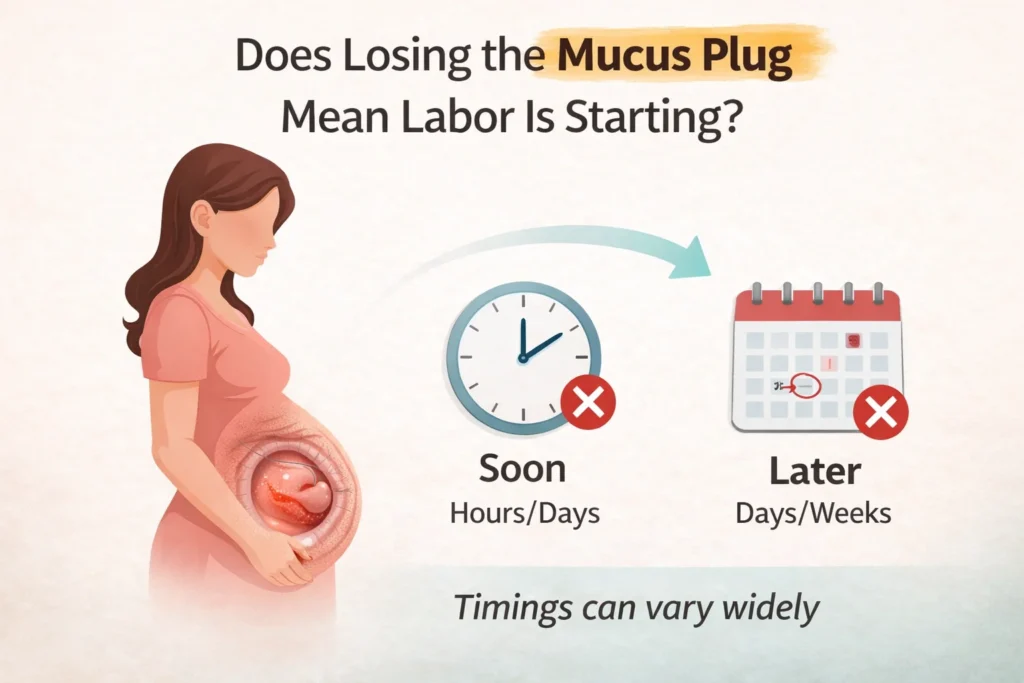
Does Losing the Mucus Plug Mean Labor Is Starting
Not necessarily.
Some women go into labor within hours. Others may wait days or even weeks. The timing varies widely.
What matters more than the mucus plug itself are other signs of labor, including:
- Regular, strong contractions
- Water breaking
- Increasing pelvic pressure
- Lower back pain with rhythm
The mucus plug is a signal that your body is preparing. It is not a countdown clock.
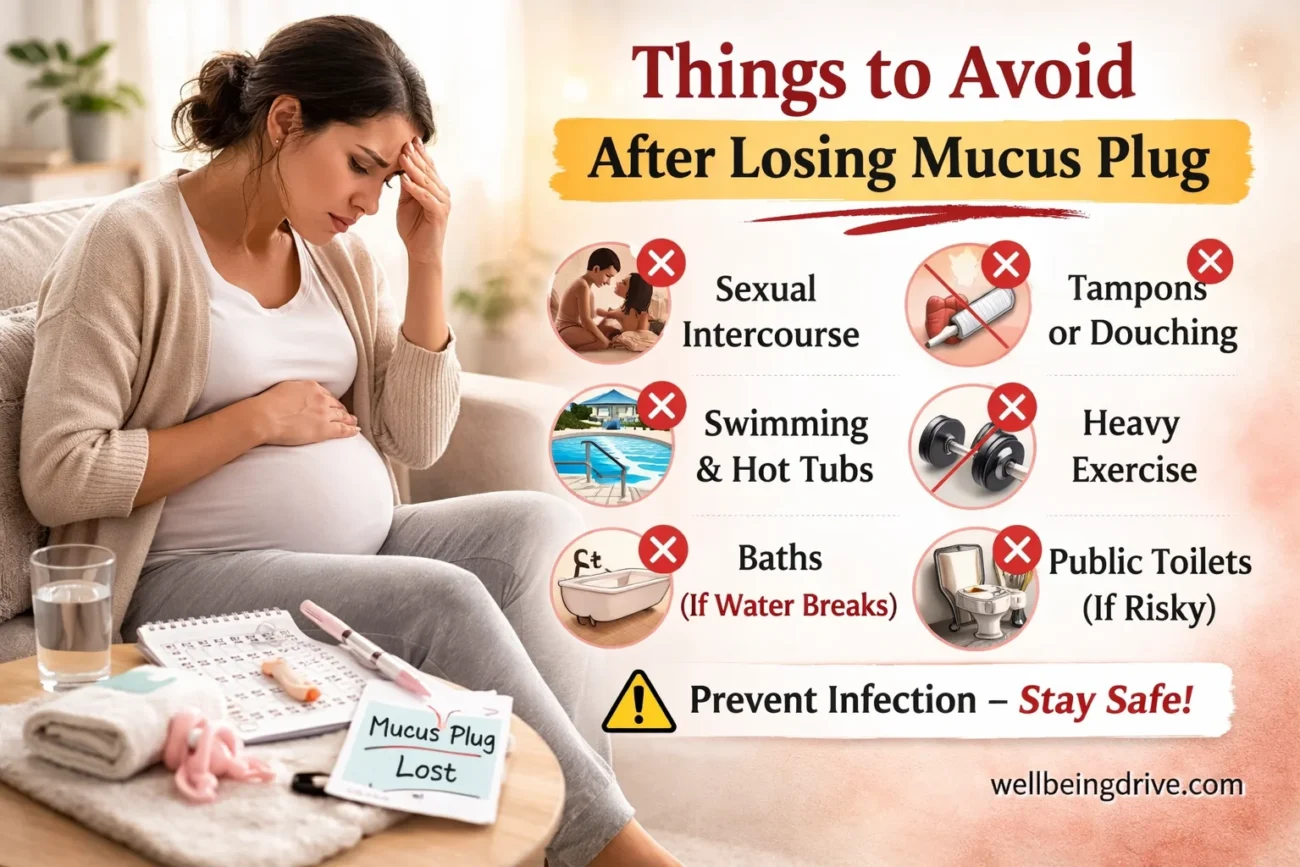
Things to Avoid After Losing Mucus Plug
Now let’s focus on the main question: what should you avoid after losing your mucus plug?
The goal is simple. Reduce infection risk. Avoid unnecessary stress on the cervix. Stay alert for labor signs.
1. Avoid Inserting Anything Into the Vagina
This is the most important precaution.
Do not use:
- Tampons
- Douches
- Vaginal cleansers
- Menstrual cups
- Fingers for self checks
The mucus plug previously helped block bacteria. Once it is gone, your cervix may be slightly more open, making it easier for bacteria to travel upward.
If you need to manage discharge, use clean sanitary pads instead of internal products.
2. Avoid Sexual Intercourse Without Medical Guidance
After losing your mucus plug, some providers recommend temporary pelvic rest, especially if:
- You are not yet 37 weeks
- You are high risk
- You have a history of preterm labor
- Your water has broken
Sex can introduce bacteria and may stimulate uterine activity due to prostaglandins in semen.
If you are full term and low risk, your provider may say it is safe. Always confirm with your healthcare professional.
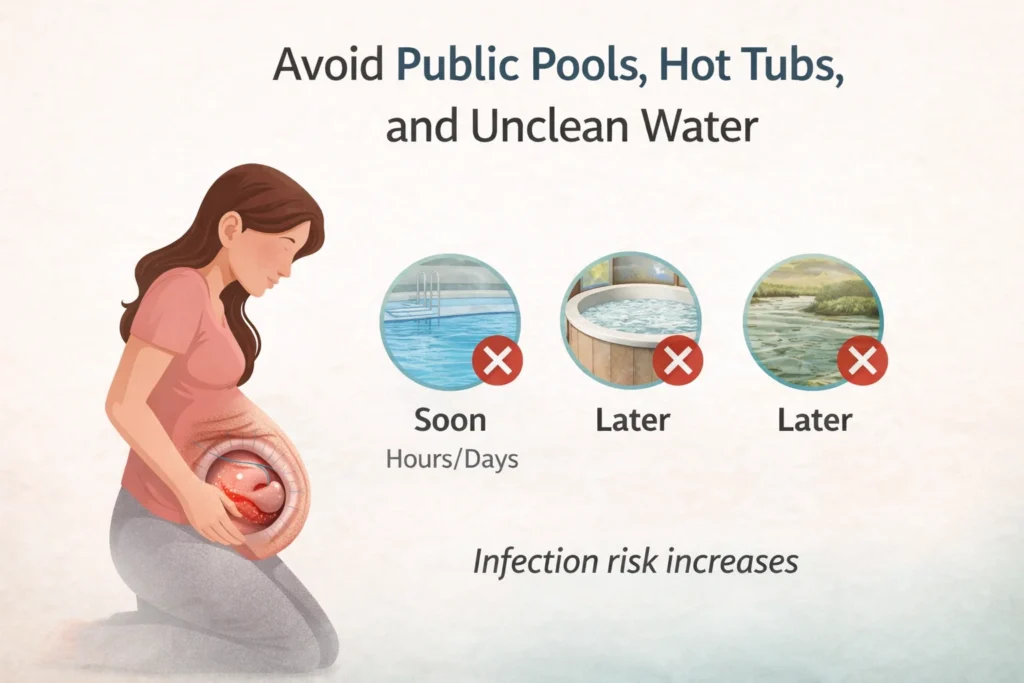
3. Avoid Public Pools, Hot Tubs, and Unclean Water
Because the mucus plug acts as a protective seal, once it is gone, avoiding contaminated water becomes important.
Avoid:
- Public swimming pools
- Hot tubs
- Jacuzzis
- Lakes or natural bodies of water
- Public baths
These environments may contain bacteria.
If you want to bathe, choose a clean shower. If taking a bath at home, ensure the tub is sanitized and water is comfortably warm, not hot.
Water temperature should stay below 100°F or 37.8°C to avoid overheating.
4. Avoid Heavy or Intense Physical Activity
Moderate movement is usually safe in late pregnancy. However, avoid:
- Heavy lifting
- High intensity workouts
- Strenuous exercise
- Overexertion
If you lost your mucus plug before 37 weeks, this becomes even more important.
Intense activity may increase uterine irritability or contractions in some cases.
Gentle walking, stretching, and prenatal yoga are typically safer options, but always follow your provider’s advice.
5. Avoid Ignoring Signs of Labor
Some women assume losing the mucus plug means labor is days away and stop paying attention to their body.
Instead, monitor for:
- Regular contractions every 5 to 10 minutes
- A gush or steady leak of fluid
- Bright red bleeding
- Severe cramping
The mucus plug is not the emergency. But labor signs that follow could require action.
6. Avoid Poor Hygiene Practices
After losing the mucus plug, maintaining good hygiene is important.
Avoid:
- Wearing damp underwear
- Reusing unsanitized cloth pads
- Wiping back to front
Instead:
- Wear breathable cotton underwear
- Change pads regularly
- Wipe front to back
- Wash hands frequently
These small habits reduce infection risk significantly.
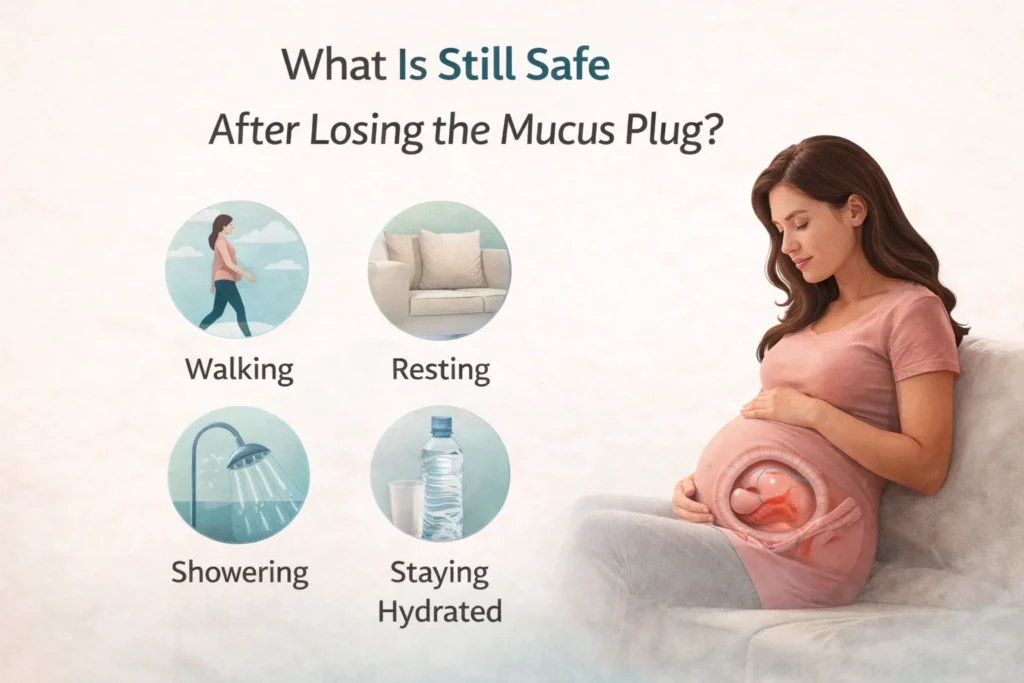
What Is Still Safe After Losing the Mucus Plug
Many women worry they must stop normal life completely. That is not true.
If you are full term and have no complications, the following are usually safe:
- Light walking
- Showering
- Resting
- Eating normally
- Gentle nesting activities
- Staying hydrated
Hydration is especially important. Dehydration can trigger Braxton Hicks contractions and increase discomfort.
Drink water consistently throughout the day.
Preterm vs Full Term: Why It Matters
Timing changes everything.
If You Are 37 Weeks or More
Losing your mucus plug is typically a normal sign of labor preparation.
Precautions focus on hygiene and monitoring.
If You Are Before 37 Weeks
Contact your healthcare provider.
Early loss of the mucus plug may indicate:
- Cervical change
- Risk of preterm labor
Your provider may want to evaluate you, especially if you experience:
- Cramping
- Back pain
- Pelvic pressure
- Increased discharge
Preterm labor requires medical assessment.
When to Call Your Doctor Immediately
While losing the mucus plug alone is usually normal, seek medical care if you experience:
- Bright red bleeding similar to a period
- Continuous leaking fluid
- Fever above 100.4°F
- Severe abdominal pain
- Foul smelling discharge
- Strong contractions before 37 weeks
Heavy bleeding or fluid leakage may indicate complications such as placental issues or rupture of membranes.
Trust your instincts. If something feels wrong, call your provider.
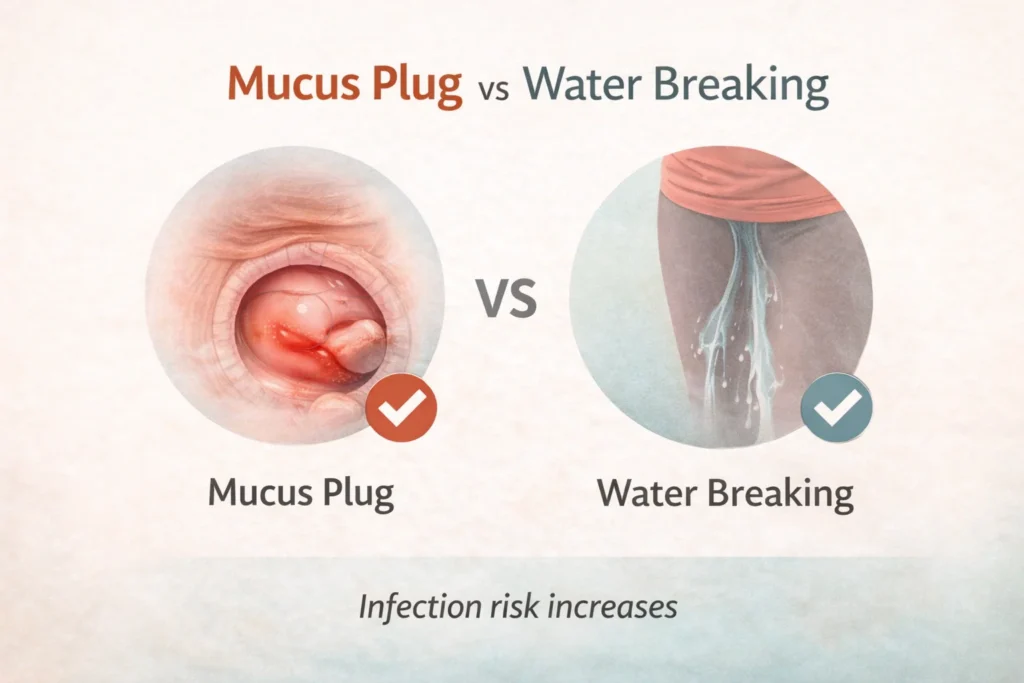
Mucus Plug vs Water Breaking
Many women confuse these two.
The mucus plug is thick and jelly like.
Water breaking feels like:
- A gush of fluid
- Or continuous watery leaking
If your water breaks, go to the hospital or call your provider. Once the amniotic sac ruptures, infection risk increases significantly.
Myth vs Fact
Myth: Losing the mucus plug means labor starts immediately
Fact: Labor may begin hours, days, or even weeks later.
Myth: You cannot shower after losing it
Fact: Showers are safe and encouraged for hygiene.
Myth: The mucus plug always comes out at once
Fact: It may come out in pieces and go unnoticed.
Myth: Losing it guarantees dilation is complete
Fact: Dilation happens gradually and varies by person.
Myth: You must stay in bed
Fact: Gentle activity is typically safe unless your provider advises otherwise.
How Dilated Are You When You Lose the Mucus Plug
There is no exact number.
Some women lose it at 1 cm dilation. Others may already be several centimeters dilated. Cervical dilation can begin days or weeks before active labor.
The only way to know dilation is through a medical examination.
Can You Go Into Labor Without Losing the Mucus Plug
Yes.
Some women do not notice losing it because it can happen during active labor or during membrane rupture.
Labor can still occur without a noticeable mucus plug event.
Emotional Reassurance for Expectant Mothers
It is completely normal to feel anxious after losing the mucus plug.
You may feel excitement, fear, anticipation, or confusion.
Remember:
- It is a natural part of pregnancy
- It does not automatically mean emergency
- Most pregnancies progress safely after this point
Focus on calm preparation rather than panic.

Practical Checklist After Losing Your Mucus Plug
- Switch to pads, not tampons
- Avoid sexual intercourse unless cleared
- Shower instead of swimming
- Avoid hot tubs
- Stay hydrated
- Monitor contractions
- Contact provider if before 37 weeks
- Call for heavy bleeding or water breaking
Keeping this checklist in mind helps you stay prepared without overreacting.
Final Thoughts
Understanding things to avoid after losing mucus plug helps you stay safe and confident in the final stage of pregnancy.
The key priorities are:
- Prevent infection
- Avoid unnecessary cervical irritation
- Monitor labor signs
- Seek care if warning symptoms appear
For most full term pregnancies, losing the mucus plug is simply a milestone that signals your body is getting ready.
Stay calm. Stay informed. Stay connected with your healthcare provider.
Your body is preparing for birth, and you are doing exactly what you need to do by learning and staying aware.
FAQS About Things To Avoid After Losing Muscus Plug
Can the mucus plug regenerate after it comes out?
Yes. If it is not yet time for labor, your body can produce more cervical mucus to rebuild part of the protective barrier.
Is it normal to lose only part of the mucus plug?
Yes. Some women lose it gradually in small pieces rather than all at once.
Does losing the mucus plug cause pain?
Most women do not feel pain when it passes. It is usually noticed visually rather than physically.
Can stress cause the mucus plug to come out early?
Stress alone does not directly cause mucus plug loss, but significant physical or hormonal changes may influence cervical changes.
Can dehydration affect cervical changes late in pregnancy?
Yes. Dehydration can increase uterine irritability and make contractions feel more frequent or intense, so staying hydrated is important.
Disclaimer: The content on Wellbeingdrive is for informational purposes only and not a substitute for professional advice. Always consult a qualified expert for health concerns.