
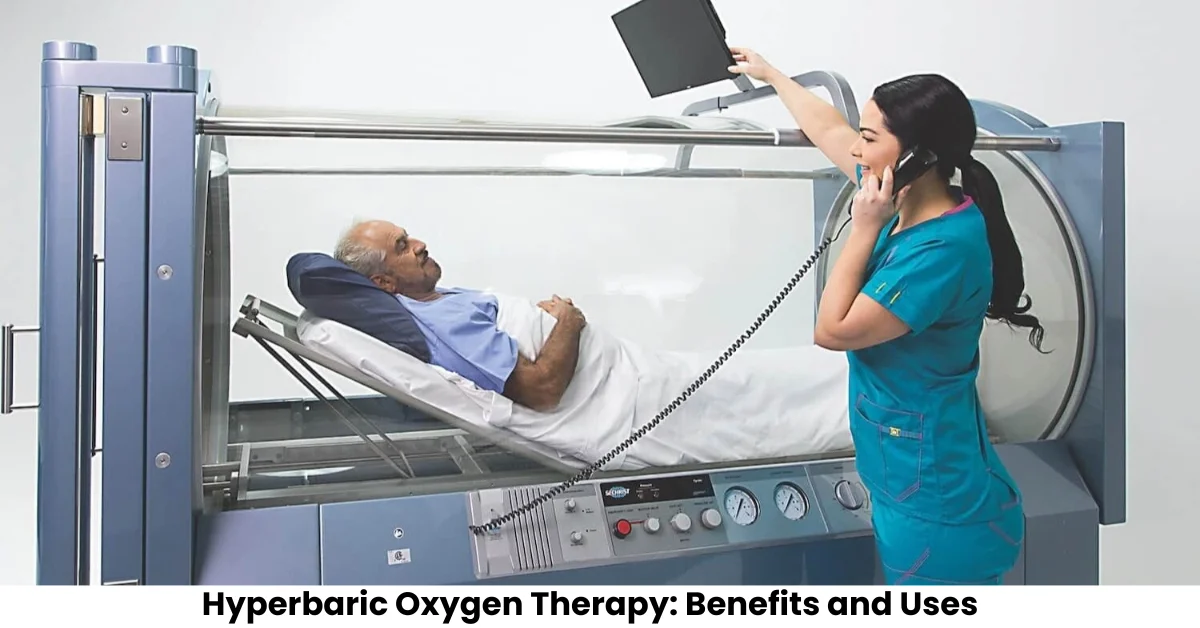
Oxygen is the most essential nutrient the human body requires — yet most of us never consider whether our tissues are actually getting enough of it. Hyperbaric oxygen therapy (HBOT) operates on a deceptively simple premise: breathe pure oxygen at elevated atmospheric pressure, and you flood the body with far more of it than normal breathing ever could. Once confined to hospital wards treating decompression sickness and severe burns, HBOT has steadily moved into sports recovery suites, wellness clinics, and even private homes. Understanding what this therapy actually does — and what the evidence says — is the first step toward deciding whether it belongs in your own health routine.
How Hyperbaric Oxygen Therapy Actually Works

Cross-section diagram of a hyperbaric oxygen chamber showing oxygen molecules flowing through tissues
Inside a hyperbaric chamber, atmospheric pressure is raised to two to three times what you experience at sea level. At that pressure, oxygen dissolves directly into blood plasma rather than binding exclusively to red blood cells. This means oxygen reaches tissues that normal circulation can struggle to supply — areas affected by inflammation, injury, or compromised blood flow.
The physiological effects extend well beyond simple oxygenation. HBOT has been shown to reduce systemic inflammation, suppress pro-inflammatory molecules, stimulate angiogenesis (the growth of new blood vessels), and activate cellular repair mechanisms. At pressure levels above 1.5 ATA, oxygen also becomes bacteriostatic, inhibiting the growth of bacteria and fungi, which partly explains its effectiveness against certain infections and slow-healing wounds.
At 2.4 ATA breathing 100% oxygen, arterial oxygen levels can reach approximately 1,824 mmHg — a figure that dwarfs anything achievable through ordinary respiration. Hard-shell chambers capable of reaching those levels are FDA-cleared Class II medical devices, regulated under rigorous safety standards. The FDA formally recognizes HBOT for 14 medical conditions, including decompression sickness, carbon monoxide poisoning, diabetic non-healing wounds, radiation injury, severe burns, and osteomyelitis, and all 14 are generally covered by insurance.
What to Look for When Choosing a Hyperbaric Chamber

A modern home wellness room with a soft-shell inflatable hyperbaric chamber near a window, a person sitting beside it, reading
For anyone seriously exploring home or clinic-based HBOT, a structured evaluation process protects both your investment and your safety. When assessing any hyperbaric oxygen chamber for sale, the most important factors are pressure rating, chamber type, FDA registration status, safety features, and long-term dealer support.
- Intended use first. If you are pursuing HBOT for a diagnosed medical condition, a prescription from an MD or DO is required in the US, and a hard-shell chamber or supervised clinical setting is appropriate. For wellness, recovery optimization, or anti-aging goals, a soft-shell unit designed for home use may be entirely sufficient.
- FDA registration matters. Only purchase from dealers offering FDA-registered products. Hard-shell chambers should carry Class II device status; soft-shell units should, at a minimum, be registered with the FDA as general wellness devices. Unregistered equipment carries unknown safety profiles.
- Safety features are non-negotiable. Look for emergency pressure-release valves, smart door sensors, air-purification systems, non-combustible materials, and stable seals. Soft chambers using oxygen concentrators require adequate ventilation — keeping combustible materials away from the chamber is essential.
- Warranty and after-sales support. A hyperbaric chamber is a long-term investment. Warranty coverage, maintenance requirements, and access to knowledgeable technical support should weigh heavily in your decision. Transparent pricing and training resources from the dealer are strong positive signals.
- Consult a physician before purchasing. Even for wellness-focused use, a consultation with a healthcare provider confirms that HBOT is appropriate for your health status and helps identify any contraindications.
What the Research Actually Shows
The clinical evidence behind HBOT has grown substantially in recent years, moving well beyond its traditional wound-care applications.
Brain Health and Neurological Recovery
One of the most compelling areas of active research is neurological support. A 2025 double-blind randomized controlled trial found that adults with persistent brain injury symptoms showed an average 10.6-point improvement on a standardized symptom inventory after HBOT treatment — compared to just 3.6 points in the control group. Improvements in anxiety, sleep quality, and vestibular symptoms were maintained at the one-year follow-up mark.
Long COVID recovery has produced some of the most rigorous HBOT trials to date. A study published in Nature Scientific Reports found that 40 sessions of HBOT significantly improved neurocognitive function and symptoms in post-COVID patients. A subsequent two-year follow-up confirmed that those gains were maintained across cognitive, psychiatric, fatigue, sleep, and pain domains — a rare demonstration of durability in a complex, poorly understood condition.
Athletic Recovery
Professional sports teams have been early adopters. The Philadelphia Flyers have maintained an ongoing HBOT partnership, and the Miami Dolphins are among NFL teams incorporating it into recovery protocols. Joe Namath famously credited HBOT with helping him recover from years of football-related head trauma. At the Nagano Winter Olympics, seven athletes treated with mild hyperbaric oxygen at 1.3 ATA showed accelerated recovery from muscular fatigue.
A 2024 randomized controlled trial in Frontiers in Physiology added controlled data to those real-world reports. Among 20 elite youth football players, a single 60-minute HBOT session after a match produced significantly lower fatigue scores in the treatment group (8.6) compared to controls (11.0) one hour post-session — a statistically meaningful difference. Notably, HBOT is not banned by the World Anti-Doping Agency, making it a fully legal recovery tool for competitive athletes.
Anti-Inflammatory and Emerging Applications
HBOT’s anti-inflammatory profile is generating interest well beyond sports medicine. A 2025 study in ScienceDirect found that tumor hypoxia — oxygen deprivation within tumors — drives resistance to chemotherapy, radiation, and immunotherapy, and that HBOT’s ability to reoxygenate the tumor microenvironment may have a role in multimodal cancer care. Researchers are cautious to frame this as adjunct support rather than a standalone treatment, but the mechanistic rationale is solid.
Hard-Shell vs. Soft-Shell Chambers: Understanding the Difference
Not all hyperbaric chambers are equivalent, and the distinction matters significantly for both safety and expected outcomes.
- Hard-shell chambers are rigid structures — typically steel or acrylic — capable of reaching 2.0 to 6.0 ATA with 100% medical-grade oxygen. These are the clinical standards: FDA-cleared, ASME-regulated, and used in hospitals and specialized treatment centers. They deliver the pressure levels required for FDA-approved medical indications. The tradeoff is cost (often $100,000 or more) and the infrastructure required to operate them safely.
- Soft-shell chambers (also called mild HBOT chambers) are flexible inflatable units made from nylon or PVC. They operate in a narrower pressure range — typically 1.3 to 1.5 ATA — and deliver oxygen via concentrators at approximately 24–31% concentration rather than 100%. They are not FDA-approved as medical devices for HBOT use (with the exception of altitude sickness transport), but they are popular for home wellness applications: general recovery, mild inflammation, sleep quality, and cognitive support.
The pressure range you need should be matched to your goals:
- 1.3–1.4 ATA: General wellness, sleep, mild inflammation — adequate for lifestyle use
- 1.5 ATA: Athletic recovery and cognitive support — where research shows better results meaningfully
- 2.0–3.0 ATA: Clinical and medical conditions requiring physician oversight and prescription
Price ranges reflect this spectrum: entry-level soft-shell units run $4,495–$9,499, mid-range hard-shell chambers $23,995–$27,999, and premium clinical-grade units can exceed $48,000.
Safety Considerations You Should Know
HBOT has a well-characterized safety profile when used appropriately, but it is not without risks.
The most common side effects are ear and sinus barotrauma from pressure changes — similar to what you might feel on an airplane. Temporary changes in vision (myopia) can occur with repeated sessions but generally resolve. At high clinical pressures, oxygen toxicity is a monitored risk, which is why sessions at 2.4 ATA and above are conducted under medical supervision.
Serious complications are rare but include seizures from oxygen toxicity, pulmonary barotrauma, and eardrum rupture. An untreated pneumothorax (collapsed lung) is an absolute contraindication. Relative contraindications include uncontrolled high fever, moderate-to-severe COPD, bullous lung disease, and some chemotherapy agents. Anyone with implanted devices — particularly older pacemakers — should disclose this before treatment.
For clinical use, the FDA recommends facilities accredited by the Undersea and Hyperbaric Medical Society (UHMS). For home use, the caution is different: stick to equipment rated for consumer wellness, follow manufacturer guidelines precisely, and have a physician aware that you are using the therapy.
The FDA also explicitly warns against HBOT marketed as a cure for autism, Alzheimer’s disease, Lyme disease, or cancer. Benefits in these areas remain unproven, and chambers sold with such claims should be a red flag for any prospective buyer.
Conclusion
Hyperbaric oxygen therapy occupies an unusual position in modern healthcare: it has a decades-long track record in critical care medicine, a growing body of rigorous clinical research supporting broader applications, and an increasingly accessible consumer market for home wellness use. Whether you are a competitive athlete looking to accelerate recovery, someone navigating a chronic inflammatory condition, or simply a wellness-minded individual interested in proactive health optimization, the evidence base for HBOT has reached a point where it warrants serious consideration rather than dismissal.
As with any meaningful health investment, the difference between benefit and risk lies in doing it properly — the right equipment, the right pressure, the right guidance. The science is compelling. The tools are more accessible than ever. The question is whether the application fits your goals.
Disclaimer: The content on Wellbeingdrive is for informational purposes only and not a substitute for professional advice. Always consult a qualified expert for health concerns.