
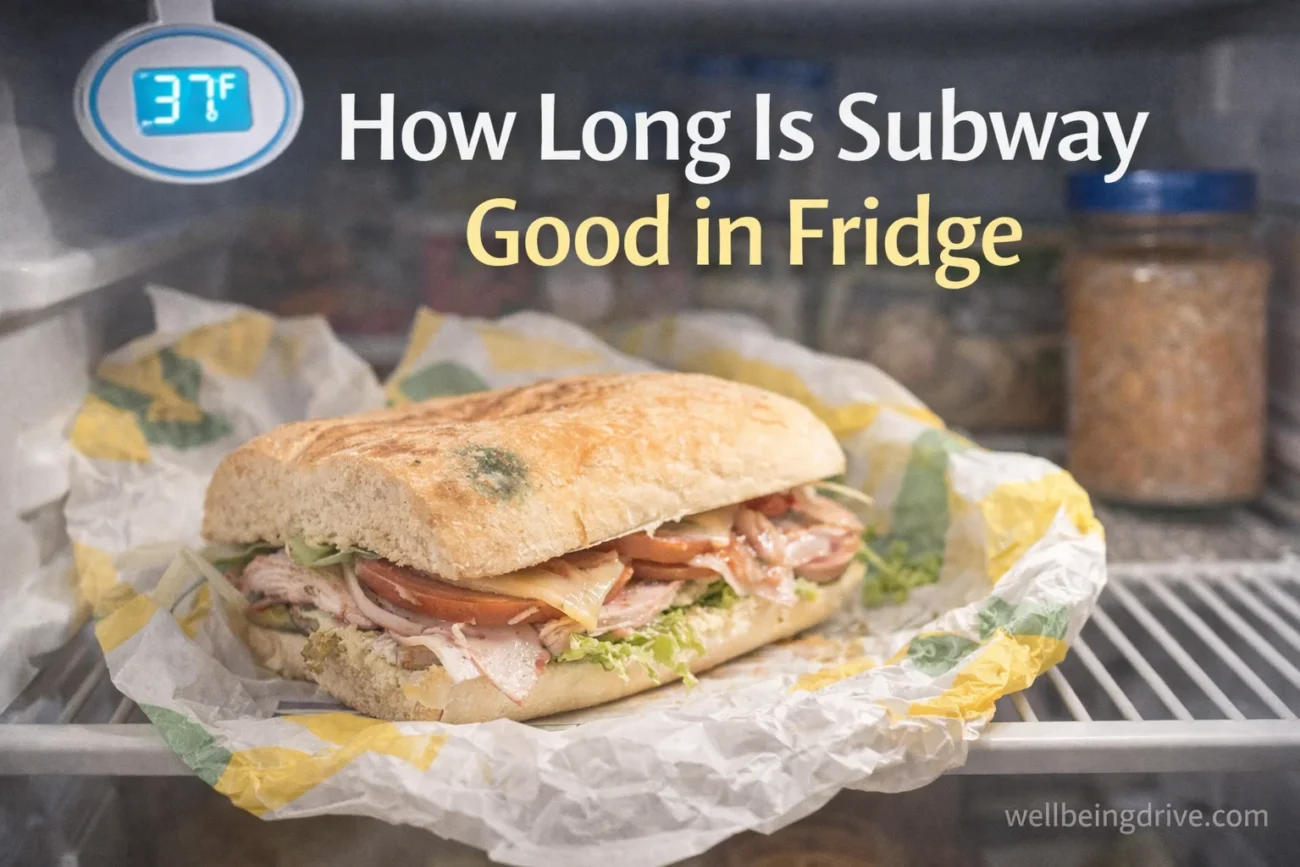
If you are wondering how long is subway good in fridge, the short answer is usually up to 1 to 2 days when stored properly at a safe refrigerator temperature. After that window, the risk of spoilage and bacteria growth increases, especially because Subway sandwiches contain perishable ingredients like deli meat, sauces, and fresh vegetables.
Understanding the exact shelf life, storage methods, and signs of spoilage can help you avoid food waste while also protecting your health. This guide explains everything in a simple and practical way so you can confidently decide when your sandwich is still safe to eat.
Quick Answer: Subway Fridge Shelf Life
Most food safety guidelines suggest that a Subway sandwich stays fresh for about 24 to 48 hours in the refrigerator when stored correctly. This timeframe applies to most leftover sandwiches containing meats, vegetables, and sauces.
Why Shelf Life Is Limited
Subway sandwiches are made with fresh, high moisture ingredients. Bread absorbs moisture quickly, while deli meat and vegetables create an environment where bacteria can grow faster than in dry foods.
When It Is Still Safe to Eat
If the sandwich has been stored at or below refrigerator temperature and shows no signs of spoilage, it may still be safe within the recommended timeframe. However, freshness and taste usually decline after the first day.
What Affects How Long Subway Lasts
Several factors determine how long a Subway sandwich remains safe and fresh in the fridge. Understanding these variables helps you better predict shelf life.
Type of Bread and Moisture
Bread absorbs moisture from fillings and sauces. The more moisture present, the faster the texture becomes soggy and the sandwich loses freshness.
Deli Meat and Protein Fillings
Protein based fillings such as turkey, chicken, or ham are perishable foods. These ingredients are more likely to spoil quickly if not stored at the right temperature.
Fresh Vegetables and Sauces
Vegetables like lettuce and tomatoes release water over time. Sauces add additional moisture, which accelerates spoilage and affects both texture and safety.
Storage Temperature
Keeping your refrigerator at a consistent cold temperature slows bacterial growth. Even small fluctuations can shorten shelf life.
Ingredient Specific Shelf Life
Different types of sandwiches may last slightly longer or shorter depending on their ingredients.
Meat Based Sandwiches
Sandwiches with deli meat typically stay safe for about 1 to 2 days. Because protein spoils faster, these should be eaten sooner rather than later.
Vegetarian Sandwiches
Vegetarian options without meat may sometimes last slightly longer, especially if they contain fewer sauces. However, vegetables can still become soggy quickly.
Sandwiches With Sauces
Sandwiches heavy in sauces usually spoil faster because moisture encourages bacteria growth and reduces freshness.
How to Store Subway Properly
Proper storage plays a major role in preserving freshness and preventing food safety issues.
Best Packaging Methods
Wrap the sandwich tightly in foil or plastic wrap to limit exposure to air. Placing it in an airtight container adds an extra layer of protection.
Airtight Containers vs Wrapping
Airtight containers help maintain consistent moisture levels, while wrapping prevents air exposure. Combining both methods offers the best results.
Preventing Sogginess
If possible, remove watery vegetables or sauces before storing. This helps keep the bread texture intact and extends freshness.
Signs a Subway Sandwich Has Gone Bad
Recognizing spoilage signs is essential to avoid food poisoning.
Smell Changes
A sour or unpleasant odor is one of the earliest indicators that the sandwich is no longer safe to eat.
Texture and Appearance
Slimy meat, wilted vegetables, or unusually soft bread suggest spoilage. Mold growth is also a clear sign the sandwich should be discarded.
Taste Warning Signs
If the sandwich tastes off or different from when it was fresh, it is best not to continue eating it.
Is It Safe to Eat Subway After 2 Days
Eating a Subway sandwich after two days depends on how it was stored and what ingredients it contains.
Risk Factors
High moisture ingredients, improper storage, or leaving the sandwich at room temperature before refrigeration can increase risk.
When It Might Still Be Safe
If the sandwich was kept consistently cold and shows no spoilage signs, it may still be safe. However, caution is advised because perishable foods can spoil quickly.
When to Throw It Away
If there is any doubt about smell, texture, or taste, it is safer to discard the sandwich rather than risk illness.
Food Safety Guidelines for Leftover Sandwiches
Following simple food safety practices helps reduce risk.
Refrigerator Temperature Recommendations
Keeping your fridge at a properly chilled temperature slows bacterial growth and keeps perishable foods safer for longer.
The Two Hour Rule
If a sandwich sits at room temperature for more than two hours, bacteria growth can increase rapidly, making refrigeration less effective.
Safe Reheating Practices
If you plan to reheat a toasted sandwich, heat it thoroughly and evenly. However, reheating does not reverse spoilage if the sandwich has already gone bad.
How to Extend the Freshness of Subway
You can take simple steps to keep your sandwich fresh for as long as possible.
Removing Wet Ingredients
Taking out tomatoes, cucumbers, or extra sauces before storage reduces moisture buildup.
Storing Components Separately
Keeping fillings separate from bread can help maintain texture and extend shelf life.
Using Proper Wrapping
Double wrapping or using airtight storage slows air exposure and preserves freshness.
Subway vs Homemade Sandwich Shelf Life
Store bought sandwiches often contain more fresh ingredients and sauces, which can shorten shelf life compared to homemade versions.
Homemade sandwiches allow better control over ingredients and moisture, which can slightly extend storage time.
Common Mistakes When Storing Subway
Avoiding common errors can help maintain quality and safety.
Leaving It in Original Packaging
Paper wrapping alone does not provide enough protection from air and moisture.
Keeping It Too Long
Holding onto leftovers beyond recommended timeframes increases the risk of spoilage.
Storing at the Wrong Temperature
An overfilled fridge or frequent door opening can raise internal temperature, reducing freshness.
When to Throw Away a Subway Sandwich
A simple decision checklist can help you decide.
- Unpleasant smell
- Visible mold
- Slimy texture
- Stored longer than recommended
If any of these are present, it is safer to discard the sandwich.
Practical Tips for Food Safety
Small habits can make a big difference in preventing food waste and staying safe.
- Store leftovers promptly
- Label storage date
- Keep fridge temperature consistent
- Eat perishable foods sooner rather than later
Consistency is key to maintaining freshness and safety.
Conclusion
Understanding how long is subway good in fridge helps you balance convenience with food safety. Most sandwiches remain safe for about one to two days when stored correctly, but factors like ingredients, moisture, and temperature can shorten this timeframe.
Using proper storage methods, watching for spoilage signs, and following food safety practices ensures you enjoy leftovers without unnecessary risk.
FAQS
Can you freeze a Subway sandwich
Freezing is possible but may affect texture, especially bread and vegetables. Removing fresh toppings before freezing improves results.
How long does Subway last at room temperature
Perishable foods should not sit out for more than about two hours to reduce bacteria growth risk.
Does a toasted Subway last longer
Toasting does not significantly extend shelf life because spoilage depends mainly on ingredients and storage conditions.
Can you reheat a Subway sandwich safely
Yes, reheating is safe if the sandwich has been stored properly and shows no signs of spoilage.
Does removing vegetables extend shelf life
Removing high moisture toppings can help keep the bread fresher and slightly extend storage time.
Disclaimer: The content on Wellbeingdrive is for informational purposes only and not a substitute for professional advice. Always consult a qualified expert for health concerns.