
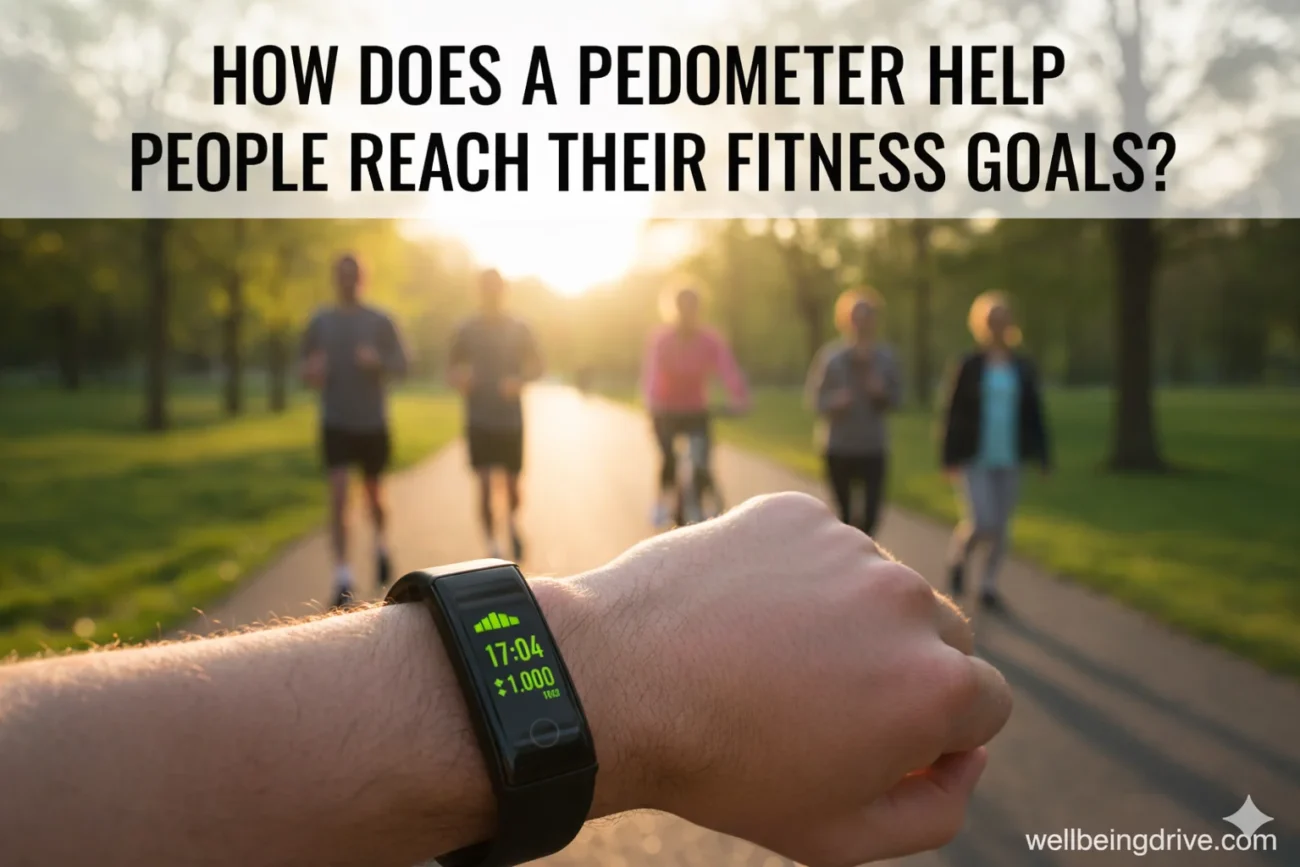
Every step you take is a data point in your journey toward a healthier life. How does a pedometer help people reach their fitness goals? It transforms the invisible effort of daily movement into a visible, motivating score. By providing an immediate feedback loop, this simple tool turns a casual stroll into a powerful strategy for behavior modification.
This real-time tracking creates a psychological “win” every time the numbers climb. It eliminates the guesswork of staying active and helps you establish a solid baseline activity level. With a clear view of your progress, reaching your metabolic health milestones becomes a manageable, daily habit.
Use a Pedometer to Reach Your Fitness Goals with Science
Most fitness journeys fail because they start with an arbitrary goal rather than an honest assessment. A pedometer allows you to discover your baseline activity level before you ever attempt to change your routine. This “passive observation” phase is crucial because it reveals your True Zero—the number of steps you take on a typical day without extra effort.
Knowing your baseline prevents the common mistake of overtraining. If your starting point is 3,000 steps, jumping immediately to 10,000 can lead to physical burnout or data fatigue. By using a simple step counter, you can set a realistic foundation that makes your subsequent fitness milestones feel achievable rather than intimidating.
The Science of the Immediate Feedback Loop
The core reason a pedometer is so effective is the dopamine response triggered by real-time tracking. When you glance at your wrist or clip-on device and see the numbers climb, your brain receives a micro-reward. This reinforces the Basal Ganglia habit loop, making the act of walking feel inherently productive.
This real-time feedback removes the guesswork from exercise. Unlike waiting weeks to see a change on the scale, a pedometer gives you a “win” every few minutes. This psychological momentum is what keeps people consistent during the difficult first 66 days of habit formation, which is the average time required for a new behavior to become automatic.
Cardiovascular Resilience and Metabolic Health
Beyond the mental benefits, the physiological impact of hitting specific step counts is backed by clinical research. Increasing your daily movement directly improves your cardiovascular system by lowering systolic blood pressure and enhancing heart rate variability.
| Metric | Health Outcome |
| 4,000 Steps | The “Longevity Floor” for reducing all-cause mortality. |
| 7,000 – 8,000 Steps | Significant reduction in arterial stiffness and heart disease risk. |
| 80+ Steps/Minute | The “Brisk Cadence” required for aerobic conditioning. |
By maintaining a brisk cadence, you transition from passive movement to active conditioning. This level of intensity helps manage Basal Metabolic Rate and supports weight management by increasing your daily caloric expenditure without the need for high-impact, exhausting workouts.
The Role of NEAT in Weight Management
A pedometer is the ultimate tool for tracking Non-Exercise Activity Thermogenesis (NEAT). NEAT refers to the energy expended for everything we do that is not sleeping, eating, or sports-like exercise. It includes walking to the mailbox, pacing during phone calls, or taking the stairs.
For many, NEAT accounts for a larger portion of daily calorie burn than a structured 30-minute gym session. By monitoring these movement snacks, a pedometer ensures you remain active throughout the day. This prevents the “sedentary athlete” syndrome, where a person works out for an hour but remains sitting for the remaining fifteen.
2026 Strategy: Integrating AI and Data-Driven Recovery
In the modern fitness landscape, pedometers are no longer isolated “dumb” devices. They now serve as the primary data feed for AI-driven recovery systems. By syncing your step data with health apps, you can receive personalized insights into your data-driven recovery needs.
If your pedometer shows a massive spike in activity (e.g., 15,000 steps after a week of 5,000), AI algorithms can suggest a “recovery day” to prevent injury. This integration of wearable tech and predictive analytics helps users maintain a balance between pushing their limits and allowing their bodies to heal.
Overcoming the 10,000 Step Myth
While the “10,000 steps a day” goal is a famous marketing success, modern health research suggests a more nuanced approach. For many, the focus should be on the 2,500 step advantage. Studies show that users who start using a pedometer naturally increase their daily walking by approximately 2,500 steps.
This incremental increase is often more sustainable than chasing a five-figure number. Focusing on sustainable fitness habits means finding the “sweet spot” where your activity improves your health without causing stress or “goal obsession.”
Case Study: The Power of Social Accountability
Consider the “Walking Challenge” often used in corporate wellness programs. When individuals use pedometers to compete in a group, their physical activity levels typically rise by 20% to 30%. This is due to accountability partners and the gamification of fitness.
“The pedometer didn’t just count my steps; it made me realize how much of my day was spent stationary. The moment I saw my daily average was only 2,100, I knew exactly why I was feeling sluggish. It was a wake-up call in digits.” — Testimonial from a WellbeingDrive user.
Using Movement Snacks to Fight Sedentary Fatigue
A major hurdle in reaching fitness goals is the “mid-day slump.” A pedometer helps combat this by encouraging movement snacks—short 3-to-5 minute bursts of walking every hour. This practice keeps the metabolic health markers active and prevents insulin sensitivity drops.
- Morning: 1,500 steps during your commute or coffee routine.
- Mid-Day: 2,000 steps during a lunch-break walk.
- Evening: 2,000 steps of low-impact cardio while listening to a podcast.
- Incidental: 1,000 steps accumulated through NEAT activities.
Designing Your 4-Week Pedometer Blueprint
To truly reach your fitness goals, you need a structured plan. You cannot simply wear the device and hope for the best. You must use the data to iterate your lifestyle and build functional fitness through intentional movement.
Week 1: The Baseline Phase
Wear your pedometer but do not change your behavior. At the end of the week, calculate your daily average. This is your True Zero.
Week 2: The +1,000 Step Bump
Add exactly 1,000 steps to your daily average. This is small enough to be “frictionless” but large enough to trigger behavior modification.
Week 3: The Intensity Shift
Focus on brisk walking for at least 20 minutes of your total count. Aim for a cadence of 80 steps per minute to improve your aerobic base.
Week 4: Habit Stacking and AI Syncing
Connect your device to a health app to monitor your health patterns. Begin “habit stacking” by walking while performing another task, such as a work call or learning a language.
Addressing Data Fatigue and Goal Burnout
A common pitfall in tracking is becoming a slave to the numbers. Data fatigue occurs when the pressure to hit a goal outweighs the enjoyment of the activity. To prevent this, focus on systems-oriented fitness rather than “all-or-nothing” targets.
If you miss your goal one day, don’t try to “make it up” the next. Simply return to your baseline and focus on the habit loop. Consistency over months is vastly more important than a single day of 20,000 steps.
Conclusion: Your Steps, Your Future
A pedometer is more than a gadget; it is a psychological tool that provides objective truth in a world of fitness myths. When asking how does a pedometer help people reach their fitness goals?, the answer lies in its ability to establish a baseline activity level while providing immediate feedback and encouraging movement snacks.
Whether you are focusing on weight management, cardiovascular health, or simply wanting to age with functional fitness, the humble step counter remains one of the most effective tools in your arsenal. It empowers you to take control of your metabolic health one step at a time.
FAQs About How Does a Pedometer Help People Reach Their Fitness Goals?
How does a pedometer help with interval walking techniques?
A pedometer allows you to track your cadence in real-time. By monitoring steps-per-minute, you can easily switch between a casual stroll and the brisk 80-step pace required for high-intensity intervals.
Can a pedometer detect the difference between a stroll and a workout?
Modern devices track intensity through steps per minute rather than just movement. Any activity exceeding 80 steps per minute is categorized as moderate-intensity exercise rather than a casual stroll.
Is there a specific time of day when tracking steps is most beneficial?
Tracking during sedentary “danger zones” like the mid-afternoon slump prevents metabolic slowdown. Using your pedometer for “movement snacks” during these times keeps energy levels high and consistent.
Does using a pedometer help improve sleep quality?
Yes, reaching a higher physical activity level during the day builds natural sleep pressure. This helps you fall asleep faster and stay in a deeper REM cycle, provided your steps are taken well before bedtime.
What is the 66-day rule in relation to step counting?
The 66-day rule is the average time it takes for a new behavior to become a subconscious habit. Using a pedometer for this duration helps transition walking from a conscious effort into a natural part of your identity.
How does a pedometer support non-exercise activity thermogenesis (NEAT)?
It captures small movements like pacing or cleaning that traditional workout trackers often miss. This encourages you to find micro-opportunities for movement that add up to significant daily caloric burn.
Disclaimer: The content on Wellbeingdrive is for informational purposes only and not a substitute for professional advice. Always consult a qualified expert for health concerns.