
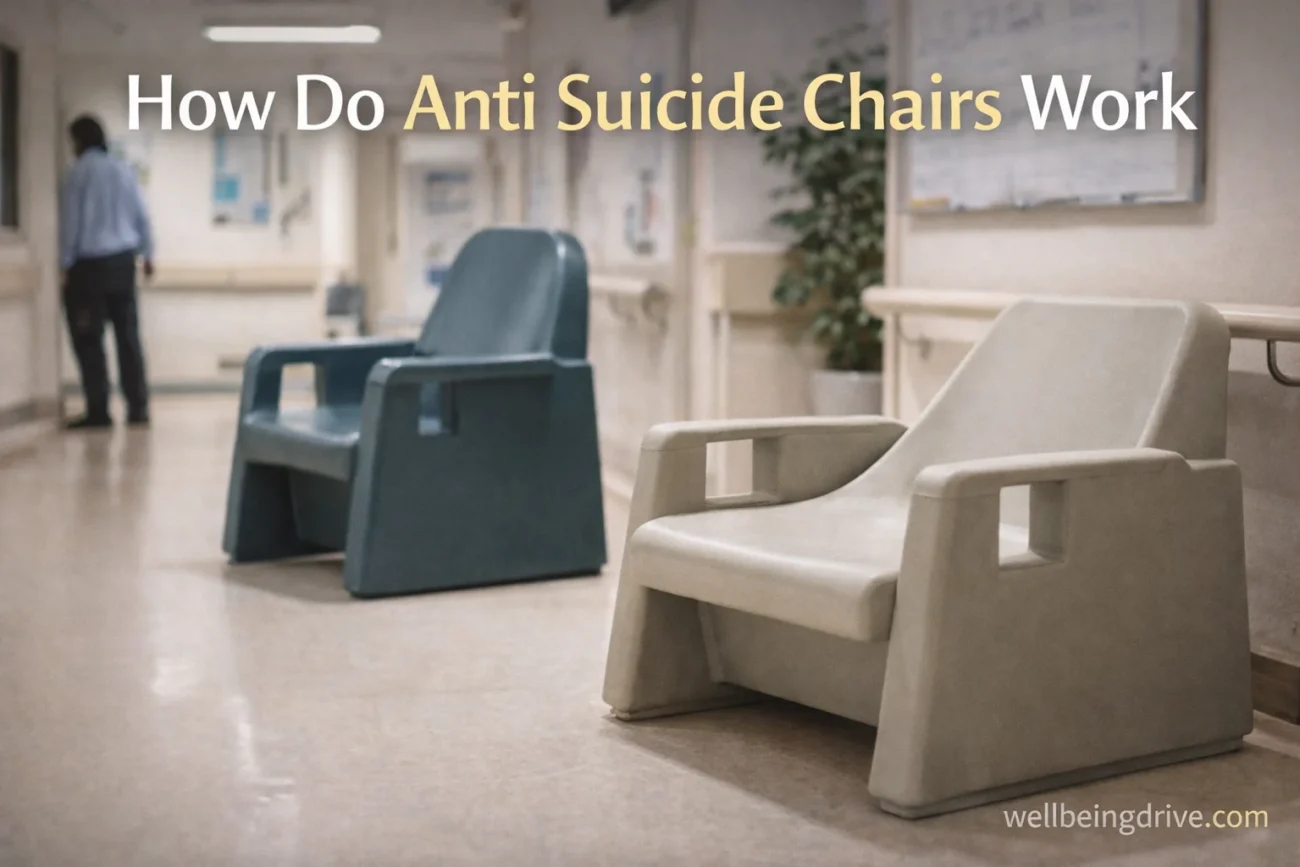
If you are searching how do anti suicide chairs work, the simple explanation is that they are designed using environmental and behavioral safety principles to reduce risk in certain settings. Their purpose is not punishment or restriction but to create a safer environment through thoughtful design choices that discourage prolonged inactivity and promote awareness.
Understanding how these chairs function requires looking beyond the physical structure. Their effectiveness comes from a combination of design features, environmental psychology, and broader mental health safety strategies. This article explains their purpose, where they are used, and the ongoing discussion around their role in prevention.
What Is an Anti Suicide Chair
An anti suicide chair is a piece of safety furniture created to support risk reduction in specific environments. It is designed to minimize prolonged static sitting and encourage movement or engagement.
Definition and Concept
These chairs are part of a broader category known as prevention design. The goal is to use physical surroundings to influence behavior and support wellbeing.
Why They Were Developed
They were developed as part of safety strategies in environments where prolonged isolation or inactivity may increase risk factors. Their design aims to promote awareness and interaction with surroundings.
Difference From Standard Seating
Unlike regular chairs, they are often structured to discourage extended immobility. The focus is on promoting alertness and reducing environmental risk triggers.
How Do Anti Suicide Chairs Work
The function of these chairs is rooted in design elements rather than mechanical operation.
Core Design Principles
They often incorporate ergonomic features that limit prolonged sedentary positioning. This subtle approach encourages movement without discomfort.
How Design Influences Behavior
Behavioral design theory suggests that physical surroundings can shape actions. When seating promotes alertness and movement, it may reduce certain environmental risk factors.
Safety Features and Structural Elements
Common characteristics include stable construction, supportive posture alignment, and reduced opportunity for misuse. These elements contribute to overall safety design.
The Psychology Behind Prevention Through Design
Environmental psychology studies how surroundings influence behavior and emotional responses.
Environmental Psychology Basics
People respond to physical spaces in ways that affect mood and engagement. Well designed environments can support comfort and awareness simultaneously.
Behavioral Influence in Physical Spaces
Subtle design changes such as posture encouragement or visual openness can impact how individuals interact with their surroundings.
Why Physical Environment Matters
Supportive environments can complement broader mental health initiatives by reducing situational stressors.
Where Anti Suicide Chairs Are Commonly Used
These chairs are typically used in environments where safety and supervision are priorities.
Institutional Settings
Certain facilities incorporate prevention furniture as part of risk management strategies.
Workplaces and Public Spaces
In some contexts, they are used to promote active engagement and reduce prolonged isolation.
Healthcare and Support Environments
They may be included as part of holistic safety planning within supportive care settings.
Key Features That Support Safety
The design focuses on balance between functionality and safety.
Ergonomic Structure
Proper posture support helps maintain comfort while discouraging extended immobility.
Reduced Risk Design Elements
Smooth surfaces, stable bases, and durable materials contribute to safety.
Durability and Stability
Strong construction ensures reliability and minimizes hazards.
Purpose and Intended Benefits
The intended role of these chairs extends beyond physical design.
Supporting Mental Health Awareness
Their presence can signal a commitment to safety and wellbeing within an organization.
Encouraging Movement and Engagement
Design features encourage users to remain active and aware of their environment.
Creating Safer Environments
When combined with other strategies, they contribute to comprehensive risk reduction.
Effectiveness and Ongoing Debate
There is ongoing discussion about how effective these chairs are as part of prevention strategies.
Supporters’ Perspective
Some view them as a proactive step that complements other safety measures.
Criticisms and Concerns
Others question whether design alone can significantly influence outcomes without broader support systems.
Observational Insights
Many experts emphasize that environmental solutions should always be paired with human centered care and policies.
Ethical Considerations
Ethics play a significant role in how safety furniture is implemented.
Balancing Safety and Comfort
It is important that design choices do not compromise dignity or wellbeing.
Respecting Human Experience
Transparent communication about purpose helps maintain trust.
Transparency in Implementation
Organizations often combine design changes with supportive programs to ensure a balanced approach.
Comparison With Other Environmental Safety Measures
Anti suicide chairs are one component within a wider prevention framework.
| Safety Approach | Purpose | Focus |
|---|---|---|
| Environmental design | Reduce situational risk | Physical space |
| Policy programs | Promote wellbeing | Organizational culture |
| Support services | Provide direct care | Individual needs |
This comparison shows that furniture design works best when integrated with broader strategies.
Broader Context: Mental Health and Environmental Design
Creating supportive environments involves more than a single intervention.
Role of Supportive Environments
Thoughtful design can contribute to comfort, safety, and awareness.
Integration With Wellness Initiatives
Programs such as counseling or engagement activities complement physical safety measures.
Holistic Prevention Approach
Combining design, policy, and support creates a more effective framework.
Common Misconceptions
Misunderstandings often arise around the purpose of these chairs.
Misunderstanding the Purpose
They are not meant to replace professional support but to complement safety strategies.
Overestimating Effectiveness
No single design solution can address complex mental health challenges alone.
Confusion With Other Safety Furniture
Their function is distinct from general ergonomic or comfort focused seating.
Future Trends in Prevention Design
Safety design continues to evolve with research and innovation.
Innovation in Safety Furniture
Designers explore new materials and structures that balance comfort with safety.
Research Driven Design
Studies in environmental psychology guide improvements in prevention furniture.
Evolving Standards
Organizations increasingly adopt holistic approaches that combine design with wellbeing initiatives.
Key Takeaways
Anti suicide chairs are part of environmental prevention strategies aimed at reducing risk through design. Their effectiveness depends on how they are integrated with supportive programs and policies.
Understanding their purpose helps create a balanced perspective on how physical spaces contribute to safety and wellbeing.
FAQs
Why are anti suicide chairs used
They are used as part of safety strategies to create environments that encourage movement and awareness.
Are they comfortable
Most designs aim to balance comfort with safety by supporting proper posture while discouraging prolonged inactivity.
Do they replace mental health support
They are intended to complement broader prevention programs rather than replace professional care.
Where are they most commonly found
They are used as part of safety strategies to create environments that encourage movement and awareness.
Are they effective on their own
They are most effective when combined with supportive policies and mental health initiatives.
Disclaimer: The content on Wellbeingdrive is for informational purposes only and not a substitute for professional advice. Always consult a qualified expert for health concerns.