
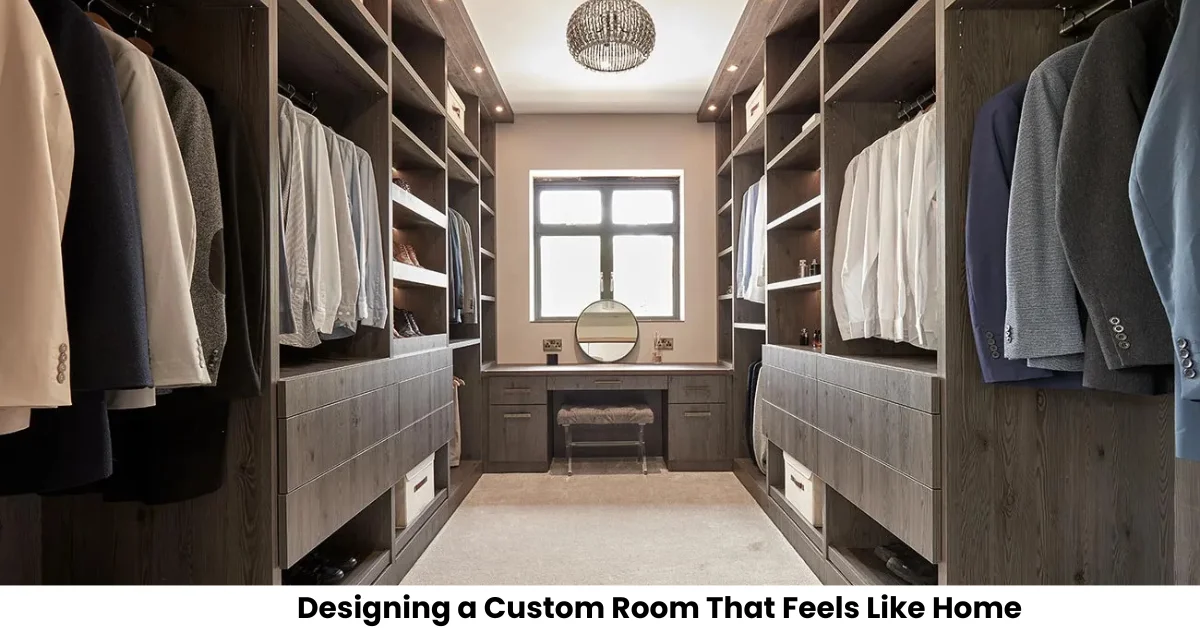
We’ve all been there: scrolling through endless Pinterest boards or flipping through high-end glossies, feeling a mix of inspiration and a tiny bit of “my-house-will-never-look-like-that” envy. Those rooms look so intentional, so curated, and—most importantly—so custom.
The mistake many of us make is thinking that “custom” is a synonym for “expensive.” We assume it requires a personal architect, a bespoke furniture maker, and a five-figure budget for textiles. But I’m here to let you in on a little secret: custom design isn’t about the price tag; it’s about the personality.
Designing a room customly is simply the act of making choices that reflect your specific life, your history, and your quirks. It’s about moving away from the “big box store” showroom look and toward a space that tells a story. Here is how you can stop decorating by numbers and start designing for yourself.
1. Define Your “Core Feeling” Before Your Color Palette
Before you even pick up a paint swatch, I want you to close your eyes and think about how you want to feel in the room. This sounds a bit “woo-woo,” I know, but it’s the foundation of custom design.
Are you looking for a “Sanctuary” (soft textures, muted tones, minimal clutter)? Or are you aiming for “Creative Hub” (bold colors, organized chaos, lots of visual stimuli)?
When I redesigned my home office last year, I realized I was trying to force a “Minimalist Zen” look because it was trendy. But the truth is, I’m a maximalist at heart. I love books, I love travel souvenirs, and I love a bit of drama. Once I leaned into my “Curated Explorer” vibe, the design fell into place. Custom design starts with being honest about who you actually are, not who you think you should be.
2. The Power of the “High-Low” Mix
The most interesting rooms are never all one thing. If everything is expensive, the room feels like a museum where you can’t touch anything. If everything is cheap, the room can feel transient and flimsy.
The “Custom” magic happens in the mix. Pair that heirloom wooden dresser you inherited from your grandmother with a sleek, modern lamp. Throw an expensive, hand-woven rug under a basic sofa you found on sale.
By mixing eras, price points, and textures, you remove the room from a specific “catalog” look. It makes people ask, “Where did you get that?” rather than “Oh, I saw that on page 42 of the IKEA catalog.”
3. Creating Custom Art (The Secret Weapon)
One of the biggest hurdles to a custom-feeling room is the walls. We often see beautiful gallery walls in magazines and think we need to spend thousands at an art gallery to achieve that look.
This is where you can get really creative. To make a room feel truly yours, the art should mean something. Maybe it’s a framed map of the city where you met your partner, or a pressed flower from a memorable hike.
If you’re looking for a specific aesthetic—say, a vintage botanical look or a modern minimalist typography vibe—you don’t have to settle for the generic prints everyone else has. I often recommend using a printable free poster maker to bridge the gap between “blank wall” and “professional gallery.”
Using these tools allows you to customize the colors, the text, and the layout to perfectly match your room’s specific palette. You can take a quote that inspires you or a date that matters to your family and turn it into a high-resolution piece of art. When you print it yourself and put it in a high-quality frame, it looks just as sophisticated as a boutique find, but it carries a piece of your personal story. Plus, it gives you the freedom to swap things out as your style evolves without the “buyer’s remorse” of a major investment.
4. Lighting: The Great Atmosphere Maker
If you want your room to look custom, you have to stop relying on “The Big Light” (the overhead fixture). Nothing flattens a room’s personality faster than harsh, clinical overhead lighting.
Custom design is all about layers. Aim for at least three sources of light in every room:
- Task Lighting: A reading lamp or under-cabinet lights.
- Ambient Lighting: Floor lamps or soft sconces.
- Accent Lighting: Think of a small spotlight on a piece of art or “candlelight” (real or LED).
By controlling the light, you control the mood. A custom-designed room feels different at 10 AM than it does at 8 PM. It’s an interactive experience.
5. Don’t Fear the “Oddball” Piece
Every custom room needs an “anchor of interest”—something that feels slightly out of place but works perfectly. Designers often call this the “tension” in a room.
If your living room is very structured and modern, maybe you bring in an oversized, slightly weathered Moroccan leather ottoman. If your bedroom is all white and airy, maybe you paint a single vintage chair in a shocking neon pink.
These “oddball” pieces act as conversation starters. They break the rules just enough to prove that a human being with a sense of humor and style lives there. Don’t be afraid to take a risk on one piece that you just love, even if it doesn’t “match” the rest of the furniture on paper.
6. Scent and Sound: The Invisible Design
We focus so much on the visual, but a custom space is a multi-sensory experience. Have you ever noticed how high-end hotels have a “signature scent”? You can do that too.
Whether it’s a specific blend of essential oils, a favorite candle, or the smell of fresh eucalyptus in a vase, scent creates a psychological boundary that says, “I am home.”
Similarly, think about the acoustics. A custom room shouldn’t feel echoey or hollow. Use textiles—curtains, rugs, throw pillows—to soften the sound. This creates that “hug” feeling when you walk into a well-designed space.
7. The 80/20 Rule of Maintenance
Designing a room customly also means designing for your habits. If you’re a person who always drops their keys on the dining table, don’t fight it—design a custom “drop zone” with a beautiful ceramic bowl and a small bench.
A room is only beautiful if it functions for the person living in it. About 80% of your room should be “the vision,” and 20% should be practical concessions to your real life. When your home works with your habits rather than against them, it feels like it was built specifically for you—because, in a way, it was.
Wrapping It All Up
At the end of the day, custom interior design isn’t about following a set of rigid rules or having the biggest budget in the neighborhood. It’s about the small, intentional choices you make every day.
It’s about choosing the rug that feels good on your bare feet, framing that one weird photo that makes you laugh, and using a printable free poster maker to create that one perfect piece of wall art that ties the whole color scheme together.
Your home should be a reflection of your journey. It should be a place where you can look at any corner and see a piece of yourself reflected back. So, stop worrying about what’s “in” this season. Start thinking about what makes you feel energized, comforted, and inspired.
Go ahead—paint that wall, move that chair, and start creating a space that is as unique as you are. You’ve got this!
Disclaimer: The content on Wellbeingdrive is for informational purposes only and not a substitute for professional advice. Always consult a qualified expert for health concerns.