
Many parents first notice a strange sensation during a pumping session, seeing their tissue stretch like a piece of saltwater taffy into the plastic. This often leads to the urgent question: what do elastic nipples look like? Understanding this specific anatomical trait is the key to stopping pain and ensuring your pumping sessions are as efficient as possible.
The realization usually happens when you notice your nipple reaching the far end of the flange tunnel, often touching the back of the connector. While it can be alarming to see your skin move this way, elastic nipples are a normal variation of breast anatomy. By identifying the signs early, you can adjust to protect your milk supply and your comfort.
A Plan for Pumping Comfort and What Do Elastic Nipples Look Like
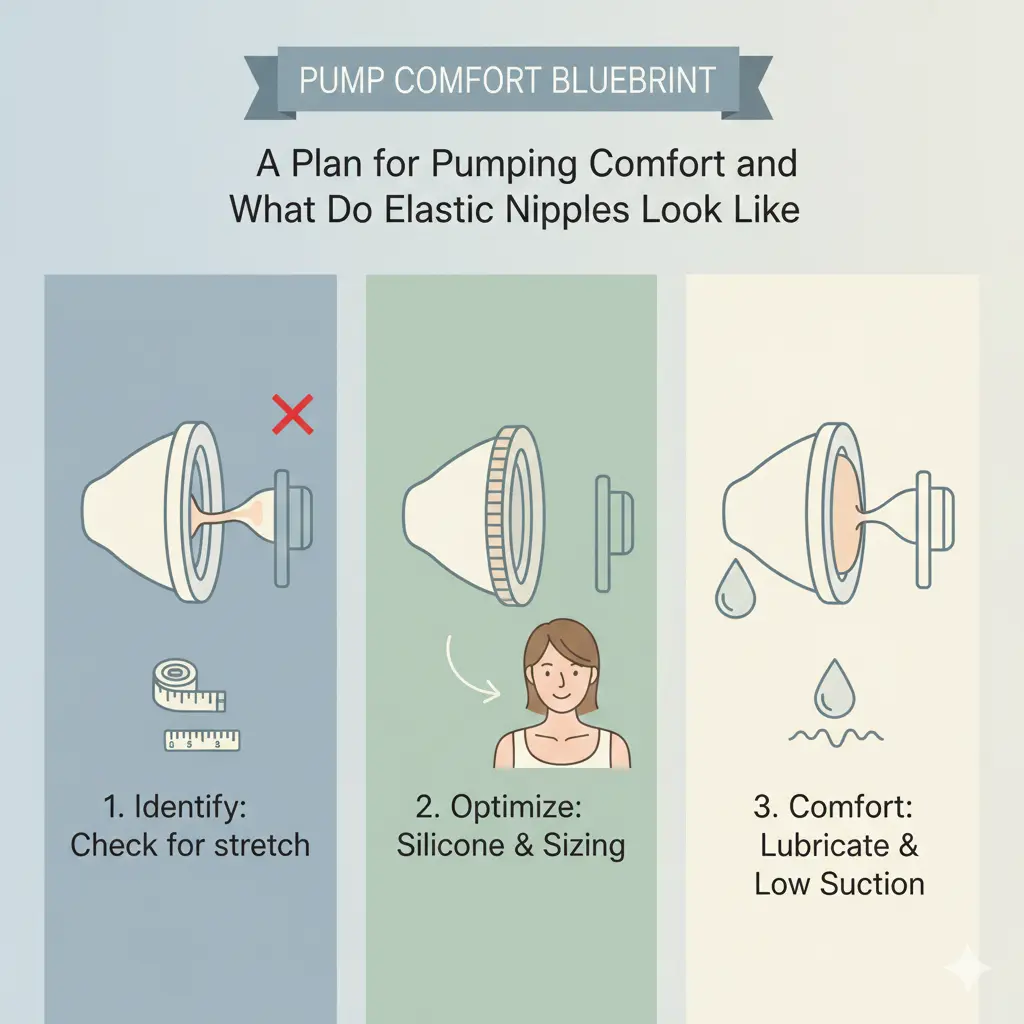
To understand what do elastic nipples look like, you have to observe them during an active pumping session. At rest, elastic nipples often look identical to any other nipple type. The “elasticity” only reveals itself once the vacuum of a breast pump is applied to the breast.
The most prominent sign is the extreme elongation of the nipple shaft. In a standard scenario, a nipple should move slightly back and forth within the flange tunnel. With elastic tissue, the nipple continues to stretch deeper and deeper into the tunnel until it often hits the back of the connector or the valve.
Another visual giveaway is the involvement of the areola. If you notice that a significant portion of your areolar skin is being pulled into the flange tunnel along with the nipple, you are likely dealing with elastic tissue. This “creeping” of the skin can cause the tissue to look tight, shiny, or even slightly translucent under the pressure of the vacuum.
| Feature | Standard Nipple Behavior | Elastic Nipple Behavior |
| Stretch Length | Moves slightly within the tunnel. | Stretches 3x its resting length. |
| Areola Entry | Stays mostly outside the flange. | Is pulled deep into the tunnel. |
| Tunnel Contact | Rarely touches the back. | Frequently hits the valve or connector. |
| Post-Pump Shape | Returns to shape quickly. | May look swollen or “doughnut-like.” |
Why Does My Nipple Stretch So Far?

The physics of pumping relies on a vacuum to draw milk from the ducts. For those with elastic breast tissue, the connective tissue and skin are naturally more pliable. This isn’t a medical “flaw” but rather a biological variation in how your body responds to external pressure.
Hormones play a significant role in this flexibility. During pregnancy and postpartum, your body produces higher levels of relaxin, a hormone designed to loosen ligaments and tissues. For some, this results in nipples that are highly mobile and reactive to the suction levels of a breast pump.
The internal structure of the nipple is composed of smooth muscle and collagen. When these fibers are more spaced out or more flexible, the nipple acts like a rubber band. While this can make breastfeeding directly at the breast easier for some babies, it often creates mechanical challenges when using hard plastic pump parts.
The Difference Between Elasticity and Wrong Flange Size
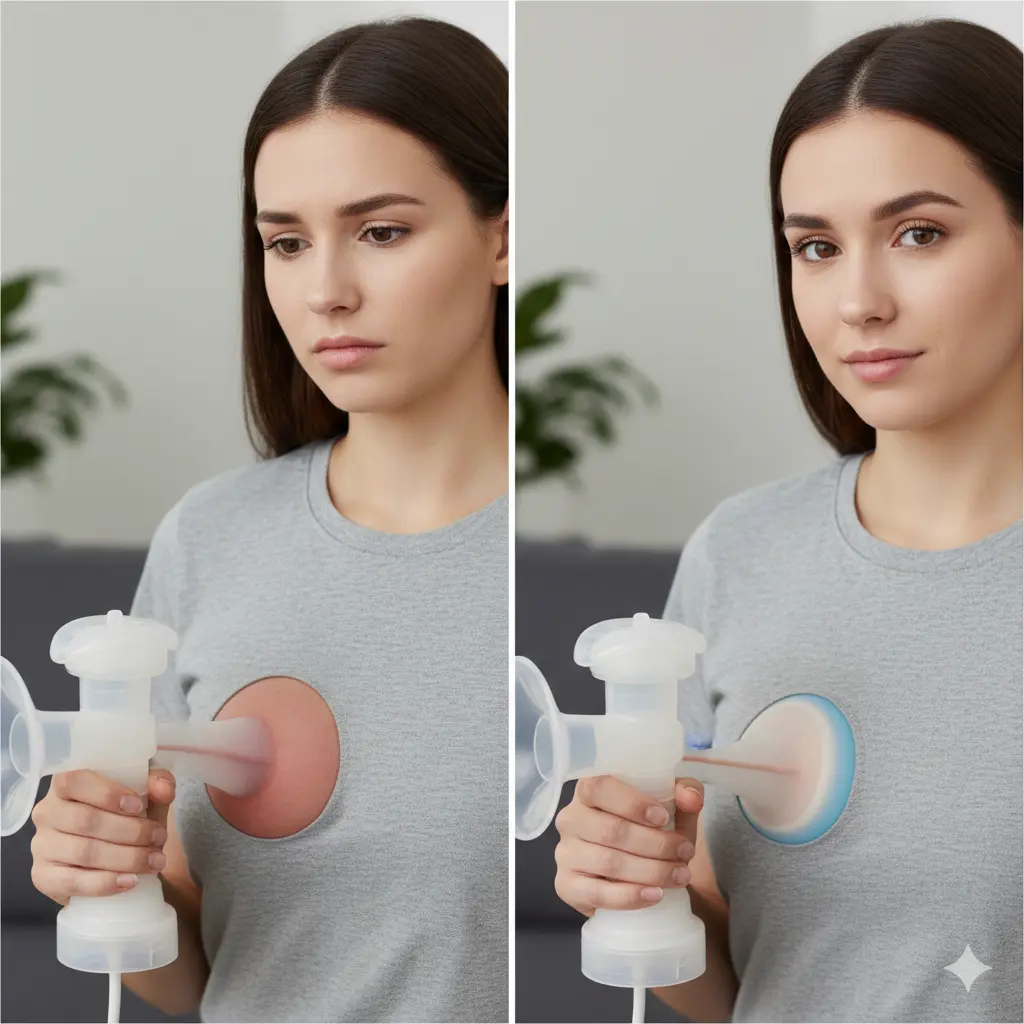
A common pitfall in the pumping community is confusing elastic tissue with an oversized flange. If your flange is too large, the vacuum will naturally pull more of your breast into the tunnel because there is too much empty space. This can mimic the appearance of elasticity.
To tell the difference, look at the nipple shaft itself. If the nipple is staying relatively short but a large ring of areola is being sucked in, your flange is likely too big. If the nipple itself is stretching into a long, thin cylinder that reaches the end of the plastic, you have true elastic nipples.
Using a nipple ruler is the best way to distinguish between the two. Measure your nipple diameter at the base before pumping. If you are using a 24mm flange on a 17mm nipple, you will see “pseudo-elasticity.” Correcting the size first is essential before assuming your tissue is the primary issue.
Impact on Milk Supply and Letdown
The way your nipples look in the flange directly impacts your milk ejection reflex. For a pump to work effectively, it needs to provide a “tug and release” motion that mimics a baby’s nursing. When a nipple is elastic, it often fills the entire tunnel, eliminating the space needed for that effective tug.
When the nipple hits the back of the flange, the vacuum is effectively blocked or dampened. This leads to inefficient milk removal, which can signal to your body to produce less milk over time. Many parents believe they have a “low supply” when they actually just have a mechanical mismatch between their tissue and their pump.
Furthermore, the constant friction of the nipple rubbing against the plastic walls can cause nipple trauma. This leads to swelling (edema), which makes the nipple even larger and more prone to stretching. It becomes a frustrating cycle of pain and decreased output that can be solved with the right tools.
Solutions for Pumping with Elastic Nipples
Once you recognize what do elastic nipples look like and confirm you have them, the next step is changing your strategy. Standard hard plastic flanges are often the enemy of elastic tissue because they offer no “grip” to stop the stretch.
Silicone flange inserts are one of the most effective solutions. Silicone provides a natural friction that helps “hold” the tissue in place, preventing it from sliding too far down the tunnel. These inserts also reduce the diameter of the flange, ensuring a tighter, more supportive fit around the nipple shaft.
“The goal for elastic tissue is to provide a gentle ‘stop’ to the stretch without causing friction burns. Silicone is the gold standard for this.” — Lactation Consultant Insight
Another option is exploring specialized flanges designed with a tapered or shortened tunnel. Some brands create flanges that mimic the compression of a baby’s mouth. These tools help move the milk forward through the ducts rather than just stretching the skin backward into the pump.
The Importance of Suction Settings
It is a common myth that higher suction equals more milk. For those with elastic tissue, high vacuum strength is actually counterproductive. The stronger the pull, the further the nipple stretches, and the more pain you experience.
Try lowering your pump’s suction to a level that is “comfortably strong” but does not cause the nipple to hit the back of the connector. You may find that a lower setting actually results in a quicker letdown because your body is not bracing for pain.
Focus on the “cycle speed” instead. A faster cycle speed with lower suction can often stimulate the nerves in the nipple more effectively than a slow, deep, painful pull. This encourages the oxytocin flow necessary for milk to move out of the breast.
Lubrication: The Secret to Friction Reduction
Because elastic nipples spend so much time in contact with the flange walls, lubrication is non-negotiable. Using a food-grade lubricant like organic coconut oil or a dedicated nipple balm can prevent the skin from sticking and tearing.
Apply a small amount of lubricant inside the tunnel of the flange before you start. This allows the nipple to glide smoothly if it does stretch, reducing the risk of friction blisters or “doughnut” swelling around the base. Be careful not to get lubricant on the rim of the flange, as this can cause the pump to slip off your breast.
Troubleshooting Wearable Pumps
Wearable pumps are incredibly convenient, but they often have shorter tunnels than traditional hospital-grade pumps. For someone with elastic nipples, this means the nipple hits the back of the wearable device almost instantly.
If you use a wearable pump, you must be extra diligent about using the correct silicone inserts. Many wearable brands now offer specific “short-tunnel” inserts or cushions that provide the necessary buffer for elastic tissue. Without these, you may experience significant discomfort and poor drainage while on the go.
Finding the Right Fit
Consider the experience of Sarah, a mother who struggled with pain for three months. She was using the standard 24mm plastic flanges that came with her pump. She noticed her nipples were always red and touched the back of the plastic “duckbill” valve.
After measuring her nipples, she realized she was actually a 19mm. She switched to a 21mm silicone insert and lowered her suction settings. The result? Her pumping sessions went from 30 minutes of pain to 15 minutes of comfort, and her milk output increased by 2 ounces per session.
Managing Nipple Swelling (Edema)
If your nipples look significantly larger after you finish pumping than they did before you started, you are likely experiencing vacuum-induced edema. This is common with elastic tissue because the fluid in the breast tissue is drawn into the nipple during the long stretch.
To manage this, try using a cold compress for a few minutes after pumping to reduce inflammation. Ensure your flanges are not so tight that they are cutting off circulation at the base. If the swelling persists, it is a sign that your vacuum is too high or your flange size is still slightly off.
Conclusion: Achieving Pumping Peace of Mind
Identifying your specific breast anatomy is a game-changer for any pumping parent. By spotting the signs of extreme stretching and areola pull, you can move away from the “one size fits all” approach. Gaining a clear sense of what do elastic nipples look like allows you to stop guessing and start using the right tools.
Remember that comfort equals milk. When you eliminate the pain caused by elastic tissue hitting the back of a flange, your body can relax. This relaxation allows you to release milk more efficiently and protects your delicate tissue from trauma. Focus on silicone materials, precise sizing, and proper lubrication to ensure your pumping sessions remain productive.
Continuing to struggle with pain or low output despite these changes is a signal to seek expert help. Consulting with an IBCLC can provide the personalized support you need to reach your feeding goals with confidence. They can offer specialized advice that ensures you are using the most effective techniques for your body. Taking this step ensures a much smoother and more comfortable breastfeeding journey.
FAQs About What Do Elastic Nipples Look Like
Can elastic nipples be “fixed” or will they change over time?
Elasticity is a biological trait of your connective tissue and cannot be “cured.” However, it can be perfectly managed by using silicone flanges and lower suction settings to prevent the tissue from over-stretching.
Do elastic nipples make breastfeeding directly at the breast harder?
Usually, no. Many infants find elastic tissue easier to latch onto because it is so pliable. The “problem” is almost entirely mechanical and only occurs when the tissue interacts with the rigid plastic of a breast pump.
Should I use a larger flange if my nipple is rubbing the sides?
Actually, a larger flange often worsens the issue by allowing more areola to be sucked into the tunnel. Instead, use a silicone insert in your measured size to “grip” the tissue and stop it from sliding too far back.
Is it normal for my nipples to look purple or white after pumping?
No, this indicates a vasospasm or restricted blood flow caused by extreme stretching or a flange that is too tight. Lower your suction levels and ensure your flange isn’t “choking” the base of the nipple.
How can I stop my nipple from hitting the back of the flange?
The most effective methods are using silicone inserts to provide friction, applying a pump-safe lubricant inside the tunnel, and reducing the vacuum strength on your breast pump to a more comfortable level.
Can I use coconut oil as a lubricant for elastic nipples?
Yes, organic coconut oil is an excellent, food-safe way to reduce friction. It allows elastic tissue to glide smoothly against the flange walls, preventing the “pulling” sensation that leads to swelling and blisters.
Disclaimer: WellbeingDrive provides health information for educational purposes only. Do not use this content as a substitute for professional medical advice. Consult your doctor before making health related decisions.