
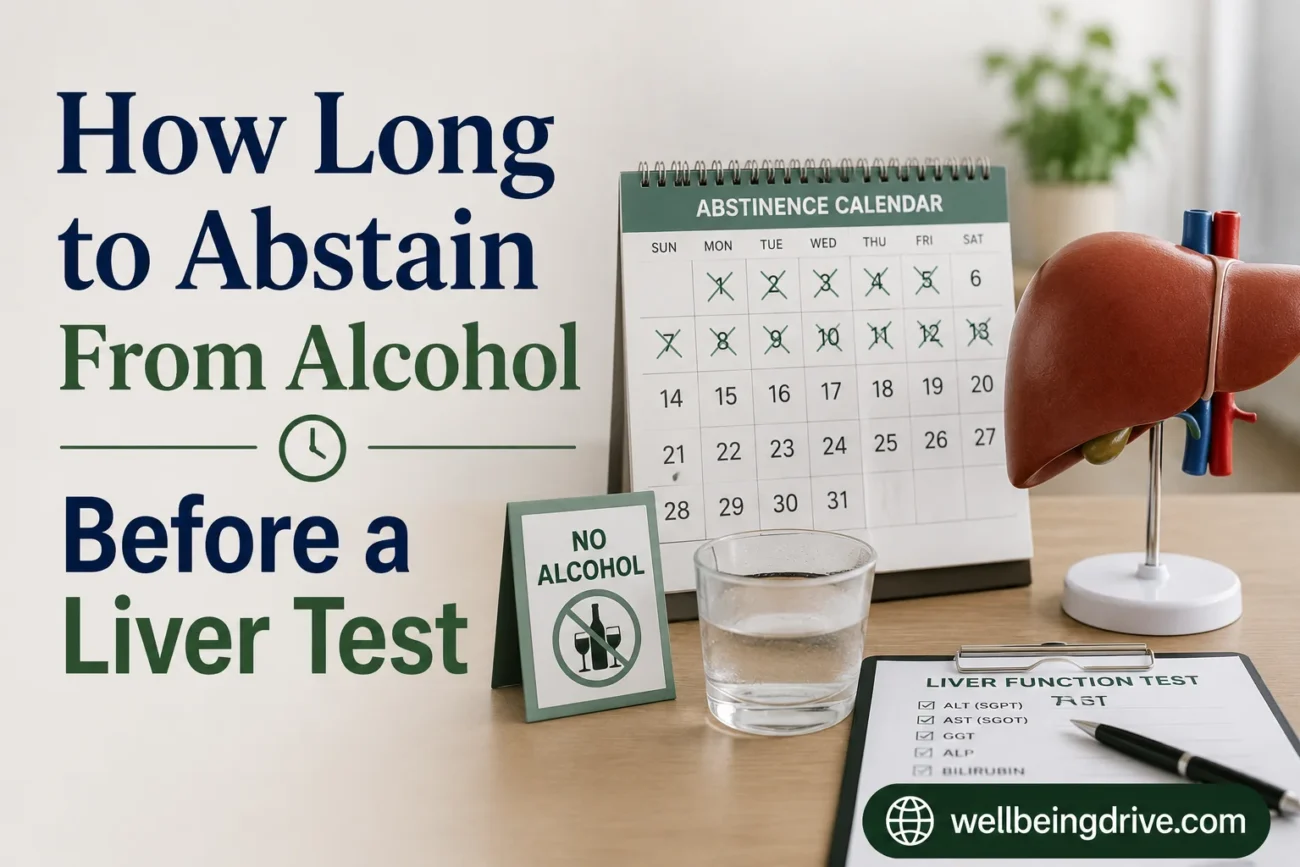
How Long to Abstain From Alcohol Before a Liver Function Test: A Clear Clinical Answer
The answer depends on how much you drink and which enzymes your test is measuring. For most people the minimum is 24 to 48 hours. For regular or heavy drinkers, a week or more gives a more reliable result. Here is the full explanation.
A liver function test measures specific enzymes and proteins in the blood to assess how well the liver is working. Alcohol directly affects several of these markers, sometimes significantly, which means drinking in the days before the test can produce results that look abnormal even in an otherwise healthy person. Getting the preparation right is not about hiding anything from your doctor. It is about making sure the test reflects your actual baseline rather than the temporary effects of alcohol still clearing your system.
The Direct Answer
Occasional drinkers: Abstain for a minimum of 24 hours before the test. 48 to 72 hours is better if you want a more reliable result, particularly for GGT. Regular or moderate drinkers: Abstain for at least 48 to 72 hours, ideally longer. Heavy or long-term drinkers: At least 7 days is recommended, as GGT in particular can remain elevated for two to three weeks after sustained heavy drinking. If your test is specifically monitoring suspected alcohol-related liver disease, your doctor may advise even longer abstinence for a meaningful baseline reading.
Why Alcohol Affects Liver Test Results
The liver is the primary site for alcohol metabolism. When you drink, liver cells ramp up enzyme production to process the alcohol, and those enzymes spill into the bloodstream in measurable amounts. According to Mayo Clinic’s overview of liver function tests, the tests measure enzymes that liver cells release in response to damage or disease. Alcohol consumption mimics some of those signals even without causing actual liver disease.
The practical problem is that a blood sample drawn while alcohol’s effects are still active may show elevated enzyme levels that look like early liver disease when they are actually a normal physiological response to recent drinking. Equally, in a person with genuine liver disease, recent drinking can obscure the pattern that would otherwise help a doctor understand what is happening.
Alcohol also causes a rapid rise in triglyceride levels, increases inflammatory markers like C-reactive protein, and in heavy drinkers reduces albumin and raises bilirubin. A full blood panel taken shortly after drinking can therefore affect multiple readings simultaneously, not just the liver-specific ones.
A standard liver function test panel includes: ALT (alanine aminotransferase), AST (aspartate aminotransferase), GGT (gamma-glutamyl transferase), ALP (alkaline phosphatase), bilirubin, albumin, and total protein. Each provides a different window into liver health, and alcohol affects each of them differently in terms of how much it elevates them and how long the effect lasts.
How Alcohol Affects Each Liver Enzyme
GGT — The Most Alcohol-Sensitive Marker
Gamma-glutamyl transferase is the enzyme most reliably elevated by alcohol consumption. It is often described as a marker of recent alcohol intake because it rises with even moderate drinking and stays elevated longer than other markers. Even a few drinks over consecutive days can produce a GGT reading above the normal range. In regular and heavy drinkers, GGT can be significantly elevated for weeks after the last drink.
GGT is so closely associated with alcohol use that clinicians use it specifically to monitor drinking patterns in patients with suspected alcohol-related liver disease. A persistently elevated GGT that normalises during a period of abstinence is considered strong clinical evidence of alcohol as the cause.
ALT and AST
Alanine aminotransferase and aspartate aminotransferase are both elevated by alcohol but respond somewhat differently. A single evening of moderate drinking can transiently raise both. In alcohol-related liver disease, AST tends to rise proportionally more than ALT, so an AST to ALT ratio greater than 2:1 is a recognised clinical indicator that alcohol is likely contributing to the liver enzyme elevation rather than another cause such as viral hepatitis.
Both ALT and AST normalise more quickly than GGT after alcohol is stopped. In people without underlying liver disease, they often return toward normal within one to four weeks of abstinence.
ALP, Bilirubin, and Albumin
Alkaline phosphatase is less consistently elevated by alcohol than GGT, ALT, or AST, though chronic heavy drinking can raise it over time. Bilirubin rises mainly in the context of significant alcohol-related liver damage rather than from occasional drinking. Albumin and total protein are reduced by chronic heavy drinking because the liver is the primary producer of albumin, and sustained damage impairs that production. For someone who drinks occasionally, albumin and bilirubin are unlikely to be noticeably affected by a few days of drinking before a test.
How Long Each Enzyme Takes to Normalise
The clearance timelines below apply to people without pre-existing liver disease. In those with liver damage, enzymes may take longer to return to baseline or may not fully normalise.
A 2020 study published in the Indian Journal of Psychiatry tracking liver enzyme changes in alcohol-dependent patients during detoxification found that AST and ALT levels improved significantly within 10 days of abstinence, while GGT showed no significant improvement over the same 10-day period. This confirms that GGT is the marker most likely to remain elevated even after shorter periods of abstinence, and explains why a 7-day minimum is insufficient for GGT normalisation in heavy drinkers.
If You Are a Regular or Heavy Drinker
Seven days of abstinence is the commonly cited minimum for regular drinkers, but it is important to understand what that means in practice. ALT and AST will have improved measurably by day 7. GGT is unlikely to have fully normalised, particularly in someone who drinks heavily or has been doing so for a long time. If your test is specifically checking for alcohol-related liver damage, a result taken at 7 days may still show elevated GGT even if you have genuinely abstained. Your doctor should know this so they interpret the result correctly rather than concluding that your liver is not recovering.
For someone with a history of heavy alcohol use, a liver function test is often most useful when taken after a meaningful period of abstinence alongside a clear discussion about drinking history with the doctor ordering the test. A single snapshot result is harder to interpret in isolation than a result accompanied by honest drinking history and, ideally, a comparison with a previous test.
Chronic heavy drinking can cause changes to the liver that are not fully reversible within weeks of abstinence. These include fatty liver, alcoholic hepatitis, and cirrhosis. Understanding what symptoms indicate progressive liver disease is important context for anyone whose drinking history may have led to more significant liver changes over time.
Other Factors That Affect LFT Results Beyond Alcohol
Alcohol is not the only variable that affects liver function test results. Several other factors can elevate liver enzymes or otherwise distort a result, and being aware of them helps ensure the test reflects liver health accurately.
Medications and Supplements
Many common medications can elevate liver enzymes, including statins, NSAIDs like ibuprofen and naproxen, certain antibiotics, antifungal medications, and paracetamol taken in higher doses. Some herbal supplements including kava, valerian, and high-dose vitamin A are also hepatotoxic. Tell your doctor about every medication and supplement you take before a liver function test.
Intense Exercise
Strenuous exercise in the 24 to 48 hours before a blood draw can raise AST and ALT because muscle tissue releases these enzymes during intense exertion, not just the liver. A hard gym session or long run the day before a liver test can produce a mildly elevated reading that has nothing to do with liver health. Avoiding intense exercise in the 48 hours before an LFT produces a cleaner result.
Fasting Status
A standard liver function test does not require fasting in the same way that a lipid panel or fasting glucose test does. However, if your blood draw includes a cholesterol or triglyceride panel, you will typically be asked to fast for 8 to 12 hours. Eating a very high-fat meal before a blood draw can transiently affect triglyceride readings, so avoiding heavy meals in the few hours before the test is sensible regardless. For those managing both cholesterol and liver health, understanding how cardiovascular and metabolic markers interrelate helps contextualise why multiple markers are often tested together.
What to Tell Your Doctor
Tell your doctor how much you drink and when you last had a drink before your test. This is not about judgment. It directly affects how they interpret your results. An elevated GGT in someone who drank three nights ago and otherwise has no liver symptoms is a very different clinical finding from the same elevated GGT in someone who has been abstinent for three weeks. Without the context of your drinking habits, your doctor is working with incomplete information, and that can lead to unnecessary follow-up tests, incorrect reassurance, or a missed opportunity to identify a real problem early.
If you drank closer to your test date than the guidelines recommend, it is better to tell your doctor than to say nothing. They can either postpone the test, or if they proceed, note the drinking history in their interpretation of the results. A result flagged as potentially affected by recent alcohol use is far more useful than an unexplained abnormal result that triggers a cascade of further investigation.
For those who are monitoring their liver health alongside managing broader wellbeing, the role of nutrition in supporting liver function is worth understanding. Certain nutrients support liver detoxification pathways, and maintaining adequate intake through diet is part of the broader picture. The relationship between magnesium, stress, and systemic inflammation is one area with relevant crossover, as chronic stress and inflammation both affect liver enzyme levels independently of alcohol. Understanding how magnesium supports the body’s stress and inflammatory response provides useful additional context for anyone monitoring their liver markers over time.
Key Takeaway
The minimum abstinence period before a liver function test is 24 hours for occasional drinkers, 48 to 72 hours for moderate drinkers, and at least 7 days for regular or heavy drinkers. GGT is the marker most sensitive to alcohol and the one that takes longest to normalise, which is why the 24-hour guideline is an absolute minimum rather than a comfortable target.
Getting the preparation right means your doctor is reading your actual liver health rather than the residual effects of alcohol. If you have already drunk closer to the test than recommended, telling your doctor is always the right call. A result interpreted with accurate context is far more useful than one interpreted in the dark.
Medical Disclaimer: This article is for informational purposes only and does not constitute medical advice. Liver function test preparation guidelines may vary depending on your specific test, clinical history, and the instructions given by your healthcare provider. Always follow the specific preparation guidance provided by your doctor or the laboratory conducting your test. If you have concerns about your liver health or drinking habits, speak to a qualified healthcare professional.
Frequently Asked Questions
Yes. Even a single drink the evening before can transiently elevate ALT and AST, potentially producing a result that appears to indicate liver stress when none is present at baseline. GGT is particularly sensitive and can show a measurable rise even from moderate single-occasion drinking. Most guidelines recommend at least 24 hours of abstinence for occasional drinkers. If you had a drink the night before your test, tell your doctor so they can interpret the results in that context.
No. GGT is the most alcohol-sensitive marker and can remain elevated for two to three weeks after heavy drinking. ALT and AST both rise with alcohol use but normalise more quickly, typically within one to four weeks of abstinence. ALP is less consistently affected. Bilirubin rises primarily in the context of heavy sustained drinking rather than occasional use.
Elevated GGT alongside raised ALT and AST, particularly with an AST to ALT ratio greater than 2:1, is a recognised pattern suggesting alcohol-related liver changes. GGT is used clinically to assess drinking patterns over weeks. Your doctor cannot tell exactly how much you drank or when, but the enzyme pattern can suggest alcohol involvement. Being transparent about your drinking gives your doctor the context to interpret results accurately.
There are no medical restrictions on drinking after the test itself. However, if the test was ordered to evaluate liver health and results come back abnormal, your doctor may advise reducing alcohol as part of follow-up care. Unless you have been told to abstain as part of a treatment plan, there is no medical requirement to avoid alcohol after the test.
No. The liver processes ethanol regardless of whether it comes from wine, beer, or spirits. The quantity of ethanol consumed is what matters for liver enzyme elevation, not the beverage type. For pre-LFT abstinence purposes, any alcoholic drink counts and total ethanol units across the preceding days is the relevant variable.
Yes, indirectly. Alcohol is a diuretic and causes dehydration that can increase the concentration of substances in the blood, producing slightly elevated readings. Alcohol-induced dehydration can also affect kidney function markers sometimes measured alongside liver tests. Drinking adequate water in the 24 hours before a blood draw helps ensure the sample is not concentrated and supports more accurate readings.
Normal ranges vary slightly between laboratories. Broadly: ALT under 56 IU/L in men and under 36 IU/L in women. AST under 40 IU/L. GGT under 61 IU/L in men and under 36 IU/L in women. ALP 44 to 147 IU/L. Total bilirubin 0.1 to 1.2 mg/dL. Your laboratory report will include its reference range alongside your results, and your doctor will interpret any out-of-range values in the context of your full clinical picture.
Disclaimer: WellbeingDrive provides health information for educational purposes only. Do not use this content as a substitute for professional medical advice. Consult your doctor before making health related decisions.