
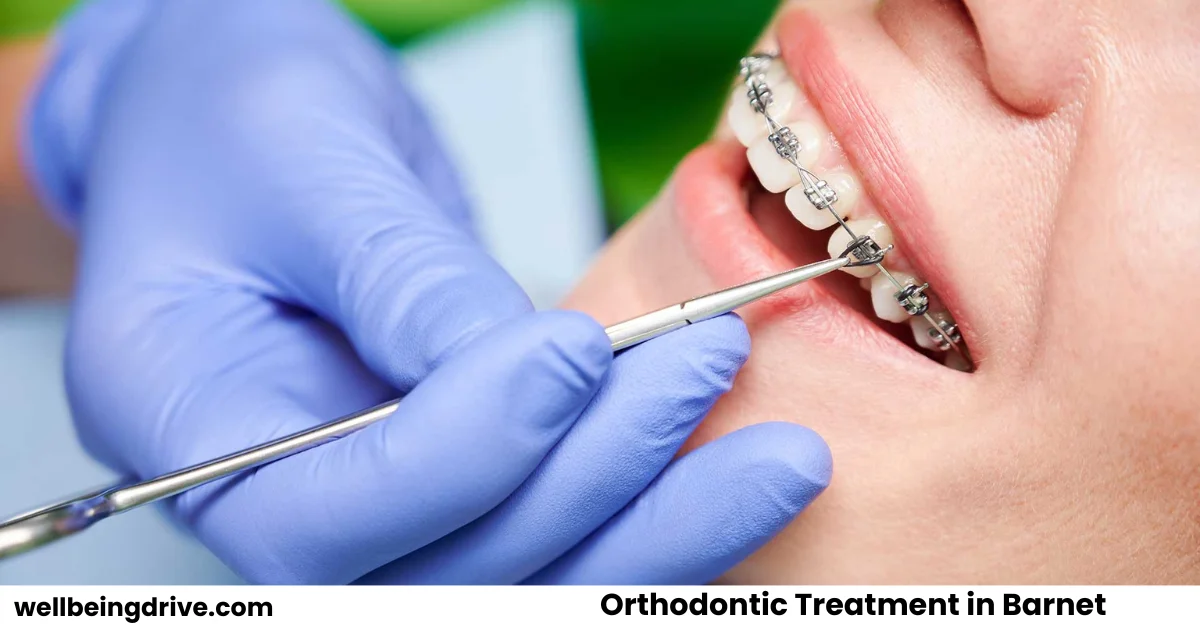
Choosing the right orthodontic clinic in Barnet can shape more than just your smile. The clinical outcome, treatment experience, and long-term oral health depend on where you receive care. Orthodontics covers everything from NHS fixed braces and affordable clear aligners to specialist private clinics offering Invisalign, lingual braces, and treatment for complicated adult or children’s cases. The differences between providers in Barnet run deep: clinical training, technology, patient access, and price vary so widely that they can change how successful your treatment will be.
The main challenge? Telling the difference between a general dental practice that provides orthodontics alongside other services and a dedicated orthodontic clinic where every clinician is GDC-registered as a specialist orthodontist. For complex cases or patients wanting the highest level of skill, this distinction matters most.
This guide covers five clinics representing the full range of options in Barnet for 2026. You’ll find a premium multi-disciplinary private practice with specialist orthodontists and VR technology for anxious patients, a specialist-only group with in-house 3D printing, a spa-style private practice with a focused interest in teeth straightening, a family practice founded in 1983 offering NHS and private treatment, and an NHS and private combined practice with Cone Beam CT scanning for precise orthodontic diagnosis.
How to Select the Best Orthodontic Clinic in Barnet
Before booking a consultation, match your needs to what each clinic actually offers.
- GDC specialist registration: Check whether the clinician treating you appears on the General Dental Council’s specialist list in orthodontics rather than being a general dentist who has taken short courses in orthodontic treatment, as this determines the level of clinical training available and matters most for complex adult cases, jaw alignment problems, and children’s orthodontics.
- Range of orthodontic systems offered: Check whether the clinic provides the specific type of treatment you’re considering such as clear aligners including Invisalign, lingual braces, ceramic braces, conventional metal braces, or short-term cosmetic systems so the clinic can offer the most appropriate clinical option instead of just what it’s equipped to deliver.
- NHS vs. private treatment availability: Check whether the clinic accepts NHS patients for orthodontic treatment, offers private-only care, or provides both, alongside any in-house dental plans or 0% financing for eligible patients, to work out which clinics fit your budget before you invest time in a consultation.
- Technology and diagnostic equipment: Check whether the clinic uses advanced diagnostic tools such as iTero digital scanning, Cone Beam CT, or 3D printing for retainers, because this affects how accurately treatment can be planned and how quickly certain elements like retainers can be produced.
- Suitability for nervous patients or specific patient groups: Check whether the clinic has specific provisions for anxious patients such as sedation, VR technology, or a clinically designed calm setting, or specialised experience with children, teens, or patients with complex needs, to work out whether the practice suits the specific patient needing treatment.
Best Orthodontic Clinics in Barnet for 2026
1. Zental Dental Barnet
- Location and access: 85 High Street, Barnet, EN5 5UR; CQC-registered; accessible via High Barnet tube station (Northern Line), buses 383, 234, and 326; pay and display parking on surrounding streets.
- Practice type: Premium private multi-disciplinary practice; part of Zental group with locations across London and Milton Keynes; award finalist dental and facial beauty group.
- Orthodontic treatments: Invisalign, ceramic braces, metal braces, lingual/Incognito braces, Six Month Smiles, Quick Straight Teeth, Angel Aligner, clear braces; children’s and adult orthodontics; all ages treated.
- Clinical team: GDC specialist-registered orthodontists including Dr Cholia (MSc Orthodontics with distinction, Eastman Dental Institute; MOrth RCS England; qualified Guy’s Hospital 2002) and Dr Sally (MSc Orthodontics with distinction, King’s College London; MSc Paediatric Dentistry).
- Anxious patient provisions: Virtual Immersion VR technology; IV sedation; spa-like environment with calming scents, soft lighting, ergonomic chairs, and ultra-quiet filtration; 24/7 online booking.
Zental Dental Barnet operates from 85 High Street as a CQC-registered premium private practice with GDC specialist-registered orthodontists, a full range of orthodontic systems for all ages, and dedicated provisions for nervous patients including Virtual Immersion VR and IV sedation in a spa-like clinical setting.
Best For: Patients seeking specialist-led private orthodontic care in Barnet, including complex adult cases or those needing sedation, who want the widest range of orthodontic systems under one roof with dedicated provisions for dental anxiety.
Standout Feature: Virtual Immersion VR technology combined with IV sedation and a purpose-designed spa-like clinical environment, making Zental one of the few orthodontic providers in Barnet set up for patients with serious dental anxiety.
2. Origin Orthodontics
- Specialisation: Specialist orthodontic-only practice; all treatment provided by UK-trained Specialist Orthodontists registered on the GDC specialist list; operating for 20 years; Platinum Incognito™ Provider and Diamond Invisalign® Provider.
- Barnet location: Mill Hill practice opened 2022 (relocated from Southgate); purpose-built modern clinic; 10-minute walk from Mill Hill Broadway Overground Station; off-street parking; free public car park nearby with up to 1 hour free.
- Technology: In-house 3D printing for same-day retainers; iTero digital scanning.
- Treatments: Invisalign (Diamond provider), Incognito lingual braces (Platinum provider), fixed metal braces, Iconix braces, ceramic/clear braces, Angel Aligners, retainers, dental monitoring, children’s and adult orthodontics.
- Consultation: Free consultation with Treatment Coordinator; specialist assessment with Dr Usman Qureshi available at £95 for adults and children; serves international patients and Diplomatic community families.
Origin Orthodontics is a specialist-only practice with 20 years’ experience, where all treatment is delivered exclusively by GDC-registered Specialist Orthodontists. It serves Barnet patients from its purpose-built Mill Hill clinic opened in 2022, with in-house 3D printing for same-day retainers, iTero digital scanning, and Diamond Invisalign and Platinum Incognito provider status.
Best For: Patients who want all orthodontic treatment delivered exclusively by GDC-registered Specialist Orthodontists, particularly those seeking Invisalign or Incognito lingual braces from one of London’s most highly accredited providers of both systems.
Standout Feature: In-house 3D printing for same-day retainers combined with iTero digital scanning, cutting the wait time for retainers to the same appointment and removing the need for traditional impressions in treatment planning.
3. Denchic Dental Spa
- Location and access: Wood Street, Barnet; half a mile south-east of High Barnet tube station; one-minute walk from Manor Road bus stops; part of Denchic Dental Spa group with practices in Crouch End, Golders Green, and Barnet.
- Practice type: Private dental practice; spa-like environment; free consultations offered.
- Practice principal: Dr Gill (BDS, MFDS RCS, DipImp); special clinical interest in implants and teeth straightening; 6 Month Smiles certified provider; committed to ongoing training and education.
- Orthodontic treatments: Invisalign, 6 Month Smiles, Quick Straight Teeth, Incognito lingual braces, fixed braces, clear aligners; full cosmetic range including dental implants, veneers, and composite bonding.
- Opening hours: Monday to Friday 9am to 6pm; Saturday appointments available; 24/7 emergency dental care.
Denchic Dental Spa’s Barnet practice on Wood Street is a private clinic led by Dr Gill (BDS, MFDS RCS, DipImp), whose special clinical interest in teeth straightening supports a range of orthodontic options including Invisalign, 6 Month Smiles, Incognito lingual braces, and Quick Straight Teeth, with free consultations, Saturday appointments, and 24/7 emergency availability.
Best For: Private patients in Barnet who want a clinician with a dedicated special interest in teeth straightening, the flexibility of Saturday appointments, and a practice that combines orthodontics with broader cosmetic dentistry including implants and composite bonding.
Standout Feature: The combination of 6 Month Smiles certification and a special clinical interest in teeth straightening under Dr Gill, offering a short-term cosmetic orthodontic pathway for mild-to-moderate alignment issues that can deliver visible results within approximately six months.
4. East Barnet Village Dental Practice
- Location and establishment: 19 Longmore Avenue, East Barnet, London EN4 8AG; established 1983; originally a brother-sister partnership, now led by twin brothers who are both dentists; renovated in 2019 with modern facilities; ample parking available.
- NHS and private: One of the few Barnet practices offering both NHS and private dental and orthodontic treatment; own East Barnet Village Dental Plan; Denplan™ accepted; 0% financing available for eligible patients.
- Orthodontic treatments: Invisalign, modern discreet orthodontic systems, conventional braces, retainers; treats crooked and protruding teeth, gaps, and jaw misalignment; adults and children treated.
- Access: Saturday morning appointments available; same-day emergency appointments when possible; all patients booked within 24 hours; high-quality patient chairs for comfort.
- Team continuity: Some staff members have served the practice for nearly 25 years, providing long-term patient familiarity and continuity of care across the local community.
Established in 1983, East Barnet Village Dental Practice at 19 Longmore Avenue, EN4 8AG, is a family-run NHS and private practice offering Invisalign, braces, and orthodontic treatment for adults and children, with the East Barnet Village Dental Plan, Denplan™, 0% financing, and Saturday morning appointments in a practice renovated in 2019.
Best For: Families and NHS patients in Barnet who want an established community practice offering both NHS and private orthodontic treatment, with flexible payment options including 0% financing and a track record of over 40 years serving the East Barnet community.
Standout Feature: Decades-long community continuity combined with NHS orthodontic access and 0% financing for eligible patients, making East Barnet Village Dental Practice one of the most accessible and financially flexible orthodontic options available in the borough.
5. Cockfosters Dental Clinic
- Registered entity and location: Trading name of HD Dental Ltd (ICO: ZA027577); 23 Station Parade, Cockfosters Road, Barnet, Hertfordshire EN4 0DW; serving the local community for over 20 years; both NHS and private dentistry.
- Principal dentists: Dr Sachin M Shah (BDS, GDC No. 177752) and Dr Aniksha Patel (BDS MJDF RCS Eng, GDC No. 178494); all dentists adhere to GDC “Standards for Dental Professionals.”
- Orthodontic diagnostic technology: Cone Beam CT (CBCT) scanning unit on-site, delivering high-resolution 3D images for improved orthodontic diagnosis and treatment planning; scan completed in 20 seconds.
- Orthodontic treatments: Fixed braces with brackets and wires; full assessment including impressions, photos, and X-rays; fixed permanent retention post-treatment to prevent teeth shifting; general orthodontic cases.
- Additional services: Recently refurbished with latest equipment; NHS and private treatment; All-on-4 implants; endodontics; private emergency service available 7 days a week (Mon to Fri 9am to 8pm; weekends 9am to 6pm).
Cockfosters Dental Clinic is the trading name of HD Dental Ltd (ICO: ZA027577), operating from 23 Station Parade, Cockfosters Road, Barnet EN4 0DW, providing NHS and private orthodontic treatment with fixed braces and on-site Cone Beam CT scanning for 3D orthodontic diagnosis, serving the Barnet community for over 20 years in a recently refurbished practice.
Best For: NHS and private patients in the Cockfosters and surrounding Barnet area who want fixed brace orthodontic treatment backed by on-site Cone Beam CT diagnostic imaging for improved precision, alongside access to NHS pricing and 7-day emergency dental cover.
Standout Feature: On-site Cone Beam CT (CBCT) scanning unit providing high-resolution 3D imagery of teeth, bone, and jaw structure, enabling more accurate orthodontic diagnosis and treatment planning than standard 2D dental X-rays in a 20-second scan.
Factors to Consider When Choosing an Orthodontic Clinic in Barnet
Confirm Whether Treatment Will Be Delivered by a GDC-Registered Specialist Orthodontist
GDC specialist registration in orthodontics requires at least three years of postgraduate specialist training beyond dental qualification. Confirming whether the clinician treating you appears on the GDC specialist list, rather than being a general dentist who has undergone short-course orthodontic training, is the single most meaningful distinction for complex cases or patients who want the highest level of clinical skill.
Match the Clinic to the Specific Treatment You Want
Not all clinics in Barnet offer the full range of orthodontic systems. Some are Invisalign or Incognito accredited providers, while others focus on fixed braces or short-term cosmetic systems. Confirming the clinic offers the specific treatment you’re considering, and holds any relevant provider accreditation, before booking a consultation prevents having to switch clinics mid-decision.
Clarify NHS Eligibility and Payment Options Before Consulting
NHS orthodontic treatment in the UK depends on eligibility criteria based on dental health need, not cosmetic preference. Confirming whether the clinic accepts NHS patients, what the current NHS waiting time is, and whether the practice offers in-house payment plans or 0% financing for private treatment tells you which clinics are financially accessible before investing time in a consultation.
Check Diagnostic Technology for Complex or Adult Cases
Clinics equipped with iTero digital scanning or Cone Beam CT can plan treatment with greater precision, produce same-day retainers, and assess bone and jaw structure in 3D. For adult cases, complex misalignment, or patients who have had prior orthodontic treatment, confirming the clinic’s diagnostic capability is a meaningful factor in treatment accuracy and outcome.
Assess Provisions for Nervous Patients Before Booking
Dental anxiety is common and should not prevent orthodontic treatment. Confirming whether the clinic has specific provisions such as IV sedation, VR relaxation technology, or a clinically designed calm environment tells you whether an anxious patient can complete a multi-month orthodontic course without unnecessary distress.
Final Thoughts
For patients choosing an orthodontic clinic in Barnet in 2026, start by clarifying the type of treatment you want: clear aligners, lingual braces, conventional fixed braces, or a short-term cosmetic system. Then confirm whether the clinic is accredited or has specialist training in delivering it. Think about whether NHS or private treatment suits your case, and whether payment plans or 0% financing are available if cost is a factor. A free or low-cost initial consultation, available at several Barnet clinics, is the most effective way to assess clinical suitability and compare options before committing.
Disclaimer: WellbeingDrive provides health information for educational purposes only. Do not use this content as a substitute for professional medical advice. Consult your doctor before making health related decisions.