
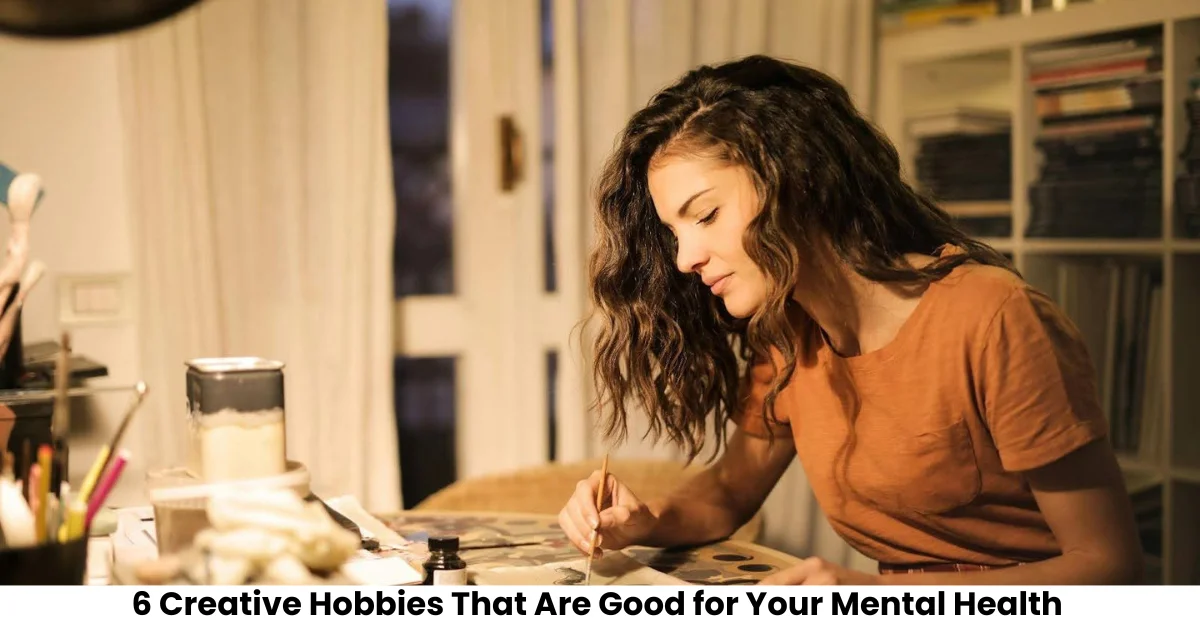
There’s a specific kind of satisfaction that comes from finishing something with your hands. It doesn’t matter if it’s a small embroidered patch or a half-finished watercolor – the feeling of making something real, out of nothing, is genuinely good for you. And the science is starting to catch up to what makers have always known.
According to the American Psychiatric Association’s Healthy Minds Monthly Poll from July 2023, 46% of Americans already turn to creative activities when they need to relieve stress or anxiety.
Adults who rate their mental health as “very good or excellent” are far more likely to engage in creative activities at least weekly compared to those who rate it “fair or poor.” A 2024 study published in Frontiers in Public Health, led by Dr. Helen Keyes at Anglia Ruskin University, found that the well-being boost from crafting was comparable to being employed, with participants reporting higher happiness, greater life satisfaction, and a stronger sense of purpose.
The six hobbies below all qualify as hands-on, beginner-friendly, and genuinely research-backed. You don’t need talent to benefit from any of them. You just need to start.
1. Punch Needle (like Punchora)
Punch needle creates satisfying textured designs – and the repetitive motion is part of what makes it so calming.
Punch needle is one of the more unusual crafts on this list, and also one of the most satisfying. You thread a specialized needle with yarn or embroidery thread, then push it rhythmically through a woven backing fabric to build up looped, textured designs. The result looks like a small rug or textile painting – dense, colorful, and completely handmade.
It’s an older craft with folk roots across Eastern Europe and Scandinavia, but it’s had a real resurgence in the last few years. A big reason for that accessibility is the arrival of complete starter sets, which is why punch needle kits for beginners have become such a popular entry point – they include everything you need in one box, no guesswork required.
Mentally, the appeal is the rhythm. The repetitive punching motion – in, out, move – creates something close to a flow state. You’re focused enough to stop ruminating, but not so taxed that it becomes stressful. A 2025 systematic review published in PMC, covering 19 separate studies on crafts-based interventions, found consistent evidence of reduced stress, anxiety, and depression symptoms across adult participants. Punch needle fits that profile well. Finished pieces can be framed and hung, giving you a permanent, visible record of something you made yourself.
2. Knitting and Crochet (like We Are Knitters)
Knitting and crochet have been through about a dozen cultural reinventions, but the mental health case for them has stayed consistent. Both involve repetitive hand movements – looping yarn around needles or a hook in a steady, predictable rhythm – and that rhythm is a big part of what makes them calming.
A 2023 study published in Nature Medicine, covering more than 93,000 people across 16 countries (reported by Harvard Health), found that people with hobbies reported better overall health, more happiness, and fewer symptoms of depression. The results held across all countries surveyed, suggesting it’s not culturally specific – making things with your hands just works.
There’s also a community dimension to this one. Knitting circles, local yarn shops, and online groups like Ravelry give knitters and crocheters a social connection that many other hobbies lack. A 2025 scoping review in PubMed, drawing on research from PubMed, CINAHL, and Scopus, identified increased social interaction as one of three consistent benefits of hobby engagement, alongside reduced anxiety and improved quality of life.
Both crafts are portable, inexpensive to start, and scale well – you can knit on a commute just as easily as on a couch.
3. Watercolor Painting (like Winsor & Newton)
Watercolor’s fluid, forgiving nature makes it ideal for beginners who want creative expression without pressure.
Watercolor has a reputation for being difficult, but that reputation is mostly bad. It’s actually one of the most forgiving painting mediums, because its defining characteristic – the way pigment blooms and blends in water – means you can’t fully control it anyway. Imperfections become part of the painting. There’s a built-in permission to be imperfect, which takes an enormous amount of pressure off first-timers.
A basic starter set costs under $30, and all you need beyond that is paper and water. The learning curve is real but shallow.
The mental health mechanism here connects to how creative expression reduces cortisol and stress – the act of focusing on color, water, and movement interrupts the brain’s default mode network, the one responsible for rumination and anxious thought loops. You’re too busy watching the paint move to spiral. For people who find pure meditation frustrating (most people), watercolor gives the mind something gentle to anchor on.
It’s also one of the few hobbies where an ugly result is almost impossible. Soft colors and loose shapes tend to look intentional even when they’re not.
4. Embroidery (like DMC)
Embroidery gets unfairly dismissed as old-fashioned, but it’s gone through a genuine cultural revival over the last five years. Younger crafters have reclaimed it – sometimes under the “Grandmacore” umbrella – partly as a counterweight to screen fatigue and the relentless pace of digital life. There’s something intentionally slow about threading a needle and stitching by hand that feels like a deliberate choice rather than a default.
Cross-stitch is the easiest entry point. You follow a pattern on gridded fabric, placing small X-shaped stitches in counted rows. The focus it requires is tight but not overwhelming – you’re tracking position and color, but the movements themselves are simple. That level of attention is exactly what makes it therapeutic: it’s demanding enough to crowd out anxious thoughts, but not so complex that it causes frustration.
The APA’s 2023 Healthy Minds poll found that adults who engage in creative activities at least weekly are significantly more likely to report good mental health than those who don’t. Embroidery fits that weekly habit pattern well – a small hoop takes maybe two hours to finish, which makes it easy to keep the momentum going.
5. Air-Dry Clay and Pottery (like Crayola Air-Dry Clay)
Clay is the most sensory craft on this list. Working with it engages your hands fully – the pressure, the texture, the way it gives and pushes back. That tactile engagement is directly tied to grounding, the therapeutic practice of pulling attention into the body and the present moment to reduce anxiety. You can’t worry abstractly about the future while you’re pressing your thumbs into clay and watching a bowl take shape.
Air-dry clay removes the main barrier that stops most people from trying pottery (no kiln, no studio, no expensive equipment). Crayola Air-Dry Clay is genuinely affordable and widely available. You can sculpt small objects, coil pots, textured tiles, or abstract forms – whatever feels right. Nothing dries in a way you can’t predict.
Once pieces dry, they can be painted, displayed, or gifted. And there’s real value in keeping your finished work around. Research consistently suggests that why surrounding yourself with meaningful objects lifts your mood – objects you made yourself carry particular weight because they’re tied to a concrete memory of effort and achievement.
The Kintsugi trend – repairing cracked pottery with gold – is a nice extension of this craft, and its philosophy (that broken things repaired are more beautiful, not less) adds a mindfulness layer that resonates well beyond the clay itself.
6. Adult Coloring (like Johanna Basford)
A handful of affordable supplies is all it takes to start a creative habit that supports your mental health.
Adult coloring is the lowest barrier on this entire list. You need a book and some colored pencils. No technique, no learning curve, no materials to source. You open a page and start filling it in.
Johanna Basford’s “Secret Garden,” published in 2013, essentially created the adult coloring category – it’s sold over 50 million copies and showed publishers there was a real appetite for intricate, hand-illustrated coloring books designed for grown-ups. The format has expanded enormously since then, covering everything from botanical patterns to architectural detail to abstract geometry.
The mental health mechanism is the same one running through most of this list: the repetitive, focused activity of choosing colors and staying inside lines produces a meditative state without requiring any prior practice. It shares the core quality of the other crafts here – it just demands less of you to get started.
According to the American Psychiatric Association’s 2023 Healthy Minds poll, 46% of Americans already use creative activities to decompress. That number probably undercounts coloring specifically, because many people don’t think of it as a “real” creative activity. It is. The 2024 Frontiers in Public Health study found that even relatively simple creative engagement produced measurable well-being gains. Coloring qualifies.
Which Hobby Should You Start With?
It depends less on skill level than on what you want from it. If you want something tactile and visual with a satisfying finished object, punch needle or clay will deliver that most directly. If portability matters – commuting, traveling, waiting rooms – embroidery or knitting are the obvious picks. If you want zero pressure and near-zero cost, adult coloring or watercolor are the right starting points. Whatever you choose, starting with a beginner kit removes the guesswork and gets you to the actual making faster.
The Bottom Line
The research is consistent: people who make things regularly report lower stress, better mood, and higher life satisfaction. None of these hobbies requires talent. The benefit comes from the act of making, not from how good the result looks. Pick one from this list that sounds even slightly interesting, get the basic supplies, and try it once this week. That’s really all you need to start.
Disclaimer: The content on Wellbeingdrive is for informational purposes only and not a substitute for professional advice. Always consult a qualified expert for health concerns.